Droll is an adjective describing humour that is dry, odd and quietly amusing rather than loud or obvious. To use droll in a sentence, link it to a person, a remark or a tone: a droll expression, or a droll way of telling a story. The word admires wit that keeps a straight face.
Droll at a glance
- Droll is chiefly an adjective; the adverb is drolly and the noun is drollery.
- It normally sits before a noun such as remark, tone, face or account.
- The core idea is humour that is dry, strange and understated.
- The usual subjects are a person, a comment, a scene or a story.
- The commonest error is using droll for loud comedy, which the word does not mean.
What does droll mean?
Droll is an adjective meaning amusing in a dry, odd or understated way. The Cambridge entry for droll ties it to humour that provokes quiet amusement rather than laughter, and that distinction runs through every good sentence: a droll remark makes you smile inwardly, while a funny one makes you laugh aloud. Where the humour is mocking or forced, facetious is the sharper label, because droll carries no cruelty.
| Sense | Plain meaning | Example sentence |
|---|---|---|
| Amusing in an odd way | Strange enough to be quietly funny | A droll little statue guarded the gate. |
| Dryly humorous person or tone | Funny without appearing to try | She has a droll way of ending every meeting. |
| Older noun sense | A jester or comic performer, now rare | The court kept a droll for entertainment. |
One limitation is worth stating. Droll is a mild compliment, and it does not fit open, energetic comedy. Calling a stand-up routine droll suggests the jokes are quiet and strange, which can sound like faint praise. For a joke that produces real laughter, funny or hilarious is the honest choice.
A useful test is to picture the reaction. When the only honest response is a slow smile and a second look, droll fits. When listeners repeat the line afterwards because it was clever, witty is closer. And when an adult cracks the joke during a solemn moment, facetious names the problem rather than the talent.
How do you use droll in a sentence?
Droll works as an attributive adjective and, less often, after the verb be. The noun that follows decides whether the sentence describes a person, a delivery or a whole scene, and the four patterns below cover most uses.
| Pattern | Example | What it signals |
|---|---|---|
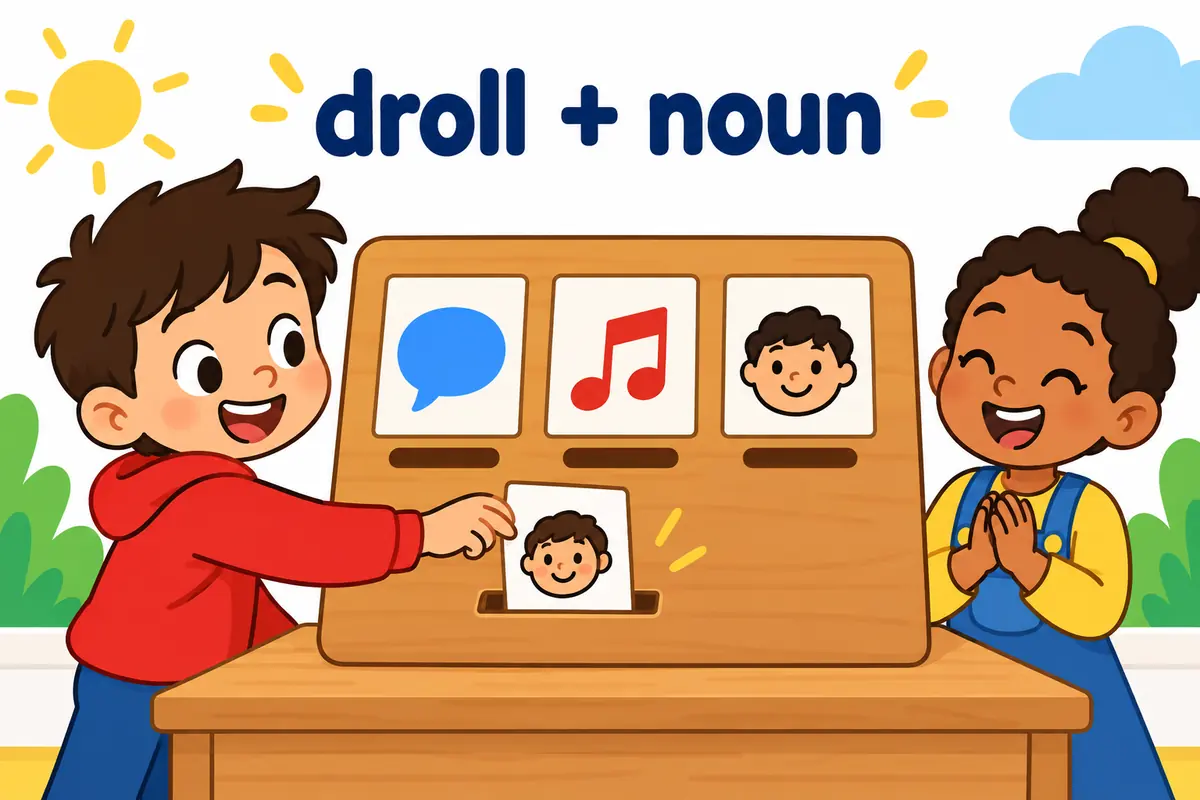
| droll + noun | He gave a droll account of the meeting. | The tone is dry and odd. |
| be + droll | The whole ceremony was quietly droll. | Judges a situation rather than a person. |
| droll way of + gerund | She has a droll way of stating the obvious. | Highlights a habit of delivery. |
| droll as a noun | The court kept a droll for entertainment. | An older sense meaning a jester; avoid it in modern prose. |
Writers wanting a broader word often choose humorous, which covers every kind of comedy, whereas droll insists on dryness and oddity.
Droll in a sentence: examples across contexts
The word suits anywhere a small, strange joke lands well. The eleven sentences below move droll from a classroom to a book review, and each one shows why the tone fits.
| Context | Example sentence | Why this works |
|---|---|---|
| Classroom | He read his droll poem about lost socks, and the class grinned. | Shows a quiet reaction rather than uproarious laughter. |
| Workplace email | She sent a droll note about the coffee machine’s retirement. | Keeps a complaint light and dry. |
| Book review | The novel’s droll narrator never once raises his voice. | Names the dry, understated tone. |
| News feature | The town’s droll tradition draws visitors every spring. | Applies the word to an odd custom. |
| Conversation | That was a droll way to say you forgot the tickets. | Marks teasing that stays gentle. |
| Film review | The film is droll rather than laugh-out-loud funny. | Draws the contrast with loud comedy. |
| Academic writing | The essayist’s droll asides soften a serious argument. | Shows the word in formal criticism. |
| Sports writing | The manager’s droll shrug said all he thought of the question. | Uses a gesture as the vehicle of dry humour. |
| Travel writing | We met a droll innkeeper who named every hen after a queen. | Describes a person’s quiet oddity. |
| Podcast | Her droll asides keep a long interview moving. | Shows the word working in spoken commentary. |
| Diary entry | It was a droll day, full of small absurd mishaps. | Extends droll to a whole stretch of time. |
Droll vs witty and facetious
Droll and witty overlap in cleverness but differ in effect. Witty means quick and clever in speech, and the pleasure comes from the verbal trick; droll means odd and dry, and the pleasure comes from the strange angle. Facetious adds a warning, because it describes a joke made at the wrong moment.
| Attribute | droll | witty | facetious |
|---|---|---|---|
| Core quality | Odd, dry, understated | Quick and clever | Jokey at the wrong time |
| Source of pleasure | The strange angle | The verbal turn | The shock of the joke |
| Typical subject | A person, remark or scene | A person or a reply | A remark |
| Register | Literary and gently affectionate | Lively and social | Usually negative |
| Example | He made a droll comment about the weather. | Her witty reply silenced the room. | A facetious answer cost him the job. |
The three words also differ in how much the speaker wants credit. A witty person is usually pleased to be noticed, and a facetious one wants a reaction of any kind. A droll person often seems to be amusing themselves, which is exactly why the quality feels unforced and can be missed by a distracted listener.
Verdict: reach for witty when the cleverness is verbal, droll when the effect is dry and strange, and facetious only when you mean that a joke was badly judged.
Word forms and grammar of droll
Droll is mainly an adjective, and its comparative and superlative forms are rare enough to sound dated. The adverb and the noun are the useful relatives, and one of them is far more common than the other.
| Form | Part of speech | Example |
|---|---|---|
| droll | adjective | Her droll summary saved the meeting. |
| droller | comparative adjective, rare | His second story was droller than the first. |
| drollest | superlative adjective, rare | It was the drollest remark of the evening. |
| drolly | adverb | He commented drolly on the weather. |
| drollery | noun | The play is full of quiet drollery. |
Notice that drollery means the quality or an instance of dry humour, not a person. The rare word droll used alone as a noun is best left to historical writing. The adverb drolly is the neatest way to attach the quality to a verb, as in she observed drolly that the lift had stopped.
Common mistakes with droll
- Incorrect:
The film was droll and made the whole audience roar with laughter.Correct: The film was funny and made the whole audience roar with laughter. Rule: Droll suggests quiet, odd amusement, not loud laughter. - Incorrect:
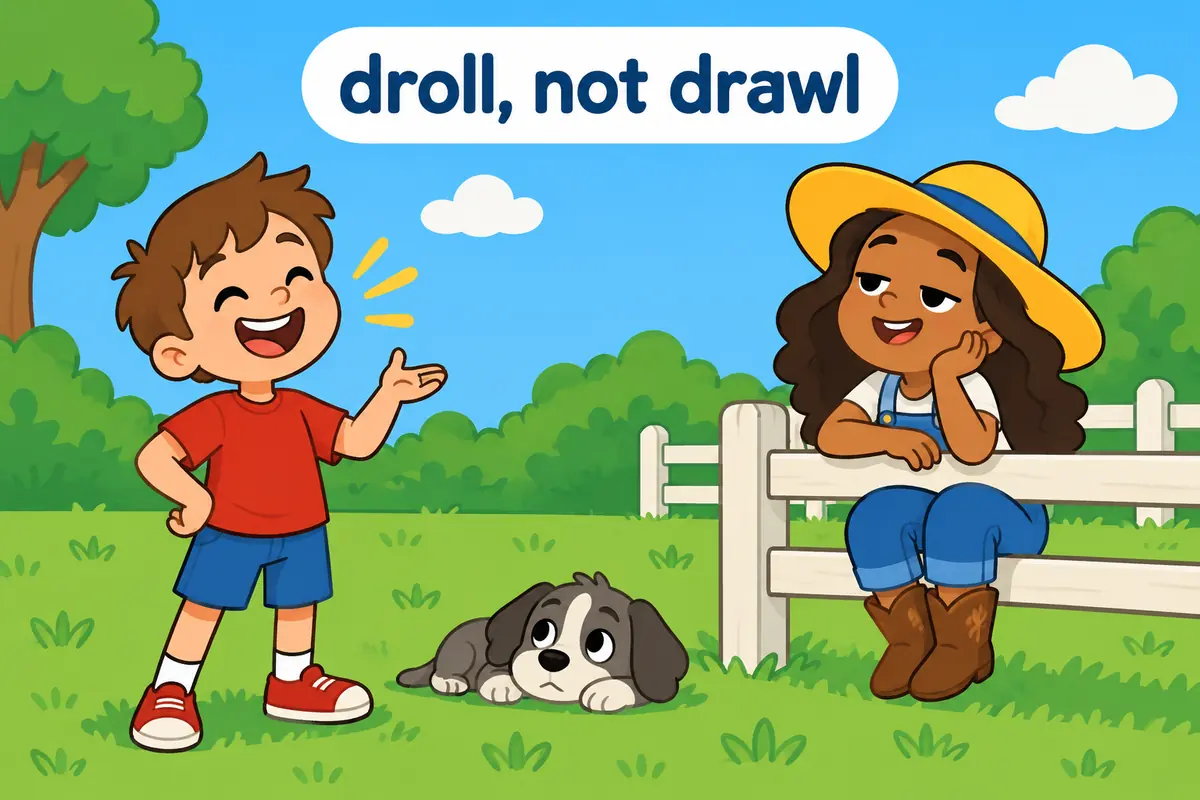
She spoke in a droll, a slow southern accent.Correct: She spoke in a drawl, a slow southern accent. Rule: A drawl is a slow way of speaking; droll is a quality of humour, and the two words only look alike. - Incorrect:
His droll was appreciated by everyone.Correct: His droll humour was appreciated by everyone. Rule: Droll is chiefly an adjective and cannot stand alone as a noun in modern use. - Incorrect:
The joke was droll and cruel.Correct: The joke was sarcastic and cruel. Rule: Droll carries no edge of cruelty; sharp or sarcastic describes humour that wounds. - Incorrect:
He separated the gold from the droll.Correct: He separated the gold from the dross. Rule: Dross is worthless waste; the two words differ by a single letter.
Practice using droll
Work through the six items, then read the answers for the reasoning behind each choice.
- Fill the gap: She told the story in her usual ______ way, and we all grinned.
- Choose the better word: The audience roared, so the comedian was (witty / droll) rather than merely droll.
- Correct the error: He made a droll, speaking slowly and warmly.
- Build a sentence: use a droll way of about a teacher explaining a rule.
- Spot the register: which belongs in a formal book review — The narrator stays droll throughout, or The narrator is a total joke machine?
- Rewrite with the adverb: He made a droll remark about the delay. Use drolly.
Answers
- droll — the adjective describes the dry, odd manner of the telling.
- witty — the roar of laughter points to quick, verbal cleverness, not dry oddity.
- He spoke in a drawl, slowly and warmly — a remark can be droll, but a slow accent is a drawl.
- Model answer: She has a droll way of explaining a rule as if it were a secret.
- The narrator stays droll throughout — a formal review prefers the precise adjective to slang.
- He remarked drolly on the delay — the adverb moves the quality onto the verb.
The bottom line
Use droll in a sentence when the humour is dry, odd and quiet, and keep close to nouns such as remark, tone and face. Two points decide most choices: droll is a mild compliment that never implies loud laughter, and its near neighbour a drawl is a slow way of speaking rather than a kind of wit. When you want the broadest word for comedy, funny or humorous is the safer choice.
Frequently asked questions about droll
Is droll a compliment?
Yes, though a gentle one. Calling someone droll praises a dry, odd sense of humour that amuses without effort. It does not suggest the person is hilarious. If you mean that a friend makes everyone laugh out loud, funny or hilarious says that more honestly, while droll describes quiet, quirky wit.
Can droll describe a person?
Yes. A droll person has a dry, understated sense of humour and rarely signals that a joke is coming. The word usually attaches to the person or to what they produce, so a droll teacher and a droll explanation are both natural. It describes manner, not appearance.
What is the difference between droll and drawl?
Droll is an adjective for dry, odd humour. Drawl is a noun or verb for slow, drawn-out speech. They are confused only because they look similar and share four letters. A comedian can be droll, and a speaker can have a drawl, but the two qualities are completely unrelated.
Does droll mean the same as funny?
Not exactly. Funny covers every kind of humour, from slapstick to sharp satire. Droll narrows the field to humour that is dry, strange and understated, and it often produces a smile rather than a laugh. Use funny for the general case and droll when the dryness is the point.