
Acidic fruits name with pictures the fruits that taste sharp and sour, from lemon and lime to pineapple and kiwi. Their sourness comes from natural acids, mainly citric and malic acid, which sit inside the juice. A simple example is “The lemon is very sour.”
acidic fruits at a glance
- An acidic fruit tastes sharp because it holds natural fruit acids.
- Citrus fruits such as lemon and lime are the most familiar acidic group.
- Common acids include citric acid and malic acid.
- Acidic fruits often carry plenty of vitamin C.
- Learners often confuse acidic, which names taste and chemistry, with sour, which names taste alone.
What makes a fruit acidic?
A fruit is acidic when its juice holds a noticeable amount of a natural acid, such as citric acid in lemons or malic acid in apples. The acid gives the fruit its sharp taste and its low pH. The table below gathers the common acidic fruits with the acid behind each one.
| Fruit | Main acid | Taste note |
|---|---|---|
| lemon | citric acid | very sour and sharp |
| lime | citric acid | sharp with a bitter edge |
| orange | citric acid | sweet and mildly sharp |
| grapefruit | citric acid | bitter and tangy |
| pineapple | citric and malic acid | sweet then sharp |
| kiwi | citric and malic acid | tart and juicy |
| strawberry | citric and malic acid | sweet with a tart edge |
| apple | malic acid | crisp and mildly sharp |
| cherry | malic acid | sweet with a light tang |
| pomegranate | citric and malic acid | juicy and tart |
| raspberry | citric acid | tart and soft |
| green mango | citric and malic acid | very sour before it ripens |
How do you use acidic fruit names in a sentence?
Fruit names are countable nouns, and acidic works as an adjective before the name or after a linking verb.
| Pattern | Example | What it signals |
|---|---|---|
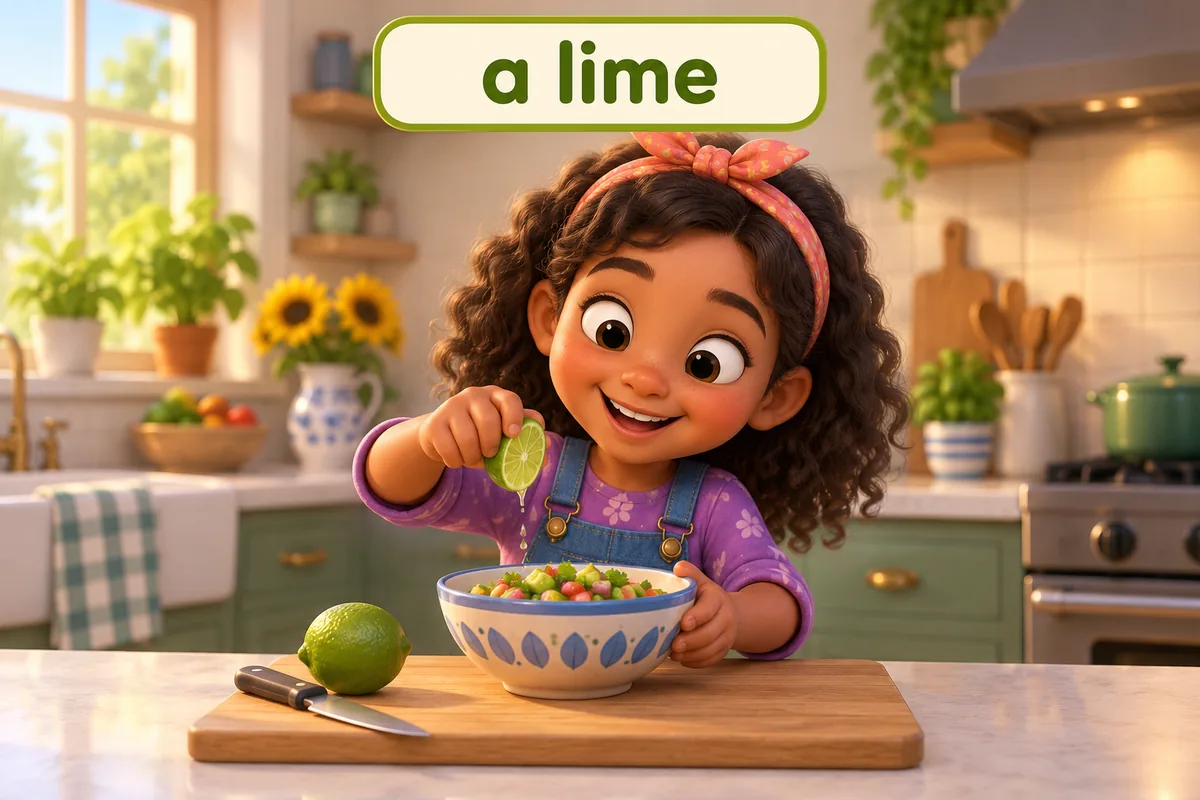
| a or an plus name | She squeezed a lime. | The singular countable noun needs an article. |
| plural plus verb | The lemons taste sour. | The plural marks more than one. |
| acidic plus name | An acidic fruit needs sugar. | The adjective describes the noun. |
| name after a linking verb | The kiwi is tart. | The name is the subject of the state. |
Tasting notes use a small set of words, and each one points to a slightly different kind of sharpness rather than to the acid itself.
| Taste word | What it means | Example |
|---|---|---|
| sour | sharp, like lemon | The lime tastes sour. |
| tart | sharp but a little sweet | The green apple is tart. |
| tangy | a lively sharp flavour | The dressing is tangy. |
| bitter | a harsh taste, like peel | The grapefruit pith is bitter. |
| zesty | bright and fresh | The drink has a zesty kick. |
Acidic fruit names across contexts
| Context | Example sentence | Why this works |
|---|---|---|
| Kitchen | A squeeze of lemon lifts the sauce. | The name gives a cooking step. |
| Nutrition note | Citrus fruits add vitamin C. | The group term carries a health fact. |
| Market | The limes are firm and green. | The name points to a produce item. |
| Recipe | Add grapefruit to the salad. | The name leads an instruction. |
| Science class | Malic acid gives the apple its tang. | The name supports a lesson. |
| Drink menu | The juice blends orange and pineapple. | The names build a drink. |
| Farm report | The strawberry harvest starts in May. | The plural name suits a report. |
| Health note | Acidic fruit can soften tooth enamel. | The adjective states a caution. |
| Travel blog | We picked green mango in the orchard. | The name marks a local fruit. |
| Everyday chat | This kiwi is really tart. | The name suits a quick line. |
Acidic and non-acidic fruits compared
The two groups differ in taste and in chemistry, so the label should match the fruit rather than the mood of the eater.
| Point | acidic fruit | non-acidic fruit |
|---|---|---|
| Taste | sharp and sour | sweet and mild |
| Chemistry | holds natural fruit acids | holds very little acid |
| Example | a lemon is acidic | a banana is non-acidic |
| pH range | usually low pH | closer to neutral |
| Common error | calling every tart fruit a lemon | calling a banana acidic |
The single word appears in acidic in a sentence, the wider group appears in fruits in a sentence, and longer sets run through fruits that start with A and fruits that start with B.
Word forms and grammar of acidic fruit names
One base word gives a noun, a plural and an adjective, and the ending shows which job the word is doing in the sentence.
| Form | Part of speech | Example |
|---|---|---|
| fruit | noun | A fruit can be sweet or sharp. |
| fruits | plural noun | Citrus fruits are acidic. |
| acidic | adjective | An acidic juice cuts through fat. |
| acid | noun | Citric acid gives the tang. |
| sour | adjective | A sour taste made her wince. |
| ripen | verb | The mangoes ripen on the tree. |
| juicy | adjective | A juicy orange is easy to peel. |
Common mistakes with acidic fruit names
Most errors come from agreement and from using acidic where a plain taste word would do, and both are quick to check.
- Incorrect:
The lemons is very sour.Correct: The lemons are very sour. Rule: a plural subject takes a plural verb. - Incorrect:
An acidic fruits need sugar.Correct: An acidic fruit needs sugar. Rule: the article a or an takes a singular noun. - Incorrect:
Bananas are acidic fruits.Correct: Bananas are non-acidic fruits. Rule: the label must match the fruit, and a banana holds very little acid. - Incorrect:
The kiwi taste tart.Correct: The kiwi tastes tart. Rule: a singular subject takes the singular verb tastes. - Incorrect:
Lime are sharper than orange.Correct: Limes are sharper than oranges. Rule: a countable fruit name needs the plural -s to name the group.
Practice using acidic fruit names
Try each item, then read the reason to check the answer.
- Fill in the blank: A ________ is the most sour citrus fruit. (lemon / orange)
- Fill in the blank: The ________ taste tart and juicy. (kiwifruit)
- Choose the better word: a banana is a ________ fruit. (non-acidic / acidic)
- Correct the error: The lemons is very sour.
- Build a sentence: use acidic plus a fruit name about a sharp juice.
- Spot the register: which fits a science class, “Malic acid gives the apple its tang” or “Apple is sour stuff”?
Answers
- Lemon: it is the most sour of the common citrus fruits, sharper than an orange.
- Kiwifruit: the plural subject takes the plural verb taste.
- Non-acidic: a banana holds very little acid, so the plain label fits.
- The lemons are very sour: a plural subject takes the plural verb are.
- Sample: An acidic fruit such as lime needs sugar. The adjective acidic sits before the noun.
- Malic acid gives the apple its tang: a science class uses a precise, full sentence.

The bottom line
Acidic fruits name with pictures the produce that tastes sharp because it holds natural fruit acids, with lemon and lime at the strongest end and apple and cherry milder. The acid, not the colour, decides the group, so a green apple and a red cherry both count. Use acidic for the chemistry and sour or tart for the taste.
Frequently asked questions about acidic fruits
Which fruits are the most acidic?
Lemon and lime are the most acidic of the common fruits, followed by grapefruit and orange. They are sharp because the juice holds a high share of citric acid. Mildly acidic fruits such as apple, cherry and strawberry hold more malic acid and taste less sharp.
Is a tomato an acidic fruit?
Yes. A tomato is a fruit in botany because it grows from a flower and carries seeds, and its juice is mildly acidic. Cooks still treat it as a vegetable because it goes into savoury dishes, so the kitchen and the science lab use different labels.
What is the difference between acidic and sour?
Acidic describes the chemistry, meaning the fruit holds a noticeable amount of a natural acid and has a low pH. Sour describes the taste a person notices on the tongue. A fruit can be acidic without tasting very sour, so the two words are close but not identical.
How do you use an acidic fruit name in a sentence?
Treat the fruit name as a countable noun, so it takes an article in the singular, as in she squeezed a lime, and a plural -s for more than one. Place acidic before the noun, as in an acidic fruit, or after the linking verb, as in the kiwi is tart.