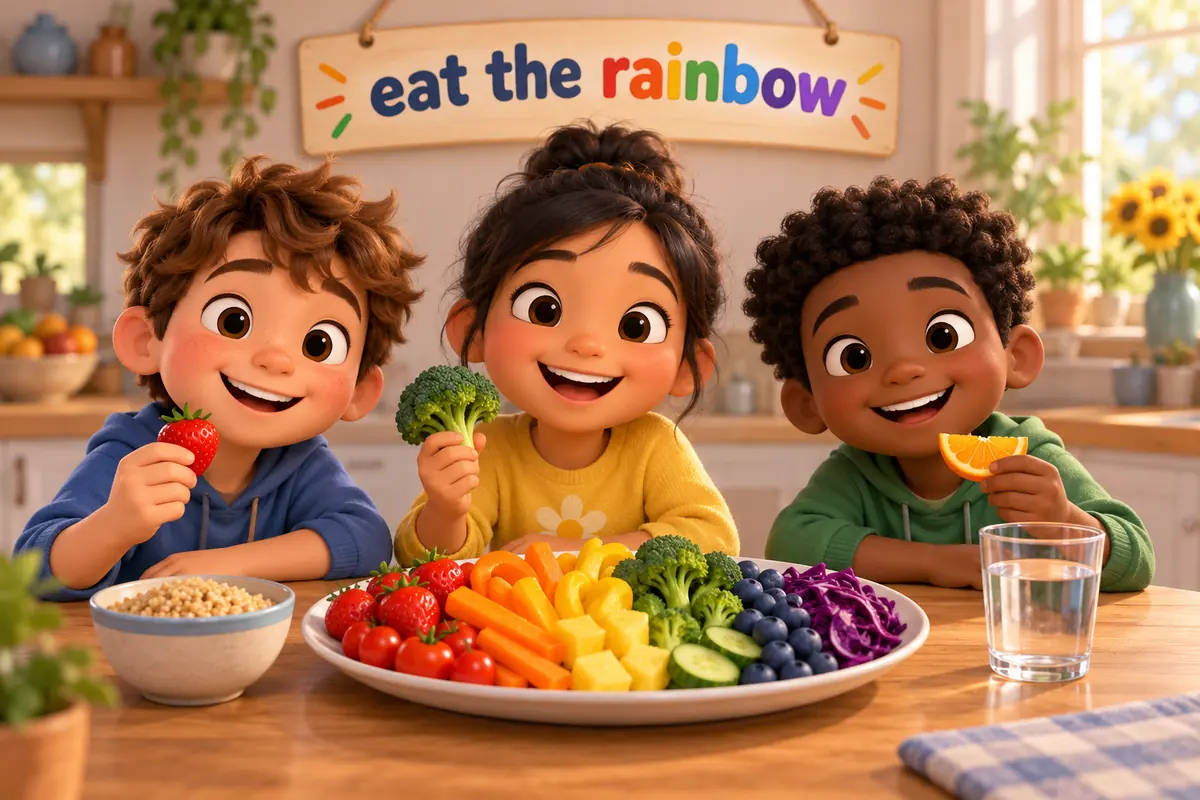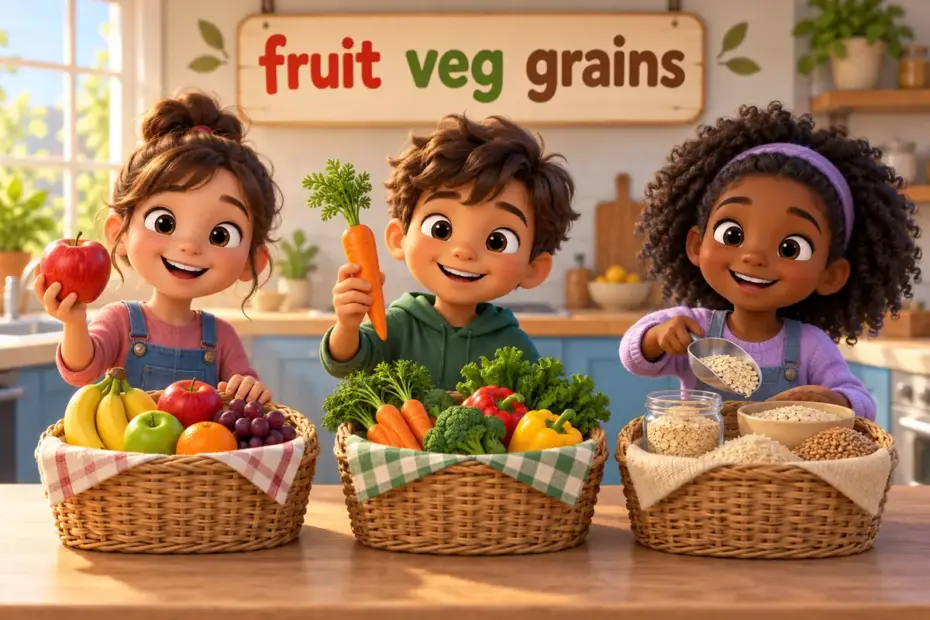
Healthy foods name in English gathers the everyday items that supply energy and nutrients, such as fruit, vegetables, whole grains, beans and dairy. The list matters because a menu, a recipe and a shopping note all name these foods directly, and each group supplies something the body needs.
Healthy foods name in English at a glance
- Healthy foods are everyday items that supply energy and nutrients.
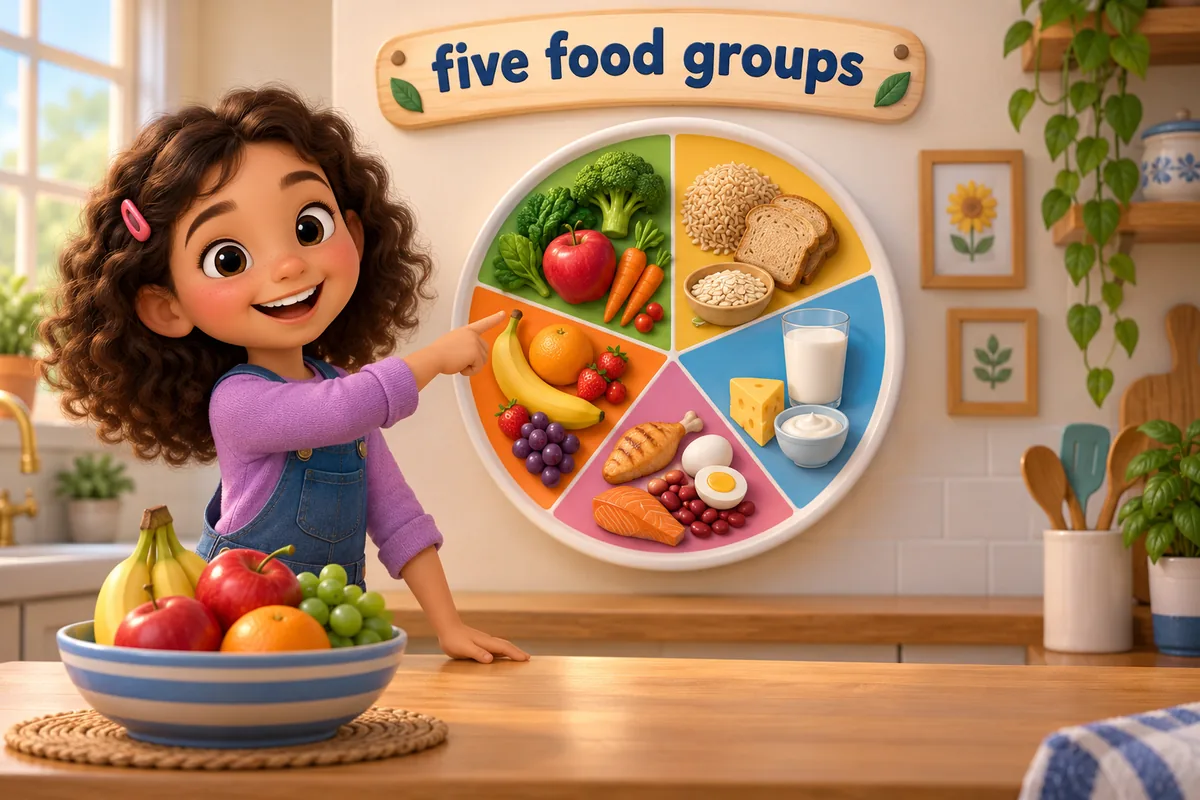
- Fruit, vegetables, grains, protein and dairy form the main groups.
- Many food words are uncountable: bread, rice and milk take no plural.
- Some foods are countable: an apple, two eggs, three carrots.
- Naming the group helps a learner build a balanced plate.
What counts as a healthy food in English?
A healthy food is an everyday item that supplies the body with energy and nutrients, such as fruit, vegetables, whole grains or beans. The vocabulary matters because a shopping list or a recipe names these foods directly, and a learner who knows the groups can build a balanced meal in words. The pages on breakfast foods that start with a and the following letters extend the same naming habit. Grocery shelves, school lessons and recipe cards all use these words, so the list repays learning group by group.
| Food group | Examples | Example sentence |
|---|---|---|
| Fruit | apples, oranges, bananas | An orange adds a fresh finish to breakfast. |
| Vegetables | spinach, carrots, peas | Carrots sweeten a simple soup. |
| Whole grains | oats, brown rice, barley | Oats make a warming porridge. |
| Protein | beans, lentils, eggs, fish | Lentils thicken the stew. |
| Dairy | milk, yoghurt, cheese | Yoghurt tops the fruit bowl. |
| Nuts and seeds | almonds, walnuts, sesame | A few walnuts lift a salad. |
How do you name healthy foods in a sentence?
Food words follow a few familiar patterns, and the article changes with the count. Some items count one by one, while grains and liquids stay uncountable and take no plural. Countable foods accept a number directly, while a mass food needs a measure word such as a bowl or a spoon.
| Pattern | Example | What it signals |
|---|---|---|
| a / an + countable food | An apple is a handy snack. | one whole item |
| plural countable food | Fresh carrots fill the pan. | several items together |
| uncountable food + is | Porridge is filling on a cold morning. | a mass noun, no article |
| verb + food | She steamed the broccoli. | names the cooking action |
| verb + with + food | He topped the oats with berries. | names the added food |
Healthy foods name in English across contexts
The same words turn up in a café menu, a science lesson and a family note, and each setting picks the group it needs. Eight sentences show the range, and more snack words sit on the breakfast foods that start with b page. A letter-by-letter list such as breakfast foods that start with c turns the same review into a short game.
| Context | Example sentence | Why this works |
|---|---|---|
| Café menu | Warm oats with berries and honey. | a menu lists uncountable foods by name |
| Science lesson | Photosynthesis helps a plant make its own food. | the group noun fits a lesson |
| Family note | Please buy carrots, lentils and milk on the way home. | a list names countable and uncountable items |
| Restaurant order | Could we have the grilled fish with greens? | a polite request names the dish |
| Diet plan | Fill half the plate with vegetables. | a group noun gives plain advice |
| Cooking show | Fold the spinach through the pasta. | the cooking verb adds the food |
| School canteen | Today we serve rice, beans and a piece of fruit. | a lunch line names each item |
| Recipe card | Add two eggs and whisk well. | a countable food takes a number |
Which word should you choose?
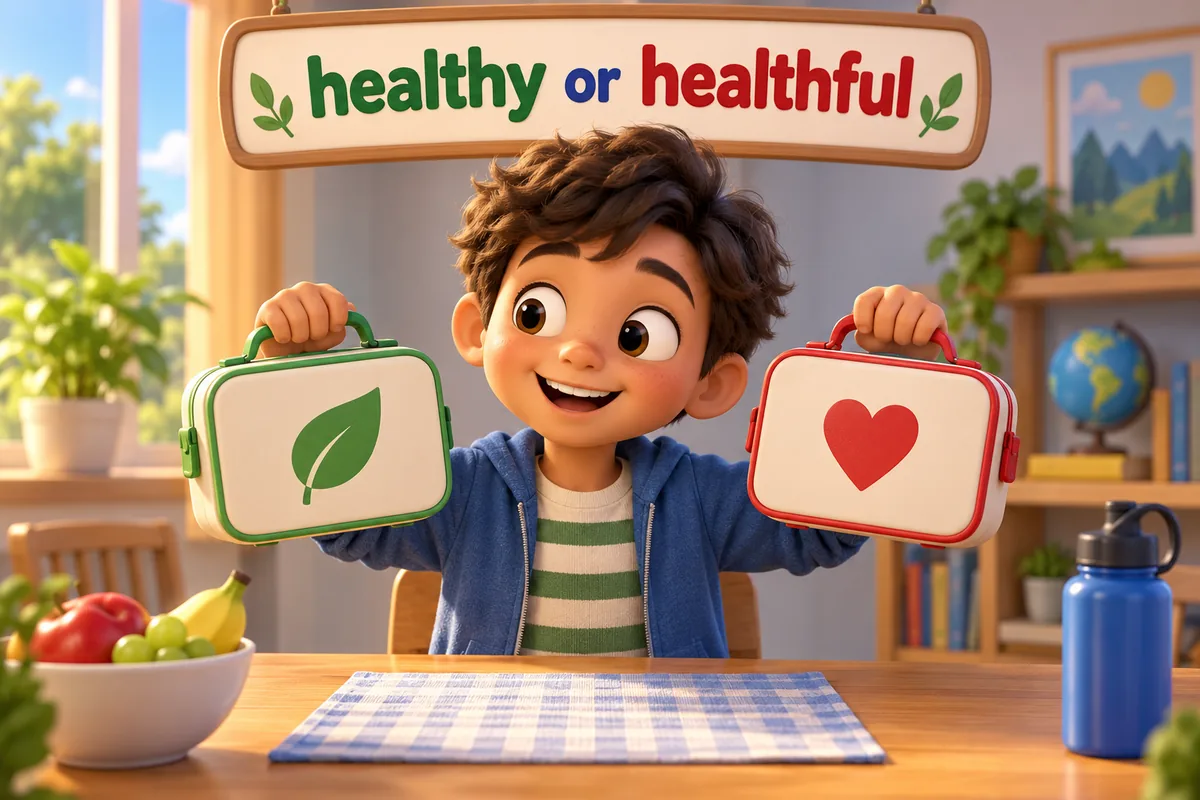
Healthy and healthful sit close together, and even careful writers mix them. One describes the food itself, and the other describes the goodness the food gives. The difference shows up most often in careful writing about diets and habits.
| Attribute | Healthy | Healthful |
|---|---|---|
| Core meaning | In good health, or good for health | Able to produce good health |
| Describes | A person, animal or food | A food or a habit |
| Common use | Everyday speech | Formal or careful writing |
| Typical pairing | a healthy meal | a healthful diet |
| Example | She keeps a healthy routine. | A healthful diet supports long-term wellbeing. |
Verdict: healthy works in almost every sentence, while healthful is the tidier choice when you want to stress what a food gives rather than how it is described.
Word forms and grammar of food names
Food vocabulary splits neatly into countable and uncountable sets, and the split explains most article mistakes. A learner who marks each new word as count or non-count avoids half the errors on this page before writing a sentence. It also makes the plural and article rules easy to apply in a single step.
| Form | Part of speech | Example |
|---|---|---|
| food | uncountable noun | Food is shared at the table. |
| foods | countable plural | The market sells many foods. |
| fruit | uncountable noun | Fruit finishes the meal. |
| vegetables | countable plural | Vegetables fill the basket. |
| nutritious | adjective | A nutritious lunch keeps energy steady. |
| nourishment | noun | The soup gave good nourishment. |
Common mistakes with food names
Most slips come from adding or dropping an article on the wrong kind of food noun. The five pairs below show the fault beside its repair. A moment spent checking whether a new food word is count or non-count prevents most of them.
Incorrect: I ate a bread and two rices. Correct: I ate bread and two bowls of rice. Bread and rice are uncountable, so they take no a and no plural.
Incorrect: She bought three vegetable. Correct: She bought three vegetables. A countable food takes the plural after a number.
Incorrect: The fruits are in the fridge. Correct: The fruit is in the fridge. Fruit as a mass is uncountable in everyday speech.
Incorrect: I like milks in my tea. Correct: I like milk in my tea. A liquid mass noun takes no plural.
Incorrect: This food has many nutritions. Correct: This food is nutritious. Nutrition is uncountable, and the adjective often fits better.
Practice naming healthy foods
Six tasks mix fill-in-the-blank, error correction and sentence building. Watch the article and the plural as you write, then check the reasoning.
- Fill the gap: An ______ is a quick snack between meals.
- Fill the gap: Warm ______ makes a filling breakfast.
- Correct the error: We bought two rice and a milk.
- Correct the error: The carrots is in the basket.
- Build a sentence about a salad using two vegetable names.
- Name three protein foods for a vegetarian meal.
Answers
- apple. A countable food takes a or an before it.
- porridge. Oats cooked as porridge form an uncountable mass, so no article is needed.
- We bought two bags of rice and a bottle of milk. Uncountable foods need a measure word to take a number.
- The carrots are in the basket. Two or more carrots take the plural verb are.
- A salad of spinach and tomatoes makes a light lunch. Both vegetable names are countable plurals.
- Lentils, eggs and beans give a vegetarian meal its protein. Each name is a common protein food.
The bottom line
Healthy foods name in English becomes easy once the learner groups the words and watches the count. Fruit, vegetables, grains, protein and dairy each supply something the body needs, and the name of each group points at its job. Keep uncountable foods bare, add a number or a measure word when you need one, and choose healthy for everyday sentences. Name the group, then name the item, and the sentence will read clearly.
Frequently asked questions about healthy foods name in English
Which five food groups should I learn first?
Start with fruit, vegetables, whole grains, protein and dairy, because these five cover most everyday meals. Each group supplies something useful: grains give energy, protein builds and repairs, and fruit and vegetables add vitamins and fibre. Learn one or two examples for each group before adding more.
Is fruit countable or uncountable?
In everyday English fruit is usually uncountable, so you say fruit is good for you. When you mean several kinds, the plural fruits appears, as in tropical fruits. A single item is countable and takes the name itself, as in an apple or a banana.
What is the difference between healthy and healthful?
Healthy describes a person or a food in good condition, and it works in almost every sentence. Healthful describes something that produces good health, so a healthful diet is one that gives benefit. The two overlap, but healthful is the more careful choice in formal writing.
Why do some food words take no plural?
Food words for liquids and grains name a mass rather than separate items, so they stay uncountable: water, milk, rice and bread take no plural and no article. To count them, add a measure word, as in two cups of rice or a slice of bread.