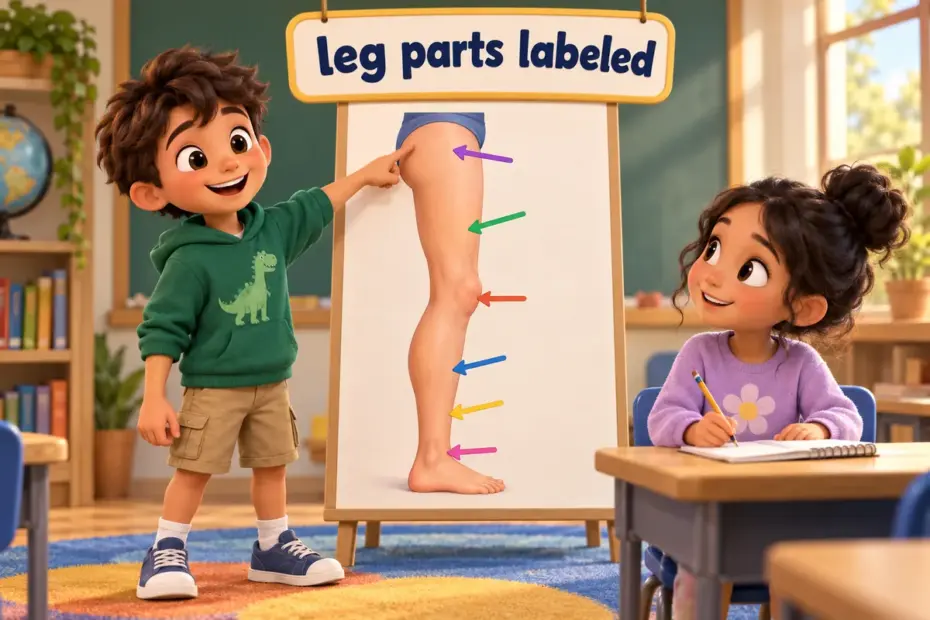
Parts of leg with labeled diagram begin at the hip and run down to the ankle. The thigh carries the femur, the knee holds the patella, and the lower leg contains the tibia, fibula and calf muscles. The ankle joins the leg to the foot.
Parts of Leg at a Glance
- The leg runs from the hip to the ankle and ends at the foot.
- The thigh is the upper section, built around the femur.
- The knee is the joint between the thigh and the lower leg.
- The shin is the front of the lower leg, made of the tibia.
- The calf is the muscle group at the back of the lower leg.
- The Achilles tendon joins the calf muscles to the heel.
What are the parts of the leg?
The leg separates into the upper leg, the knee and the lower leg. The thigh holds the femur, the knee carries the patella, and the lower leg holds the tibia and fibula with the calf muscles. The ankle joins the leg to the foot.
| Part | Where it sits | What it does |
|---|---|---|
| Hip | Top of the leg | Joins the leg to the pelvis and allows movement |
| Thigh | Upper leg | Holds the femur and the big thigh muscles |
| Femur | Bone of the thigh | The longest and strongest bone in the body |
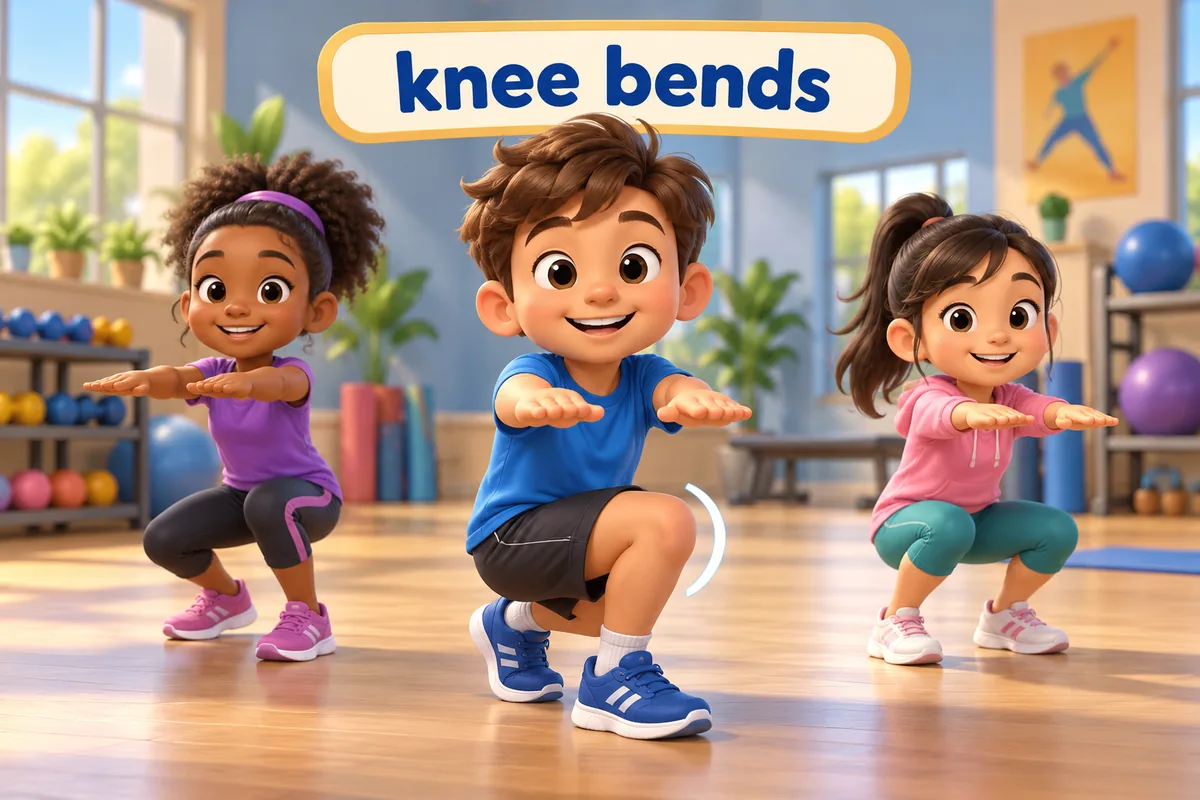
| Knee | Between thigh and shin | The joint that bends the lower leg |
| Patella | Front of the knee | Protects the joint and improves the lever |
| Shin | Front of the lower leg | Carries the tibia, the main lower-leg bone |
| Fibula | Outer lower leg | Thin bone beside the tibia that stabilises the ankle |
| Calf | Back of the lower leg | Muscles that lift the heel and push off |
| Ankle | Bottom of the leg | Joint that links the leg to the foot |
| Achilles tendon | Behind the ankle | Connects the calf muscles to the heel bone |
What does each part of the leg do?
Each part answers one need: standing, bending, pushing off or absorbing force. Grouping the parts by function shows how bones and muscles work as a set of levers.
| Job | Part responsible | Why it matters |
|---|---|---|
| Support the body | Femur and tibia | Carry the weight from hip to ground |
| Bend the leg | Knee joint | Lets you walk, sit and climb |
| Straighten the knee | Quadriceps | Powers standing and jumping |
| Bend the knee | Hamstrings | Pull the lower leg back as you step |
| Push off | Calf muscles and Achilles tendon | Raise the heel and drive you forward |
| Stabilise the ankle | Fibula and ligaments | Keep the joint from rolling sideways |
How do you use leg-part words in a sentence?
Leg vocabulary behaves like most body-part nouns. Each part takes the when you name it, and prepositions such as on, behind and between say where the part sits.
| Pattern | Example | What it signals |
|---|---|---|
| the + part + of the leg | The knee of the leg bends between thigh and shin. | Names one part of the whole |
| part + action verb | The calf lifts the heel. | Describes the part’s job |
| verb + the + part | Stretch the hamstrings before you run. | Uses the part as an object |
| adjective + part | A tight calf can pull on the tendon. | Adds a quality to the part |
| there is / are + part | There are two bones in the lower leg. | States how many parts are present |
Parts of the Leg in Everyday Contexts
The same terms appear in clinics, gyms and cooking. Each sentence below uses an exact name so the reader knows which part is meant.
| Context | Example sentence | Why this works |
|---|---|---|
| Clinic | The pain sits just below the knee on the shin. | Locates the symptom precisely |
| Gym | Warm up the hamstrings and quadriceps first. | Names the muscles being trained |
| Sports report | He pulled a calf muscle near the end of the match. | Links a part to an injury |
| Shoe shop | The ankle needs support on uneven ground. | Names the joint the shoe protects |
| Anatomy class | The femur is the longest bone in the body. | Uses the precise name |
| Word study | We practised the noun leg in a sentence before the parts. | Starts with the whole object |
| Cooking | She roasted a chicken leg until the skin crisped. | Shows an everyday use of the word |
| Animal writing | The horse shifted its weight onto its hind leg. | Uses leg for an animal limb |
The word leg spreads beyond the body. A joint of meat is a chicken leg, and animals rest on a hind leg at the back and a foreleg at the front. Naming parts of a leg uses the same habit as listing the body parts that start with A.
Leg Parts That Are Easy to Confuse
Four pairs cause most of the muddle. Two involve parts that sit close together, and two involve bones that look alike on a chart.
| Pair | How they differ | Quick test |
|---|---|---|
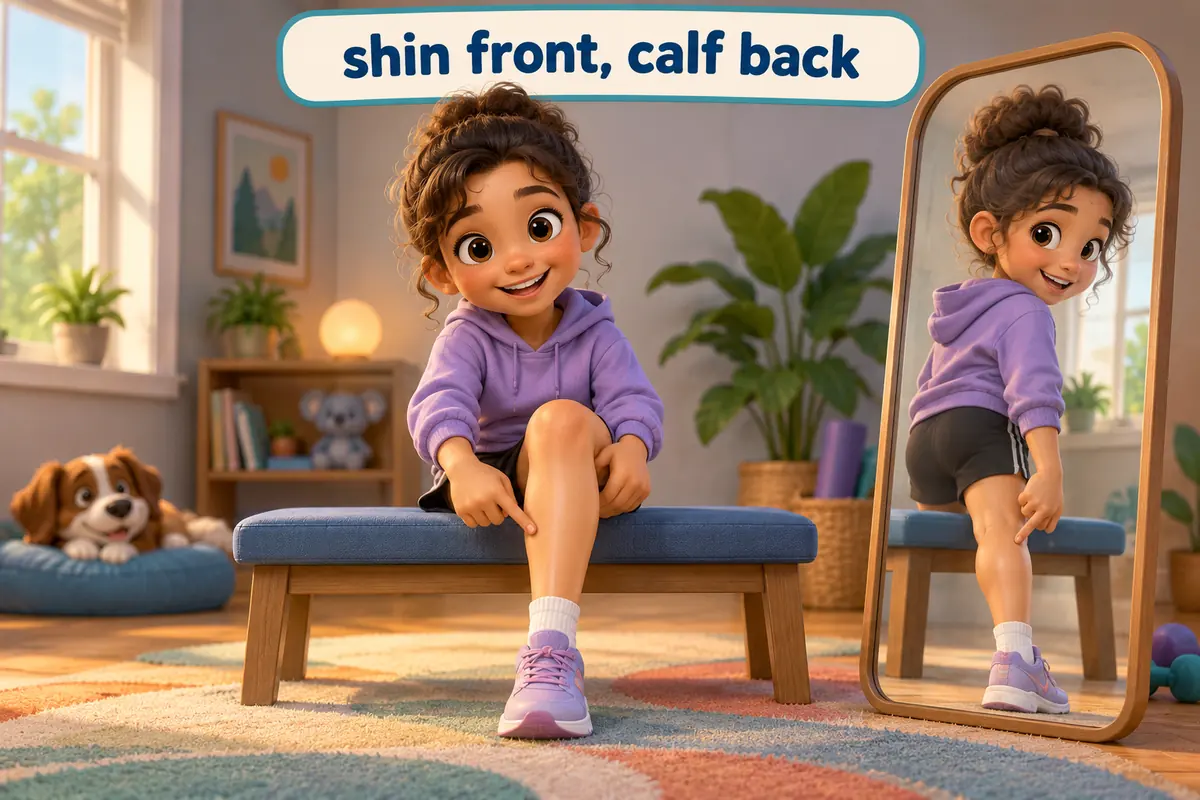
| shin / calf | The shin is the front of the lower leg; the calf is the muscle behind. | Front is shin, back is calf. |
| thigh / shin | The thigh is the upper leg; the shin is the lower leg. | The knee divides the two. |
| femur / humerus | The femur is the thigh bone; the humerus is the upper-arm bone. | Leg bone versus arm bone. |
| knee / ankle | The knee is the middle joint; the ankle is at the bottom. | Bend the middle, roll the base. |
The label-and-function habit carries across object lists, which is why a page about the parts of a car follows the pattern you are practising here.
Word Forms and Plurals for Leg Parts
A few leg words change form in ways that surprise learners. The table below shows the form to write and one that people often get wrong.
| Form | Part of speech | Example |
|---|---|---|
| leg / legs | countable noun | Both legs were tired. |
| calf / calves | noun with an irregular plural | His calves ached after the climb. |
| thigh / thighs | countable noun | Strong thighs help on hills. |
| knee / knees | countable noun | She rested on her knees. |
| kneel / knelt | verb and past form | He knelt to tie the lace. |
| femur / femurs | countable noun | The femurs support the body’s weight. |
Common Mistakes When Naming Leg Parts
These errors appear in student writing and clinic notes. Each one shows the wrong version, the corrected version and the rule behind the fix.
Incorrect: The calf is the front of the lower leg. Correct: The shin is the front of the lower leg, and the calf is the muscle behind it. Position tells the two apart.
Incorrect: The femur is the bone of the upper arm. Correct: The femur is the thigh bone, and the humerus is the upper-arm bone. The two are easy to swap on a chart.
Incorrect: He kneed down to tie his shoe. Correct: He knelt down to tie his shoe. Kneel is the verb, and knee is the body part.
Incorrect: My both calf hurt after the run. Correct: Both my calves hurt after the run. The plural of calf is calves, and the determiner comes first.
Incorrect: The patella is in the ankle. Correct: The patella is the kneecap at the front of the knee. The ankle lies much lower, where the leg meets the foot.
Practice Using Leg Part Vocabulary
Six tasks cover the terms you have met. Write your own answers before you read the reasoned list below.
- Fill in the blank: The longest bone in the body is the _____.
- Fill in the blank: The muscle at the back of the lower leg is the _____.
- Choose the better word: The front of the lower leg is the (shin / calf).
- Correct the error: He knee down to pick up the pencil.
- Build a sentence: use Achilles tendon to explain how the heel lifts.
- Spot the register: which sentence belongs in a clinic note, and which in a friendly message?
Answers
- femur; it is the thigh bone and the longest bone in the body.
- calf; it lifts the heel and pushes you forward.
- shin; the calf is the muscle at the back of the lower leg.
- He knelt down to pick up the pencil; kneel is the verb and knee is the body part.
- One model answer: The calf muscles pull on the Achilles tendon, which raises the heel for each step.
- The note describing pain just below the knee suits a clinic note; the message about tired legs after a walk suits a friendly note.
The Bottom Line
The parts of leg anatomy run from the hip through the thigh and knee to the shin, calf and ankle. The femur carries the weight, the knee bends the leg, and the calf with the Achilles tendon lifts the heel to push you forward. Keep shin at the front and calf at the back, and do not swap the femur with the arm’s humerus. With these terms secure, you can describe a strain or a stretch precisely.
Frequently asked questions about parts of leg with labeled diagram
What are the main parts of the leg?
The main parts are the hip, the thigh with the femur, the knee with the patella, the lower leg with the tibia and fibula, the calf muscles and the ankle. The quadriceps and hamstrings move the knee, while the calf and the Achilles tendon raise the heel. The leg ends where the ankle meets the foot.
What is the difference between the shin and the calf?
The shin is the front of the lower leg, and the calf is the muscle group at the back. You can feel the shin bone, the tibia, just under the skin at the front, while the calf is soft muscle. A knock to the shin feels hard and sharp, while a tight calf feels like a cramp.
What is the longest bone in the leg?
The femur, or thigh bone, is both the longest and the strongest bone in the human body. It runs from the hip to the knee and carries the weight of the upper body. Because it is so strong, a break in the femur usually needs a great deal of force.
What does the knee do?
The knee is the joint that lets the lower leg bend and straighten, which makes walking, running and sitting possible. The patella at the front protects the joint and improves the pull of the thigh muscles. Ligaments hold the two bones steady while the joint moves.