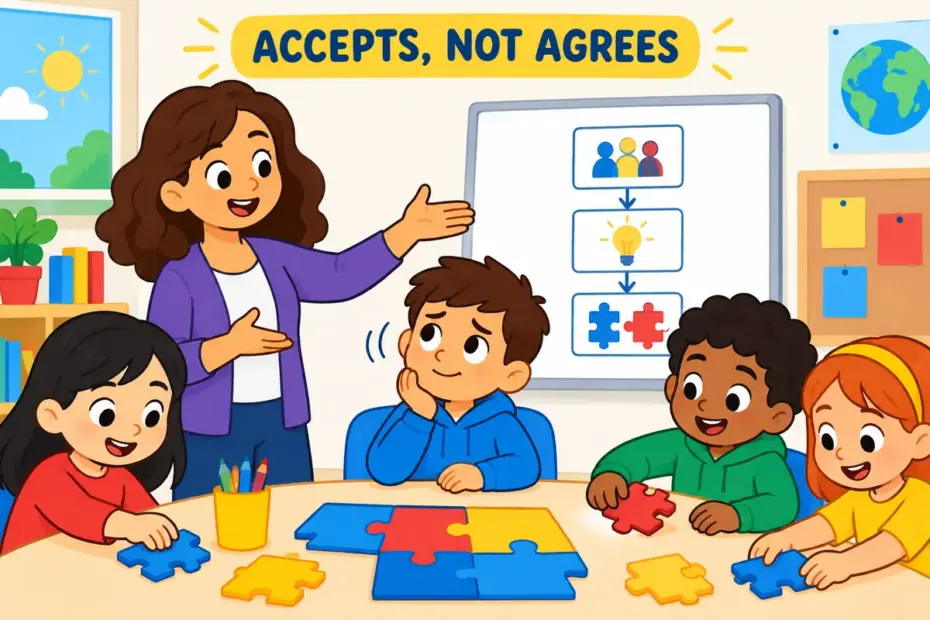
Acquiesce means to accept something or agree to it without protest, often reluctantly. To use acquiesce in a sentence, name the demand and add in or to before it: “The committee acquiesced in the plan.” The verb signals quiet acceptance rather than enthusiasm, so it rarely appears where someone is pleased.
Acquiesce at a glance
- Acquiesce is an intransitive verb; its forms are acquiesces, acquiesced and acquiescing.
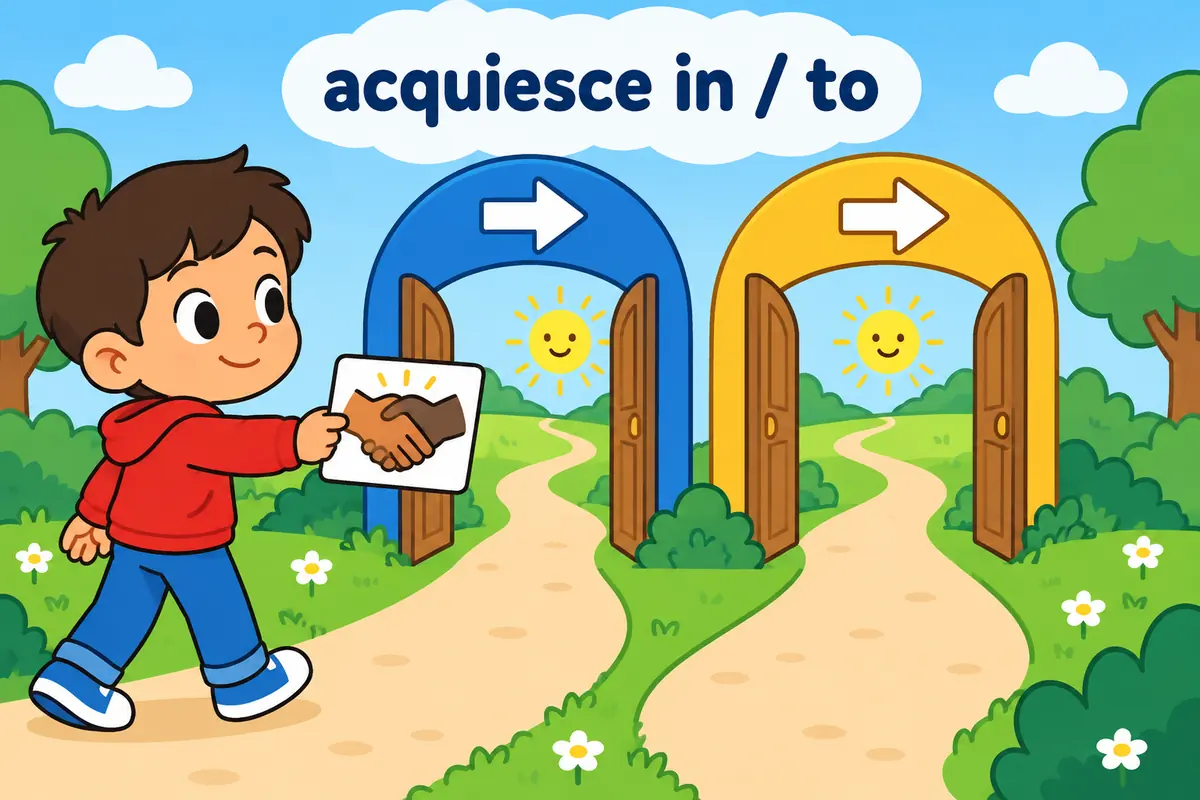
- It takes in or to before the thing accepted: acquiesce in a decision, acquiesce to a request.
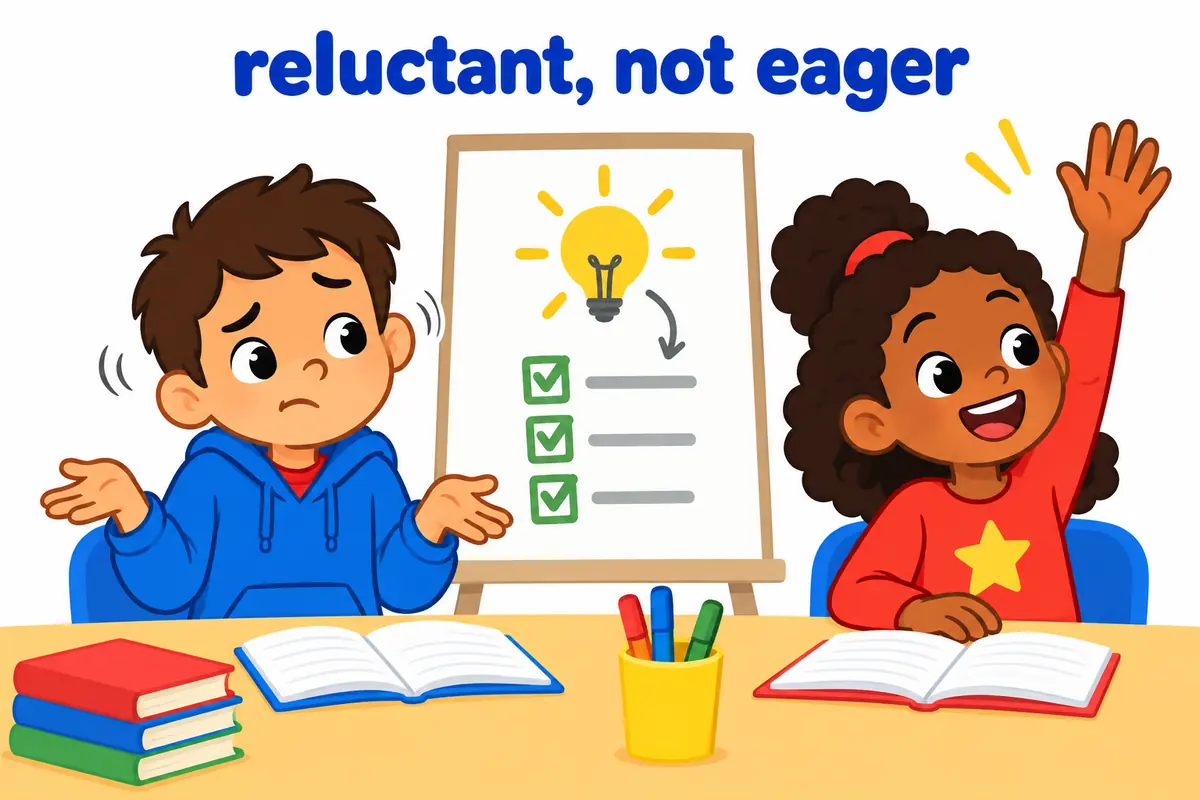
- It implies reluctant or passive agreement, not active support.
- The noun is acquiescence, and the adjective is acquiescent.
- The commonest error is giving it a direct object, as in acquiesce the plan.
What does acquiesce mean?
Acquiesce is an intransitive verb meaning to accept something quietly or agree to it without objecting. The Cambridge entry for acquiesce stresses acceptance without protest, and the Merriam-Webster entry for acquiesce adds the idea of giving in passively. To accede to a request is a close formal cousin, though accede can also mean taking up an office. Where the agreement is genuine and willing, plain agree is the honest word.
| Sense | Plain meaning | Example sentence |
|---|---|---|
| Accept quietly | Let a decision stand without objecting | The neighbours acquiesced in the new parking rules. |
| Agree reluctantly | Say yes after resistance or doubt | She acquiesced to the later deadline. |
| Submit by silence | Give way by doing nothing at all | The board acquiesced and never called a vote. |
One limitation is worth stating plainly. Acquiesce never means to support or to celebrate. A team that acquiesces in a decision has stopped resisting it, not endorsed it, and a plainer verb such as agree or yield to demands will often be clearer.
How do you use acquiesce in a sentence?
Because acquiesce is intransitive, it never takes a direct object; the thing accepted arrives after in or to, or after a gerund. Five patterns cover almost every real sentence, and the two prepositions are not fully interchangeable.
| Pattern | Example | What it signals |
|---|---|---|
| acquiesce in + noun | The staff acquiesced in the rota change. | Accepts a decision or situation already made. |
| acquiesce to + noun | The mayor acquiesced to the petition. | Gives way to a request or a demand. |
| acquiesce in + gerund | They acquiesced in moving the office. | Names the action accepted, not the person. |
| acquiesce without + noun | He acquiesced without a single complaint. | Emphasises the absence of protest. |
| refuse to acquiesce | The union refused to acquiesce in the cuts. | The negative, common in news and politics. |
Acquiesce in a sentence: examples across contexts
Acquiesce keeps its note of reluctant acceptance wherever it appears; only the setting changes. The nine sentences below move from a classroom to a political report, and each one names what was quietly accepted.
| Context | Example sentence | Why this works |
|---|---|---|
| Classroom | The pupils acquiesced in the new seating plan. | A small everyday decision shows the quiet acceptance clearly. |
| Workplace email | We have acquiesced to the revised deadline under protest. | The added phrase exposes the reluctance. |
| News report | The senate acquiesced in the emergency budget. | Formal bodies and weighty decisions suit the verb. |
| Legal writing | The tenant acquiesced in the rent review. | Signals conduct that may affect a later claim. |
| Political commentary | Voters acquiesced to higher fees with little debate. | Names the public and the unpopular measure. |
| Family conversation | Dad acquiesced and let us choose the film. | The first person shows the everyday version of the verb. |
| Academic writing | The committee acquiesced in the reform without endorsing it. | Draws the line between accepting and approving. |
| Diary or memoir | I acquiesced to the plan and regretted it for years. | The regret confirms the reluctance the word carries. |
| Sports writing | The club acquiesced in the transfer ruling. | An organisation gives way to a governing body. |
Notice that only two sentences use the first person. The verb prefers the distance of reporting, which is why it clusters in formal prose.
Acquiesce vs agree
Acquiesce and agree are close in meaning and far apart in feeling. To agree with the plan is to share the decision, while to acquiesce is merely to stop resisting it. To capitulate under pressure is stronger again, because it implies defeat rather than quiet acceptance.
| Attribute | acquiesce | agree |
|---|---|---|
| Core meaning | Accept without protest | Share the same view or intention |
| Enthusiasm | None to slight | Neutral to positive |
| Grammar | Intransitive; takes in or to | Can be transitive: agree a price |
| Typical subject | A body, a group or a person under pressure | Anyone, in any register |
| Register | Formal and written | Neutral, spoken and written |
Verdict: choose acquiesce when someone yields without enthusiasm, and agree when the same view is genuinely shared.
Word forms and grammar of acquiesce
Acquiesce inflects regularly, and the noun acquiescence appears in legal and political writing. The adjective keeps the same quiet tone, as the table shows.
| Form | Part of speech | Example |
|---|---|---|
| acquiesce | verb, base form | Countries rarely acquiesce in a border change. |
| acquiesces | verb, third person singular | She acquiesces whenever the argument ends. |
| acquiesced | verb, past and past participle | The manager acquiesced in the delay. |
| acquiescing | verb, present participle | He is acquiescing rather than agreeing. |
| acquiescence | noun, uncountable | Her acquiescence surprised the whole team. |
| acquiescent | adjective | An acquiescent committee changed nothing. |
The noun has no plural in ordinary use, so write the board’s acquiescence, never acquiescences.
Common mistakes with acquiesce
The same five slips appear in student writing each term, and most come from treating the verb as if it were transitive. Each item shows the wrong sentence, the repair and the rule behind it.
- Incorrect:
The council acquiesced the proposal.Correct: The council acquiesced in the proposal. Rule: Acquiesce is intransitive, so it needs in or to before the noun. - Incorrect:
She acquiesced the request immediately.Correct: She acquiesced to the request immediately. Rule: With requests and demands, to is the natural preposition. - Incorrect:
He was very acquiesce about the change.Correct: He was very acquiescent about the change. Rule: After a linking verb use the adjective acquiescent, not the verb. - Incorrect:
They acquiesced to increase the fee.Correct: They acquiesced in increasing the fee. Rule: After the preposition use a noun or gerund, not a bare infinitive. - Incorrect:
The team acquiesced with delight.Correct: The team agreed with delight. Rule: Delight contradicts the reluctance that acquiesce implies.
Practice using acquiesce
Work through the six items, then read the reasoning rather than only the answer.
- Fill the gap: The residents finally ______ in the decision to close the lane.
- Choose the better word: Everyone shared the plan happily, so the board (agreed / acquiesced).
- Correct the error: She acquiesced the holiday dates without argument.
- Build a sentence: use acquiesce to about a pupil who gives way to a friend’s choice of game.
- Spot the register: which belongs in a formal report — the union acquiesced in the new terms, or the union just went along with it?
- Rewrite with the noun: The staff acquiesced in the change. Use acquiescence instead.
Answers
- acquiesced — in introduces the decision that was accepted.
- agreed — happy, shared support is agreement, not reluctance.
- She acquiesced to the holiday dates — to fits a request, and the verb needs a preposition.
- Model answer: Sam acquiesced to his friend’s choice of game and said nothing more.
- The union acquiesced in the new terms — a formal report prefers the single precise verb to the phrase went along with.
- The staff showed their acquiescence in the change — the uncountable noun needs a verb such as showed.
The bottom line
Use acquiesce in a sentence when someone accepts a decision quietly and without enthusiasm, and always give the verb in or to before the thing accepted. The two nuances that decide most sentences are these: acquiesce is intransitive, so it never takes a direct object, and it signals reluctant acceptance rather than support. Where the agreement is willing, agree is the plainer and more accurate verb.
Frequently asked questions about acquiesce
Is acquiesce a formal word?
Acquiesce sits in formal and written English. Reports, legal summaries and literary prose use it, while casual conversation prefers go along with or give in. Saying I acquiesced to the plan in a text message would sound stiff, though the same words fit a formal minute or a novel.
Does acquiesce always mean agreeing against your will?
Not quite. Acquiesce always means agreeing without protest, and reluctance is usually present, but the word does not require outright opposition. A tired committee may acquiesce because it sees no better option, and a person may acquiesce out of politeness. What the verb never suggests is enthusiasm or active campaigning.
What preposition follows acquiesce?
Both in and to are correct, with a small difference in flavour. Acquiesce in is the older and more formal pairing and fits decisions and situations, as in the board acquiesced in the merger. Acquiesce to is common with requests and demands, as in she acquiesced to his plea.
What is the noun form of acquiesce?
The noun is acquiescence, meaning the act of accepting something quietly, and the adjective is acquiescent. The noun is uncountable, so write her acquiescence, not an acquiescence. Both forms appear in the same formal registers as the verb, which is why a single page can carry the whole family.
Have you ever found yourself in a situation where you reluctantly agree or give in to a request? This act of passive acceptance is known as “acquiesce.”
When you acquiesce, you are essentially yielding to someone else’s wishes without putting up resistance. It can involve giving in to pressure, persuasion, or simply following along with a decision you may not fully agree with.
7 Examples Of Acquiesce Used In a Sentence For Kids
- Sometimes we have to listen to our parents and _acquiesce_ to their rules.
- Let’s acquiesce to our teacher’s instructions and work quietly.
- It’s important to acquiesce when someone is speaking to show respect.
- When playing a game, we should all acquiesce to the rules to make it fair.
- We can show kindness by choosing to acquiesce and share our toys with friends.
- We should acquiesce to our elders when they give us advice.
- It’s good to learn how to acquiesce and cooperate with others.
14 Sentences with Acquiesce Examples
- Acquiesce to the professor’s request to submit your assignment on time.
- It is important to acquiesce to the rules and regulations set by the college.
- Don’t be afraid to acquiesce to seeking help from your seniors when needed.
- You should acquiesce to the feedback given by your peers to improve your work.
- Learn to acquiesce to the fact that not all exams will be easy.
- Make sure to acquiesce to the dress code requirements for college events.
- Acquiesce to participating in extracurricular activities to enhance your college experience.
- It’s essential to acquiesce to the schedules set for exam preparations.
- College students should acquiesce to the technology requirements for their coursework.
- Remember to acquiesce to following ethical practices in academic work.
- Acquiesce to getting involved in community service projects for holistic development.
- Find a way to acquiesce to time management techniques that work best for you.
- It’s important for college students to acquiesce to seeking mental health support when needed.
- Make an effort to acquiesce to diverse opinions and perspectives in group discussions.
How To Use Acquiesce in Sentences?
To use the word Acquiesce in a sentence, simply follow these steps:
-
Understand the meaning of Acquiesce: It means to accept or comply with something passively without protest.
-
Think of a situation where someone is agreeing to something reluctantly or without voicing their objections.
-
Formulate a sentence that clearly demonstrates the concept of Acquiesce. For example: “Despite her disagreement with the decision, she chose to acquiesce and follow along with the group.”
-
Make sure the sentence conveys the idea of accepting or agreeing to something without pushing back or resisting.
-
Ensure that the context in which you are using the word Acquiesce makes sense and accurately reflects its definition.
-
Practice using the word Acquiesce in different sentences to become more comfortable with incorporating it into your vocabulary.
Remember that the key to successfully using a new word like Acquiesce is to grasp its meaning and apply it correctly in context. By following these steps and practicing, you can feel confident in incorporating Acquiesce into your everyday language.
Conclusion
In conclusion, acquiesce means to accept or comply with something without protest or resistance. Through the examples provided, it is clear that acquiescing often involves giving in to a request or yielding to a demand without objection. Whether out of agreement, submission, or a lack of desire to confront, acquiescence can be seen in various contexts, from social interactions to political decisions. While acquiescing can sometimes lead to peaceful resolutions and harmony, it is important to also consider the implications of not asserting one’s own beliefs and standing firm in the face of challenges. Balancing the act of acquiescing with standing up for oneself is vital in maintaining personal integrity and ensuring that individual values are not compromised.


