Chattel in a Sentence: Meaning, Grammar & Examples
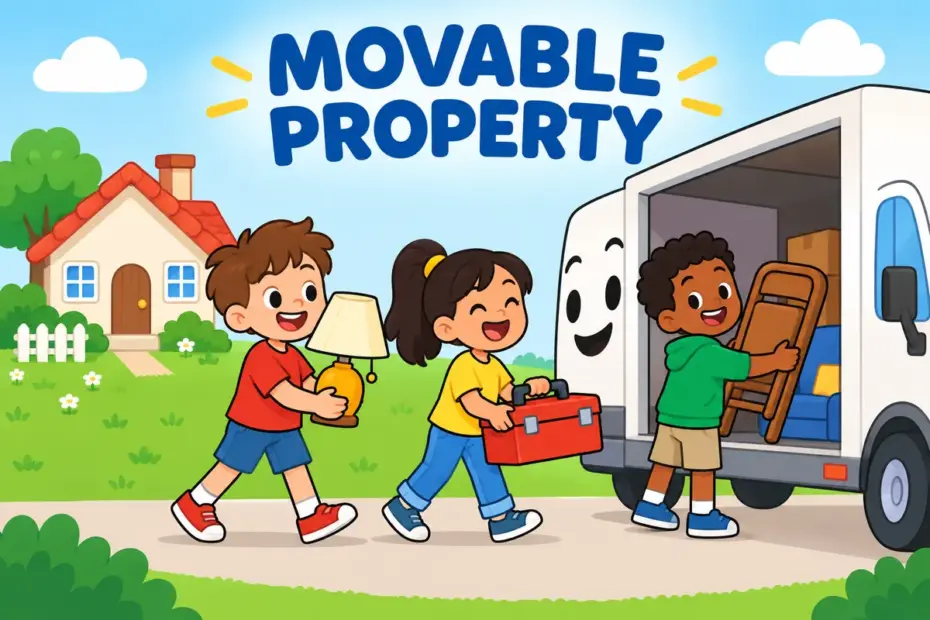
Chattel is a noun for an item of movable personal property, the kind of possession a person could carry away: furniture, tools, a bicycle or livestock. In a sentence it usually appears in the plural with a determiner, as in “The auction sold every chattel in the house.”
Chattel at a glance
- Chattel is a countable noun; the plural chattels is the form most legal writing uses.
- It names movable personal property, never land or buildings.
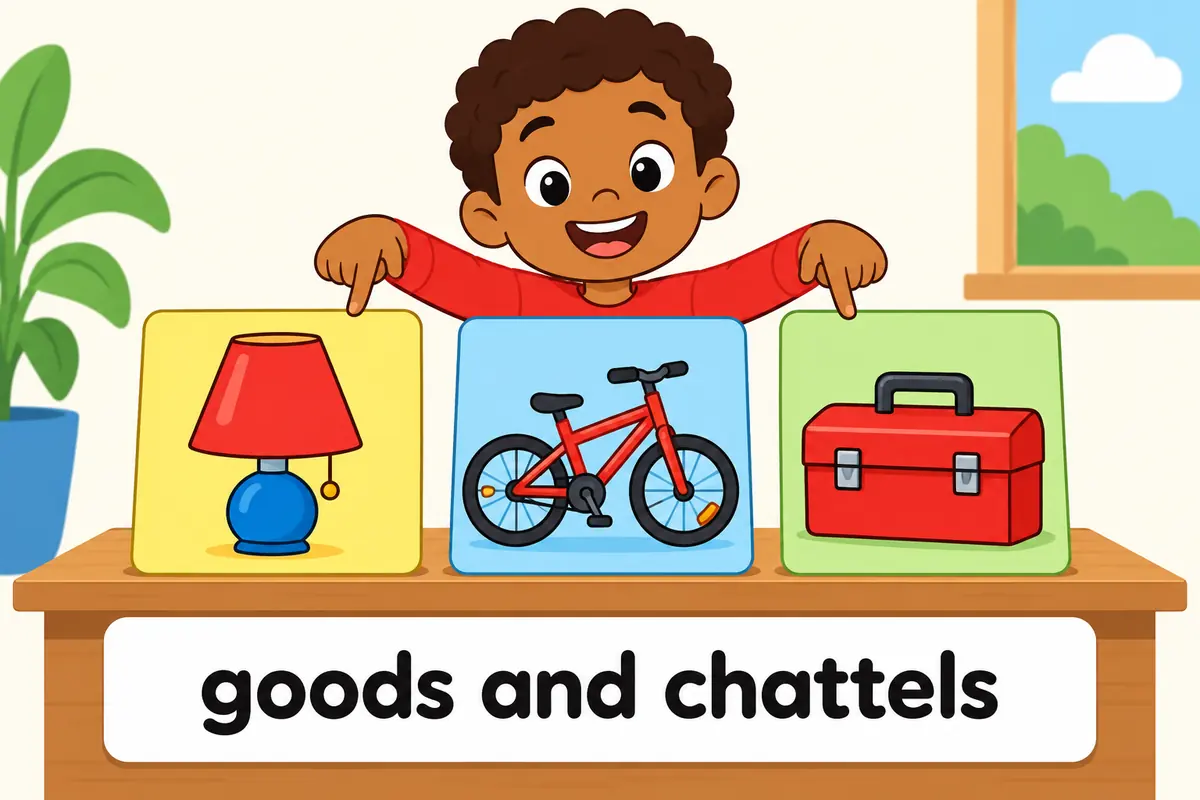
- The fixed phrase goods and chattels is the one readers meet outside law.
- Chattel belongs to legal, historical and formal writing rather than everyday speech.
- The commonest error is spelling it chattle, or confusing it with cattle.
What does chattel mean?
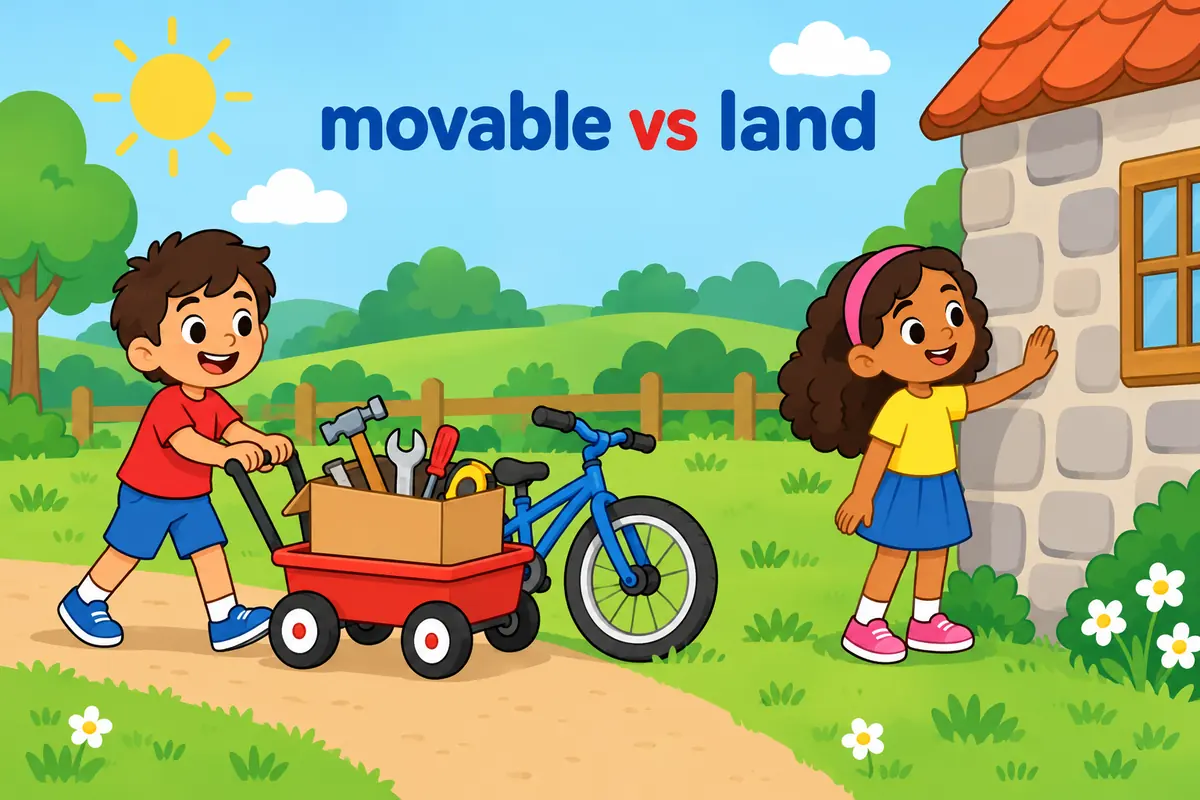
Chattel is a noun meaning an item of movable personal property, as distinct from land and buildings, which the law calls real property. The Cambridge entry for chattel and the Merriam-Webster entry for chattel both stress that the defining feature is movability: if the thing can be moved, it is a chattel; if it cannot, it is real property. The word has three related uses, and the plural covers the widest one.
| Sense | Plain meaning | Example sentence |
|---|---|---|
| One movable possession | A single item of personal property | The ring was listed as a chattel in the will. |
| Chattels, plural | The whole category of movable goods | The lease covers fixtures but not the chattels. |
| Historical, people as property | A dated legal use in slavery | Historians describe the plantation as a system of chattel slavery. |
One limitation is worth stating plainly. Chattel is a technical legal term, so it is the wrong word for a casual conversation about someone’s belongings. It also never covers land, a house or a fixed building, and its oldest sense, in which human beings were treated as property, belongs to history and should be handled with care.
How do you use chattel in a sentence?
Treat chattel as a countable noun and decide first whether you mean one item or the whole category. Five patterns cover almost every natural sentence, and the fixed legal phrase is the one that survives in ordinary prose.
| Pattern | Example | What it signals |
|---|---|---|
| a chattel | The dealer sold each chattel separately. | One countable item of movable property. |
| the chattels | The bank valued the chattels at forty thousand pounds. | The plural names the whole set of movables. |
| goods and chattels | The estate passed with all its goods and chattels. | A fixed legal pairing for personal possessions. |
| chattel + noun | They signed a chattel mortgage on the machinery. | Attributive use naming the legal instrument. |
| personal chattels | Personal goods and chattels were stored off site. | Distinguishes movables from the building itself. |
The noun is rarely used as a countable singular outside law, because writers usually mean the category rather than a specific object, and the plural carries that meaning naturally. In older contracts the phrase chattels real names leasehold interests, a use that survives in legal history but seldom appears in modern drafting. A writer who needs the singular will usually add a determiner, as in a chattel of little value, to keep the noun countable.
Chattel in a sentence: examples across contexts
Chattel keeps one precise legal meaning wherever it appears, which is why it concentrates in contracts, wills and history. The ten sentences below move from a household inventory to a court filing, and each keeps the property movable.
| Context | Example sentence | Why this works |
|---|---|---|
| Household inventory | The movers listed every chattel before loading the van. | A concrete task makes the legal noun easy to picture. |
| Will and probate | She left her jewellery and other chattels to her niece. | The plural covers a mixed set of belongings. |
| Business contract | The buyer acquired the plant and its chattels as one lot. | Separates machinery from the land it stands on. |
| Banking | The loan was secured against the farm’s chattels. | Shows movables used as security. |
| News report | Officers recovered stolen chattels worth thousands. | A short, formal way to say movable goods. |
| Legal writing | The tenant may remove fixtures but not the landlord’s chattels. | Draws the line that matters in disputes. |
| History essay | A serf could hold chattels even when tied to the land. | Uses the term in its social-historical setting. |
| Insurance | Cover for household chattels rarely includes the roof. | Shows what the category excludes. |
| Museum essay | Each chattel was catalogued by material, not by owner. | Treats objects as the unit of record. |
| Conversation | Lawyers say chattel where the rest of us say belongings. | Names the register gap directly. |
In every row the thing can be carried away. The moment a sentence includes a house or a field, chattel stops being the right term. The distinction also decides which law applies, because a dispute over chattels follows the rules for movable goods while a dispute over land follows the law of real property.
Chattel vs property
Chattel and property are not rivals; chattel is one kind of property. Property is the wider legal category that includes land, and chattel is the part of it that can be moved. The distinction turns on one test: can the thing be carried away?
| Attribute | chattel | property |
|---|---|---|
| Scope | Movable personal possessions only | Movables and land alike |
| Core test | Can it be moved? | Is it owned or legally held? |
| Typical examples | Furniture, tools, livestock, shares | Houses, fields, and all of the above |
| Opposite term | Real property | Nothing; property is the umbrella |
| Register | Technical and legal | General and everyday |
| Common slip | Using it for a building | Using it as if it excluded land |
Verdict: choose property when you mean ownership in general, and choose chattel only when you specifically mean the movable part of it. A warehouse full of goods holds chattels, but the warehouse itself is real property. Where the movable thing is traded in bulk, commodity is the more usual word; where it is held for what it is worth, asset fits.
Word forms and grammar of chattel
Chattel is a noun with almost no family. It has a plural, an attributive use and one historical compound, and it has no verb or adjective of its own. The table also marks the form learners invent by mistake.
| Form | Part of speech | Example |
|---|---|---|
| chattel | noun, singular | The violin was his only chattel of value. |
| chattels | noun, plural | All the chattels were sold by noon. |
| chattel | attributive noun | They signed a chattel mortgage. |
| chattel real | historical noun | A lease was once called a chattel real. |
| chattle | non-standard | Write chattel, never chattle. |
Because the noun has no verb form, a sentence such as they chattelled the goods is never correct. The movable item has to be named with a different word altogether. Many readers meet the word only in the fixed phrase goods and chattels, which is worth learning as a single unit, since it gathers a whole household of movable belongings into four words and keeps the legal flavour without listing every object.
Common mistakes with chattel
- Incorrect:
The farmhouse is his most valuable chattel.Correct: The farmhouse is his most valuable property. Rule: A chattel must be movable, and a house cannot be carried away. - Incorrect:
They chattled the tools to the next owner.Correct: They sold the chattels to the next owner. Rule: Chattel is a noun only, so it never works as a verb. - Incorrect:
The field was full of chattle.Correct: The field was full of cattle. Rule: Cattle are animals; chattel is the legal term for movable goods. - Incorrect:
Every chattels were listed.Correct: Every chattel was listed. Rule: Every takes a singular noun, so the plural chattels needs all or the. - Incorrect:
Personal chattel goods were stored.Correct: Personal chattels were stored. Rule: Chattel already means personal property, so chattel goods repeats the idea.
Practice using chattel
Work through the six items, then check the reasoning rather than only the answer.
- Fill the gap: The will bequeathed the house but left the ______ to the charity.
- Choose the better word: The orchard behind the cottage is (a chattel / real property).
- Correct the error: The movers chattelled the piano down the stairs.
- Build a sentence: use goods and chattels about the contents of a rented flat.
- Spot the register: which belongs in a lease — the landlord’s chattels remain on site, or the landlord’s stuff stays put?
- Rewrite in the plural: The single chattel was catalogued. Use chattels instead.
Answers
- chattels — the movable contents form the plural category, while the house is real property.
- real property — the orchard is attached to the land, so it is not a chattel.
- The movers moved the piano down the stairs — chattel is a noun and has no verb form.
- Model answer: The tenant agreed that all goods and chattels belonged to the landlord.
- The landlord’s chattels remain on site — a lease keeps the technical term.
- The chattels were catalogued — the plural takes a plural verb.
The bottom line
Use chattel in a sentence to name a movable item of personal property, and remember that the plural chattels usually refers to the whole category of such belongings. The two facts that decide most sentences are these: the defining test is whether the thing can be carried away, and the word belongs to legal and historical writing rather than casual talk. If the thing is land or a building, property is the accurate term instead.
Frequently asked questions about chattel
Is chattel singular or plural?
Chattel is a countable noun, so the singular names one movable item and the plural chattels names several or the whole category. Legal writing prefers the plural because it usually refers to a collection of belongings rather than a single object, and the plural takes a plural verb.
What is the difference between chattel and cattle?
The two words look alike but name different things. Cattle are the cows and bulls kept on a farm, while chattel is the legal term for movable personal property of any kind. Only one of them belongs in a contract, and only one belongs in a field.
Can chattel mean land?
No. By definition a chattel is movable personal property, and land, houses and buildings are its opposite, which lawyers call real property. If a thing cannot be carried away, calling it a chattel is an error, no matter how valuable the object is.
Why is the word chattel sensitive?
Chattel also appears in the historical phrase chattel slavery, where human beings were legally treated as movable property. That use belongs to historical and scholarly writing about that system of slavery, and it is not a casual label to apply to anything else today.