Didactic in a Sentence: Meaning & Examples
Didactic describes something designed to teach, and you use didactic in a sentence to mark a lesson, a style or a tone. A didactic novel guides its readers toward a moral: “The story is didactic without ever becoming dull.” The adjective can praise clear instruction or criticise a lecturing manner.
Didactic at a glance
- Didactic is an adjective; its adverb is didactically and its noun is didacticism.
- The dominant pattern is a didactic plus a noun, as in a didactic poem or a didactic tone.
- The word can be neutral praise or clear disapproval, and the context decides which.
- Common collocations are didactic literature, didactic purpose and didactic method.
- The usual learner error is assuming didactic is always an insult.
What does didactic mean?
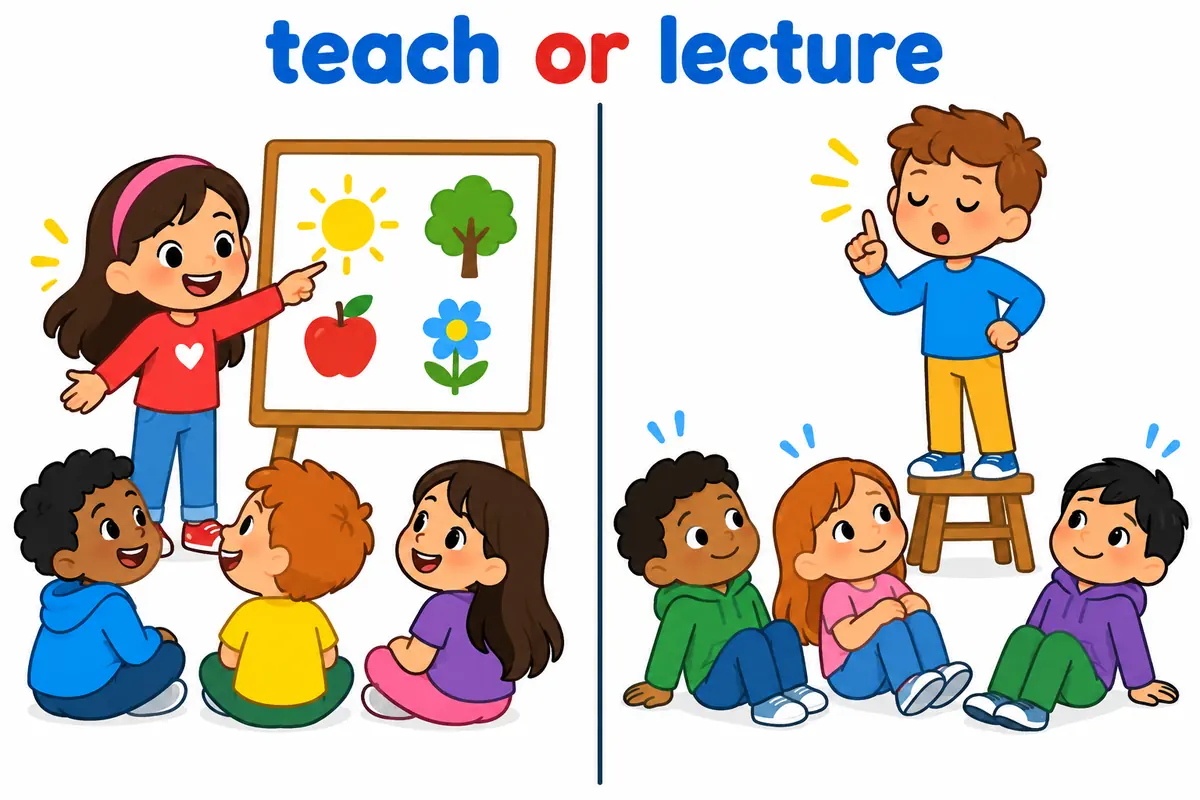
Didactic is an adjective meaning intended to teach or instruct, and, in a disapproving use, too eager to teach or moralise. The Cambridge entry for didactic records the instructional sense first and the lecturing sense second, and the order matters: the neutral sense names a purpose, while the negative sense names an effect on the audience. A didactic label, a didactic manual and a didactic exhibition are neutral; a didactic tone or a didactic speech usually signals that the listener felt talked down to. Where the aim is simply to pass on facts, educational programmes and informative talks carry no hint of lecturing. Didactic is the wrong choice when you mean boring, because it names an intent to teach rather than a failure to entertain.
The split between the two senses is really a split in the audience’s patience. A reader who wants open instruction hears didactic as a compliment, while a reader who wants a lesson folded into a story hears the same word as a complaint. That is why a single sentence can label the same book generous and preachy, depending on who is reading. Writers who want a neutral tone usually reach for educational or instructive, and writers who want to signal a fault choose didactic on purpose.
| Sense | Plain meaning | Example sentence |
|---|---|---|
| Instructional (neutral) | Intended to teach | The museum built a didactic display for children. |
| Moralising (disapproving) | Too keen to instruct or preach | His didactic tone annoyed the whole panel. |
| Literary | Shaped to carry a lesson | The fable is didactic but warm. |
How do you use didactic in a sentence?
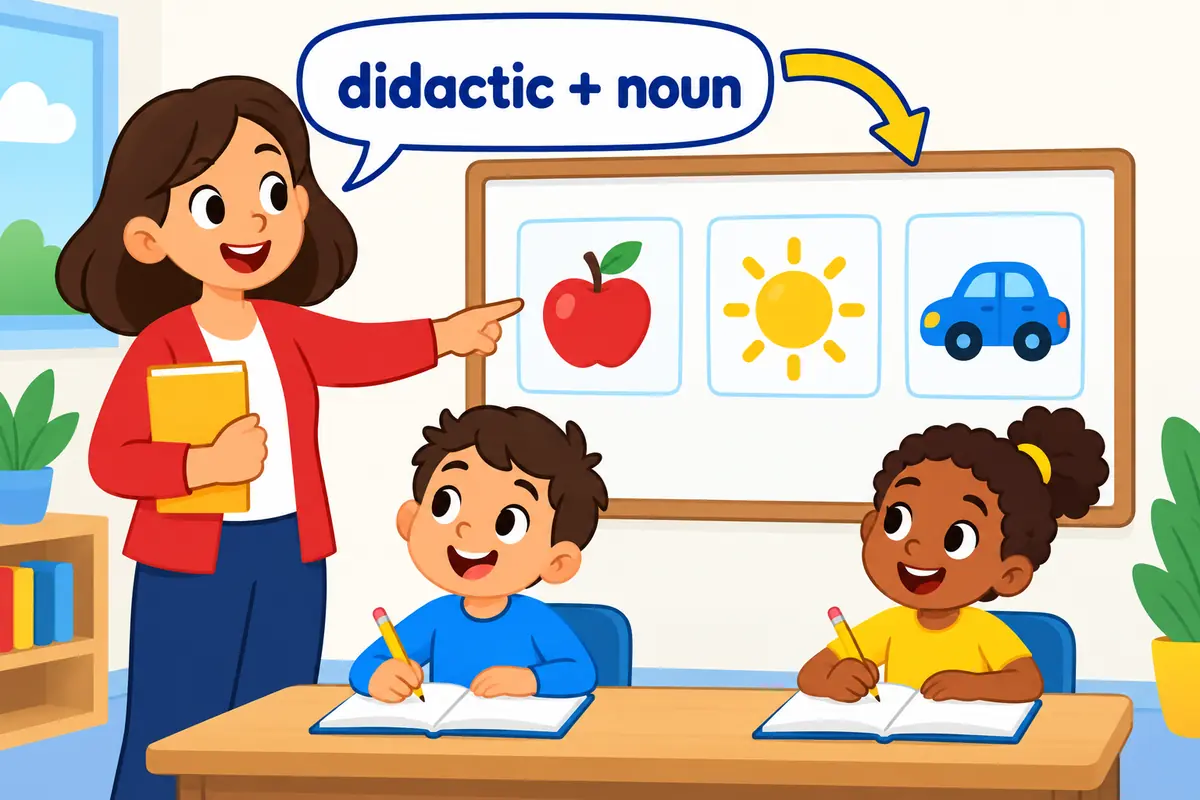
Didactic works in two positions. It sits before a noun to label a purpose, or it follows a linking verb to judge how something teaches.
| Pattern | Example | What it signals |
|---|---|---|
| a didactic + noun | a didactic poem | Labels purpose or manner. |
| be + didactic | The ending is didactic. | Judges how the work instructs. |
| didactic + about + noun | He was didactic about grammar. | Names the subject lectured on. |
| more or less + didactic | The rewrite is less didactic. | Compares degrees of lecturing. |
| didactic + in + noun | didactic in style and purpose | Locates the quality precisely. |
Word order carries the judgment. Put didactic before the noun when you are describing a thing’s purpose, as in a didactic film, and put it after be when you are judging the effect, as in the film is didactic. The second pattern usually sounds critical, because it reports how the audience felt rather than what the maker intended.
Didactic in a sentence: examples across contexts
The adjective changes colour with its subject, so the same word can praise a manual and criticise a speech.
| Context | Example sentence | Why this works |
|---|---|---|
| Academic writing | The curriculum takes a didactic approach to grammar. | Names a teaching method neutrally. |
| Book review | The novel turns didactic in its final chapter. | Signals a shift toward moralising. |
| Workplace email | Let us keep the briefing informative rather than didactic. | Requests a tone, not different content. |
| Conversation | He gets didactic whenever politics comes up. | Reports a lecturing habit. |
| Museum label | The exhibit is didactic and hands-on. | Praises clear teaching. |
| Sermon or speech | A didactic sermon explains doctrine point by point. | Describes the structure. |
| Film criticism | The film is didactic without being smug. | Balances instruction and warmth. |
| Parenting advice | Constant reminders can sound didactic. | Warns about tone rather than content. |
| Technical manual | The guide’s didactic style suits first-time users. | Justifies simple, step-by-step instruction. |
| Debate | Her didactic answers won no allies. | Criticises manner, not facts. |
| Study guide | Each chapter opens with a didactic summary. | Describes a deliberate teaching device. |
| Literary essay | Critics call the ending didactic rather than moving. | Contrasts instruction with emotion. |
Didactic vs pedagogical
Didactic and pedagogical both come from the world of teaching, but they answer different questions. Didactic describes the intention or manner of a thing, while pedagogical describes the theory and method behind pedagogical training. A didactic comic teaches on purpose; a pedagogical choice is a decision about how teaching is planned and assessed. When instruction tips into scolding, preachy advice or moralizing lectures is the sharper, plainer word.
| Attribute | Didactic | Pedagogical |
|---|---|---|
| Core question | Does it set out to teach? | How is teaching designed? |
| Typical pairing | a didactic novel, tone or display | pedagogical training, research or approach |
| Tone | Can turn negative, meaning preachy | Neutral and technical |
| Register | General and literary | Academic and professional |
| What it judges | Intent and manner | Method and theory |
| Common confusion | Calling any lesson didactic | Using pedagogical for mere teaching |
Use didactic for the intention to instruct or for a lecturing manner, and pedagogical for the professional study of how teaching works. The two are not rivals, because one comments on purpose and the other on method.
The test is easy to apply. If you can ask what method or theory is being discussed, the right word is pedagogical; if you can ask what lesson a thing is trying to deliver, the right word is didactic. The first belongs in a staff handbook, and the second belongs in a review or a classroom note.
Word forms and grammar of didactic
The family keeps the root and changes the job. The abstract noun didacticism names the quality of teaching or moralising, often as a criticism of a novel or a speech. The adverb didactically describes how something is said, as in she explained the rule didactically, and the rare noun didact names a person who likes to teach. Only didactic is the common adjective, so a sentence needs to place it before a noun or after a linking verb.
| Form | Part of speech | Example |
|---|---|---|
| didactic | adjective | a didactic tone |
| didactically | adverb | She spoke didactically. |
| didacticism | noun | The novel’s didacticism divided critics. |
| didact | noun (rare) | He was a born didact. |
The forms also differ in force. Didactically is rare and formal, so it stands out in a sentence, while didacticism is common in literary criticism and almost always implies that the teaching felt heavy. A plain rewrite usually swaps didacticism for its message, as in the novel’s message divided critics, which sounds less technical and more natural.
Common mistakes with didactic
- Incorrect: The comedy was didactic and made us laugh all night. Correct: The comedy was clever and made us laugh all night. Rule: didactic names an intent to teach, so it clashes with pure entertainment.
- Incorrect: His didactic tone was warm and informal. Correct: His didactic tone was formal and instructive. Rule: didactic usually pairs with a lecturing manner, not a casual one.
- Incorrect: The manual is very pedagogical; it shows each step. Correct: The manual is very didactic; it shows each step. Rule: didactic describes something that teaches, while pedagogical describes the method behind teaching.
- Incorrect: The event was didactic of science. Correct: The event was didactic about science. Rule: the adjective takes about or a noun, never of.
- Incorrect: She wrote a didacticism novel. Correct: She wrote a didactic novel. Rule: didacticism is the noun, so it cannot modify another noun.
- Incorrect: Didactic means unclear. Correct: Didactic means intended to teach. Rule: the word concerns instruction, not confusion.
- Incorrect: The lecture was didacticism. Correct: The lecture was didactic. Rule: didacticism is a noun, so it cannot follow was as a description of the lecture itself.
Practice using didactic
- Fill in the blank: The children’s guide is ______ but never dull.
- Fill in the blank: His ______ manner made the briefing feel like a lecture.
- Correct the error: The workshop was very pedagogical and taught us to code.
- Choose the better word: The team discussed the (didactic / pedagogical) theory behind the new syllabus.
- Build a sentence: use didactic before a noun to describe a museum display.
- Spot the register: which sentence belongs in a formal report, “He lectured us” or “His remarks were didactic”?
Answers
- didactic, because it names the guide’s teaching purpose.
- didactic, because the manner felt like instruction.
- Change pedagogical to didactic: the workshop taught, so it was didactic.
- pedagogical, because the theory of teaching is the subject.
- Model answer: The exhibit is didactic and easy for children to follow.
- The report sentence is formal; he lectured us is conversational.
The bottom line
Didactic marks something that sets out to teach, so you use didactic in a sentence to name a purpose or to comment on a lecturing manner. It is neutral before words like display, poem and manual, and faintly critical before tone or speech. If the aim is only to share facts, educational and informative are safer, and if the quality is method rather than intent, choose pedagogical. Context, not the word itself, decides whether the reader hears praise or complaint.
Frequently asked questions about didactic
Is didactic always a criticism?
No. The neutral sense simply means intended to teach, which is why didactic material, a didactic label and a didactic exhibition are all ordinary, positive phrases. The critical sense appears when the teaching feels relentless, as in a didactic tone or a didactic speech. Context decides which reading applies.
Is didactic the same as educational?
They overlap but differ in focus. Educational describes anything to do with learning, while didactic stresses a deliberate intention to instruct. A museum can be educational because children learn there by accident, but it is didactic only when the design sets out to teach a specific lesson, message or skill.
Can a person be called didactic?
Yes, and it usually criticises the way the person talks rather than their knowledge. A didactic colleague explains, corrects and moralises even when nobody asked. The label is common in reviews of teachers, managers and public speakers, where it warns that the delivery has turned into a lecture instead of a conversation.
What is the noun form of didactic?
The main noun is didacticism, meaning the quality of being instructive or moralising, and it often carries disapproval in literary criticism. A rarer noun, didact, names a person who likes to teach. If you need something neutral, use teaching or instruction instead, because didacticism tends to imply that the lesson was heavy.