Yea vs Yeah: Which One Should You Use?
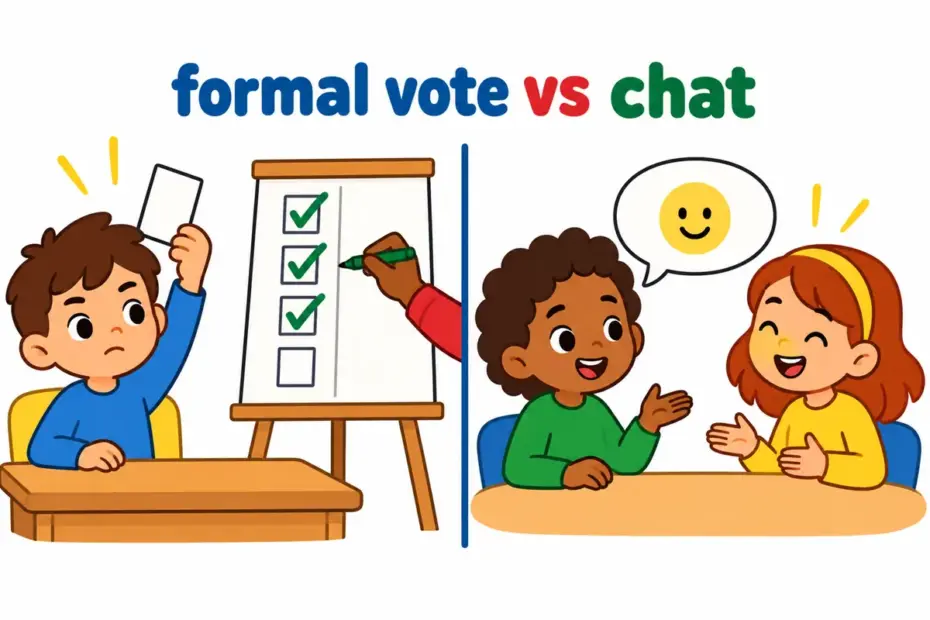
Yea vs yeah comes down to register: yea is the formal yes used in votes and older prose, while yeah is the everyday spoken yes that dominates conversation. Choose yea for a recorded vote or a deliberately archaic tone, and choose yeah everywhere you would simply say yes aloud.
Yea vs yeah at a glance
- Yea is a formal yes and an affirmative vote; it is also the older spelling of yes.
- Yeah is the casual spoken yes, an informal variant used in everyday conversation.
- Yea survives mainly in voting, debates, minutes and deliberately archaic writing.
- Yeah belongs to speech, text messages, dialogue and casual online posts.
- The commonest error is writing yea when the everyday yeah is meant.
- Neither word is a typo for the other; the difference is formality and setting.
What do yea and yeah mean?
Yea is a formal or literary way of saying yes, and in a meeting it is also a countable vote in favour; yeah is the relaxed spoken yes that fills casual conversation. The Cambridge entry for yea and the Cambridge entry for yeah show the split clearly: one word belongs to the written record, the other to the voice. For a full set of models, the guide to how yeah works in speech collects them in one place.
| Word | Sense | Example sentence |
|---|---|---|
| yea | A formal or literary yes | The proposal carried by fifty yeas to twelve nays. |
| yea | An affirmative vote in a meeting | When the chair called the yea, the room fell silent. |
| yeah | An informal spoken yes | Yeah, I finished the essay last night. |
| yeah | A filler signalling agreement or acknowledgement | Yeah, that makes sense now. |
One limitation is worth stating plainly. Yeah is not a careless spelling of yes that should be corrected in every text; it is the normal form in conversation, and writing yes throughout a chatty dialogue makes the speakers sound stiff. The reverse also holds: yea in a text message can read as a joke or a costume, because it belongs to votes and old books rather than to phones.
The spelling also changes how a reader hears the word. Yea lengthens the vowel and lands with a formal ring, close in sound to the cheer yay but far from it in use, while yeah is a quick, clipped syllable. Because yay is a separate word for delight, a writer who reaches for it beside yea adds a third term this pair does not need.
Yea vs yeah: the full comparison
Register is the deciding factor, and the criteria below are the ones that actually change a writer’s choice. Read the table as a set of tests: if a row points to the formal side, the answer is yea, and if it points to speech, the answer is yeah.
| Criterion | yea | yeah |
|---|---|---|
| Core meaning | A formal yes and a vote in favour | An informal spoken yes |
| Register | Formal, ceremonial or archaic | Casual and conversational |
| Typical setting | Votes, minutes, historical prose | Speech, texts, dialogue |
| Function in a vote | Counts as an affirmative vote | Never used in formal tallies |
| Modern frequency | Rare outside fixed contexts | Very common in speech |
| Common companions | yea or nay, the yeas have it | yeah right, yeah okay, oh yeah |
| Effect if swapped | Sounds theatrical in a chat | Sounds sloppy in a roll-call |
Which should you use?
Four everyday situations cover almost every real decision. Match your context to the row and follow the recommendation, because both spellings are correct words and only one of them is right for the setting.
| Situation | Choose | Why |
|---|---|---|
| Recording a formal vote | yea | The written record expects the traditional form, and yea pairs with nay. |
| Chatting with a friend | yeah | Everyday speech uses yeah, and yea would sound theatrical. |
| Writing historical dialogue | yea | The older spelling signals the period without needing a footnote. |
| Answering a question by text | yeah | Informal writing follows speech, so yeah matches the tone. |
How do you use yea and yeah in a sentence?
Both words are short and both can stand alone as answers, but their grammar differs at the edges. Yea can act as a countable noun in a vote, and yeah can act as a discourse marker that opens a turn without really answering anything. In a count of votes, a plain affirmative such as aye does the same work as yea, while casual replies such as sure as a reply overlap with yeah in tone.
| Pattern | Example | What it signals |
|---|---|---|
| yea as a standalone answer | Yea, the motion is adopted. | Formal assent delivered in a set phrase. |
| yea as a countable noun | The count was forty yeas and three nays. | A single recorded vote in a tally. |
| yeah as a standalone answer | Yeah, I can help with that. | Relaxed agreement in speech or informal writing. |
| yeah as a discourse marker | Yeah, so what happened next? | Acknowledgement that keeps the turn moving. |
Yea and yeah in a sentence: examples across contexts
The two spellings rarely share a page, so the eight sentences below deliberately place them side by side. Each one shows the setting deciding the form rather than the meaning.
| Context | Example sentence | Why this works |
|---|---|---|
| Formal meeting | The treasurer recorded twenty yeas and one nay. | Yea works as a countable noun in a tally. |
| Parliamentary report | The yeas have it, and the bill advances. | Uses the fixed formula of a recorded vote. |
| Historical novel | Yea, my lord, the messenger has returned. | A deliberate archaic tone suits the period. |
| Text message | Yeah, I will bring the tickets. | Yeah matches informal writing that follows speech. |
| Casual conversation | Yeah, that film was better than I expected. | Natural agreement in a relaxed exchange. |
| Podcast transcript | Yeah, so we tried the second approach. | Shows yeah as a discourse marker opening a new point. |
| Debate transcript | Senator, was that a yea or a nay? | Names the vote directly, as formal minutes do. |
| Online comment | Yeah right, as if that would work. | Uses the common dismissive phrase built on yeah. |
| School council | The motion failed by four yeas to nine nays. | Yea again works as the countable vote. |
| Film script | Yea, my lord, the message has arrived. | The archaic register sets a historical scene. |
| Group chat | Yeah, let us meet after lunch. | Yeah fits a quick, informal reply. |
| Sales meeting | Yeah, the numbers look strong this quarter. | Casual agreement inside a spoken workplace exchange. |
Notice that the formal examples are almost all written records, while the informal ones reproduce speech. That pattern is the clearest evidence that this is a difference of channel, not of politeness alone.
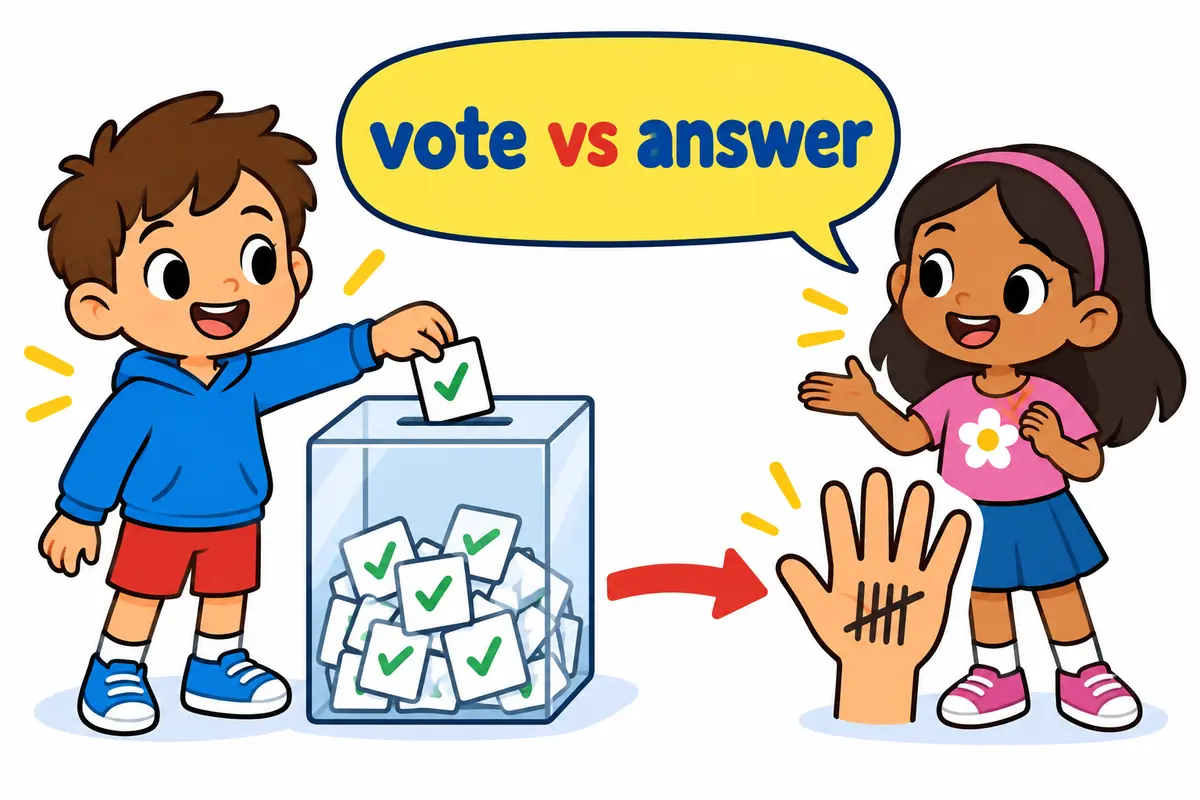
Two traps hide inside the vote sense. Minutes record yeas and nays, so the plural is yeas, never yeahs, and a single vote is a yea. The phrase yea or nay is fixed one way round, while yeah right is fixed the other. If a sentence would sit comfortably in both a roll-call and a chat, it probably wants the neutral yes instead.
Word forms and grammar of yea and yeah
Neither word inflects, but both build set phrases. Yea appears in the compound ayes and yeas in some rule books, where an older spelling of yes survives beside it, and yeah appears in the fixed dismissive yeah right. The page on the neutral yes covers the form that belongs in neither extreme.
| Form | Part of speech | Example |
|---|---|---|
| yea | adverb, formal yes | Yea, the report is accepted. |
| yea | countable noun, a vote | Four yeas were enough to pass it. |
| yeah | adverb or interjection | Yeah, I agree. |
| yeah | discourse marker | Yeah, but that is a different question. |
| yep and yup | informal variants of yeah | Yep, that is the one. |
Yea and yeah share no inflected forms, so their grammar lives in the surrounding phrase. Yea takes a plural only as the vote noun, yeas, and yeah never takes one at all. Neither word changes for tense, person or number, which is why the errors below concern register and count rather than conjugation.
Common mistakes with yea and yeah
- Incorrect:
Yea, I will meet you at six.Correct: Yeah, I will meet you at six. Rule: everyday agreement uses yeah; yea belongs to votes and archaic prose. - Incorrect:
The motion passed with thirty yeahs.Correct: The motion passed with thirty yeas. Rule: only yea is the countable noun for a vote. - Incorrect:
Yea right, as if that would work.Correct: Yeah right, as if that would work. Rule: the dismissive phrase is fixed with yeah, not yea. - Incorrect:
Yea, so what happened next?Correct: Yeah, so what happened next? Rule: the turn-opening discourse marker is always yeah. - Incorrect:
He voted yeah in the committee.Correct: He voted yea in the committee. Rule: a recorded vote takes the formal form.
Practice using yea and yeah
Work through the six items, then read the reasons, because the reason is what tells you which side of the register line a sentence belongs on.
- Fill the gap: The clerk counted forty ______ and two nays.
- Choose the better word: (Yea / Yeah), I would love to come to the party.
- Correct the error: The minutes record twenty yeahs in favour.
- Build a sentence: use yea as a countable noun about a school council vote.
- Spot the register: which fits a court transcript — the member answered yea, or the member was like yeah?
- Choose the better word: He replied (yea / yeah) to the roll-call.
Answers
- yeas — the clerk is recording votes, and only yea becomes the countable noun.
- Yeah — an invitation is everyday speech, so the casual form fits.
- The minutes record twenty yeas in favour — yeah has no countable vote sense.
- Model answer: The school council passed the plan by twelve yeas to five nays.
- the member answered yea — a formal transcript requires the recorded form.
- yea — a roll-call is a formal tally, not a casual exchange.
The bottom line
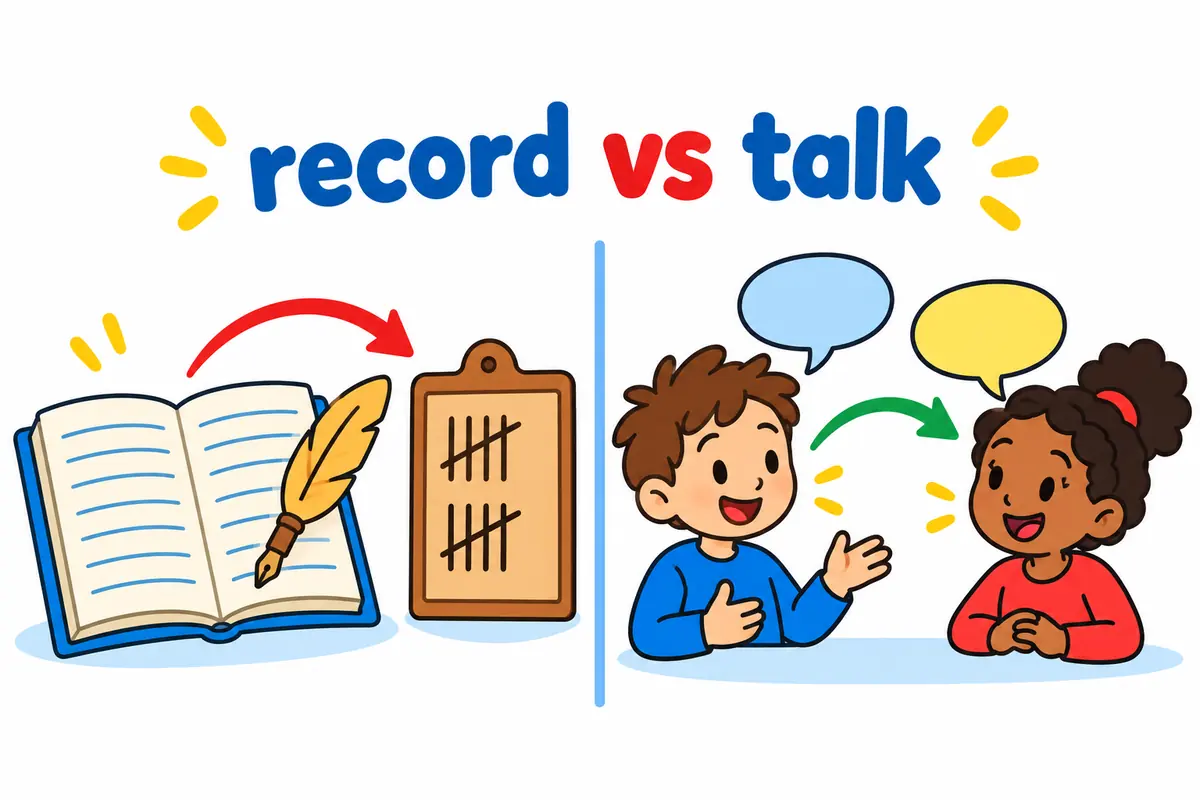
Choose yea vs yeah by setting rather than by taste: use yea in a vote, a minute or a deliberately archaic line, and use yeah in speech, texts and casual dialogue. The two nuances that decide most sentences are that only yea works as a countable vote, and that yeah carries fixed phrases such as yeah right that would break with the other spelling. When the setting is neutral, the plain word yes is safer than either extreme.
Frequently asked questions about yea vs yeah
Is yea just an old-fashioned spelling of yeah?
No. Yeah is a casual pronunciation of yes that became its own spelling, while yea is the older formal yes that survives in votes and ceremonial writing. They sound similar and mean roughly the same thing, but they belong to different registers, and only yea is used as a countable vote.
Which spelling is correct in a text message?
Yeah is correct in a text message, because informal writing follows speech and yeah is the normal relaxed form. Yea would read as a joke, a costume or a typo in that setting. The one exception is deliberate humour, where the formal spelling can be used for effect.
Can yea be used to mean yes outside a vote?
Yes, but usually with a formal or archaic flavour. In the phrase yea or nay it is fixed, and in historical dialogue it sets the period. Modern writing outside those contexts prefers yes for the neutral answer and yeah for the casual one, so yea can sound self-conscious.
Why do some dictionaries list yea and yeah together?
Dictionaries group them because both spell the same basic agreement, yet each entry notes a different register. Yea is marked formal or archaic and carries the vote sense, while yeah is described as informal. Reading the two labels side by side is the quickest way to see why the pair is compared at all.