Proprietary in a Sentence: Meaning and Examples
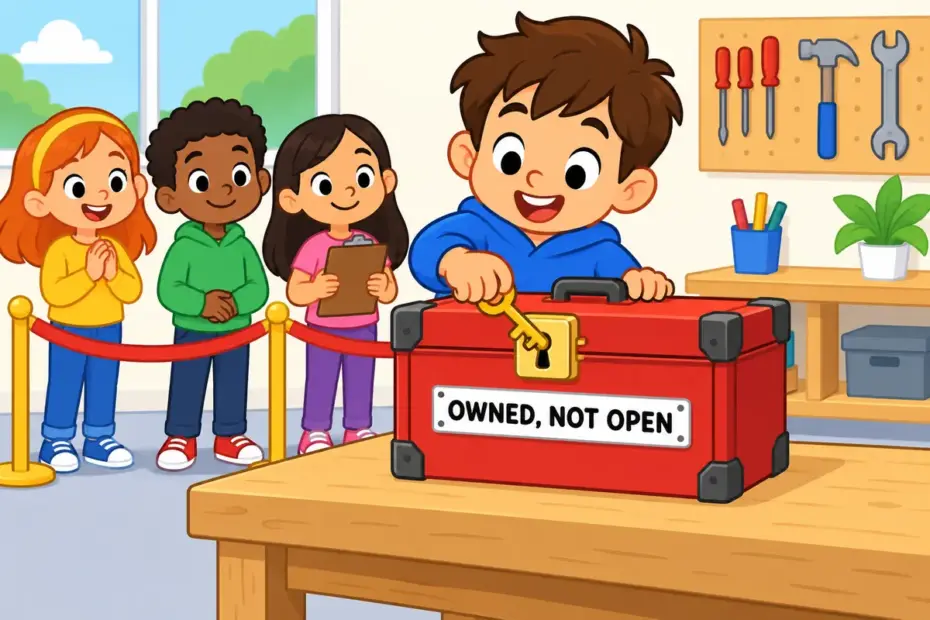
Proprietary describes something owned privately and controlled by its owner, usually a company that keeps it exclusive. In a sentence the adjective sits before its noun, as in proprietary software or proprietary information, and it signals that the item is owned and restricted rather than open to everyone.
Proprietary at a glance
- Proprietary is an adjective meaning owned and controlled by a person or company.
- The dominant patterns are proprietary plus a noun and be proprietary to plus an owner.
- It belongs to legal, business and technical writing rather than casual speech.
- Common collocations are proprietary software, proprietary information and proprietary rights.
- The commonest error is confusing proprietary with propriety, which means correct behaviour.
What does proprietary mean?
Proprietary is an adjective meaning owned and controlled by a particular person or company, rather than shared or open to the public. The Cambridge entry for proprietary lists the owned sense and the exclusive sense together, because a product that one maker controls is usually also one that others cannot freely copy.
The word keeps the idea of ownership at its centre. A proprietary formula belongs to the firm, a proprietary licence grants controlled use of it, and a proprietary interest is a legal stake in a property. The related word copyright protects a creative work, while a proprietary claim protects the ownership of a product or process.
Proprietary does not mean secret or illegal. A proprietary design can be published and still owned, and a company can let partners use proprietary technology under a contract. When you only mean not public, plain private is usually the better word. The distinction matters most in a licence, where the owner keeps control even after granting use.
| Sense | Plain meaning | Example sentence |
|---|---|---|
| Owned and controlled | Belongs to a company or person, not the public | The company guards its proprietary formula. |
| Exclusive to one maker | Made and sold by a single company | The camera uses a proprietary mount. |
| Relating to an owner | Connected with ownership in law | The deed records a proprietary interest. |
Register is part of the meaning. In a licence or a contract, proprietary is the precise legal term; in a message to a colleague, owned or in-house reads more naturally and keeps the tone human.
How do you use proprietary in a sentence?
Proprietary behaves like most adjectives of ownership. It stands before a noun, or it follows the verb be with the preposition to naming the owner.
| Pattern | Example | What it signals |
|---|---|---|
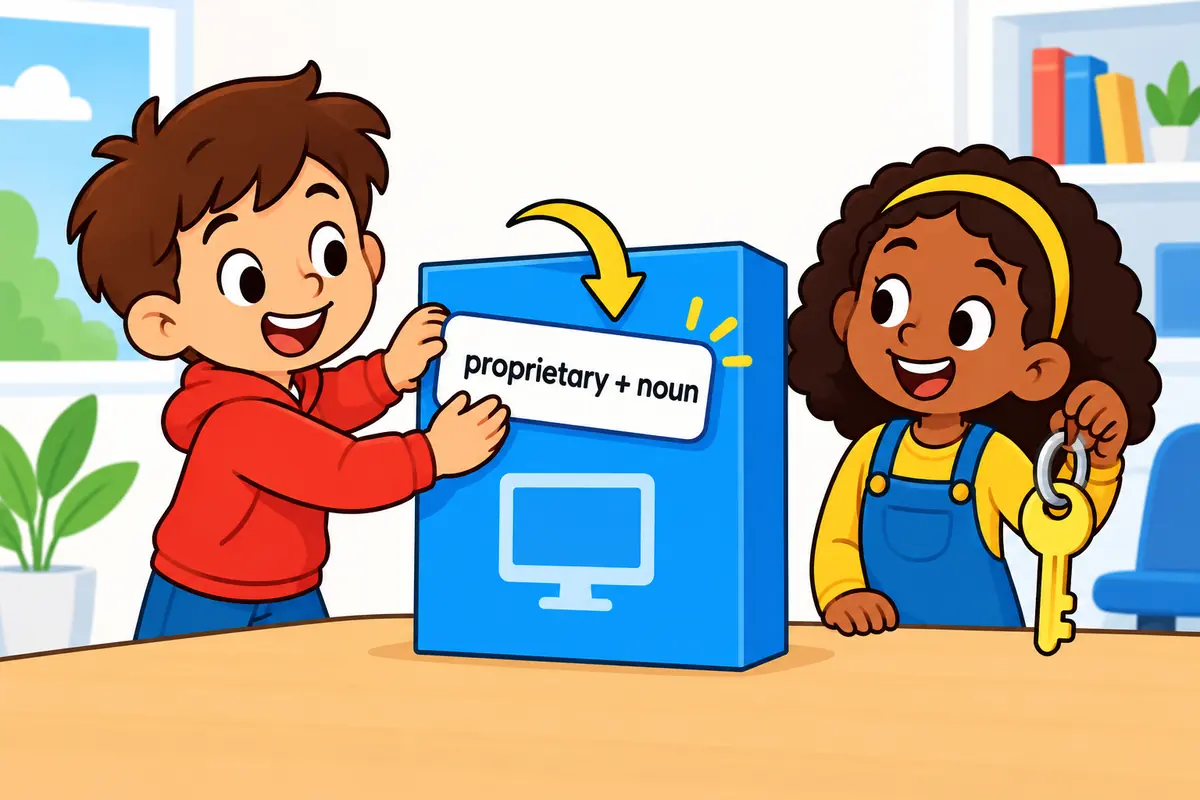
| proprietary + noun | The lab uses proprietary equipment. | Marks the item as privately owned and exclusive. |
| be proprietary | The format is proprietary, so rivals cannot open it. | States ownership as a property of the thing. |
| proprietary to + owner | The design is proprietary to the manufacturer. | Names who holds the rights. |
| proprietary information | Staff must protect proprietary information. | A fixed business collocation for confidential company data. |
Possessive ideas stay inside the word itself, so native writers say proprietary rights rather than adding an extra possessive marker such as the company its rights. Keep the noun close as well, because proprietary used alone as a noun sounds wrong to most readers.
Proprietary in a sentence: examples across contexts
The adjective keeps the same shape in every register, but the noun after it decides the tone. Each row shows why the sentence works.
| Context | Example sentence | Why this works |
|---|---|---|
| Classroom | The science club keeps a proprietary list of experiment ideas. | Uses the adjective before a noun to mark private ownership. |
| Workplace email | Please do not share the proprietary data outside the team. | Signals that the information belongs to the company. |
| News report | The firm lost its case over proprietary technology. | Shows the adjective naming protected company assets. |
| Technical writing | The printer uses a proprietary cartridge format. | Explains why only one brand of cartridge fits. |
| Legal writing | The contract transfers all proprietary rights to the buyer. | Uses the term for ownership rights in law. |
| Conversation | Their app runs on proprietary code, so we cannot copy it. | Keeps the word but ties it to the concrete noun code. |
| Academic writing | The archive holds proprietary records from three companies. | Marks records as privately owned and restricted. |
| Business report | Proprietary software licences made up most of the budget. | Names a category of licensed, exclusive products. |
| Design studio | The studio guards its proprietary typeface and never licenses it. | Shows the adjective naming a protected creative asset. |
| Manufacturing | The machine runs on proprietary firmware that only the maker can update. | Ties ownership to control of future updates. |
| Start-up pitch | We built on proprietary algorithms to stay ahead of rivals. | Frames owned technology as a competitive asset. |
| Pharmacy | The chemist stocks both generics and proprietary brands. | Uses the adjective for branded, owner-made medicines. |
| Education | The campus licence is proprietary to the university and cannot be resold. | Marks an owner and bans transfer of the rights. |
| Software support | Only the vendor can patch its proprietary system. | Shows control following ownership over time. |
Something exclusive is limited to chosen users, whether or not it is proprietary, so the two labels often travel together without meaning the same thing.
Proprietary vs private
Proprietary and private both push something out of public reach, but they say different things. Proprietary means owned and controlled by a company, while private only means not public.
| Attribute | Proprietary | Private |
|---|---|---|
| Core meaning | Owned and controlled by one party | Not open to the public |
| Typical partner | Software, information, rights, technology | Home, road, school, message |
| Register | Legal, business and technical | Everyday and legal |
| What it implies | Exclusive rights and restricted use | Restricted access with no ownership claim |
| Common slip | Using it for anything non-public | Using it for something owned |
The verdict: use proprietary when ownership and control matter, and private when access is the only point.
The two overlap when a company keeps something to itself, but only proprietary makes a claim about who owns it. If you can swap in owned without changing the meaning, proprietary is the right word; if owned sounds wrong, private is doing the job.
Word forms and grammar of proprietary
| Form | Part of speech | Example |
|---|---|---|
| proprietary | adjective | They signed a proprietary licence. |
| proprietaries | noun (rare, plural) | The pharmacy stocked several proprietaries. |
| proprietor | noun | The proprietor runs the shop. |
| proprietress | noun (now dated) | The proprietress greeted every guest. |
| propriety | noun (different meaning) | She behaved with propriety. |
The lookalike propriety is unrelated and means correct behaviour, so the two words must never be swapped even though they share the root propri.
Note that proprietor, proprietress and propriety all share that root, but only proprietary carries the legal sense of ownership. Proprietor is the person, propriety is behaviour, and the adjective stands apart from both.
Common mistakes with proprietary
- Incorrect: The software is proprietary of the company. Correct: The software is proprietary to the company. Rule: use to, not of, to name the owner.
- Incorrect: This is a propriety document. Correct: This is a proprietary document. Rule: proprietary means owned; propriety means correct behaviour.
- Incorrect: We bought the proprietary last week. Correct: We bought a proprietary product last week. Rule: as a noun it is rare and usually plural.
- Incorrect: Private and proprietary mean the same. Correct: Private means not public, while proprietary means owned and controlled. Rule: a private club is not automatically proprietary.
- Incorrect: Proprietary means illegal to use. Correct: Proprietary means owned and controlled, often restricted but not automatically secret. Rule: the word marks ownership, not secrecy or prohibition.
- Incorrect: The rights are proprietory to the author. Correct: The rights are proprietary to the author. Rule: the adjective ends in -etary, so the -ory spelling is the correct one.
Practice using proprietary
- Fill in the blank: The team signed a ___ agreement before sharing the source code.
- Choose the better word: The beach is (proprietary / private), so visitors need a resident pass.
- Correct the error: The formula is proprietary of the manufacturer.
- Build a sentence: Use proprietary to describe software owned by one company.
- Spot the register: Which sentence belongs in a licence? (a) That app is ours and you cannot copy it. (b) The licence covers the proprietary software only.
- Fill in the blank: The deed records a ___ interest in the land.
- Fill in the blank: The engineer refused to share the ___ algorithm with the rival firm.
- Choose the better word: The garden is (proprietary / private) and belongs to the family.
Answers
- proprietary — the agreement concerns owned and controlled information.
- private — the beach is not public; ownership is not the point.
- The formula is proprietary to the manufacturer — proprietary takes the preposition to.
- The company sells proprietary software that only its own engineers may modify — the adjective marks owned code.
- (b) — a licence uses the formal term, not the casual phrase ours.
- proprietary — the fixed legal collocation is a proprietary interest.
- proprietary — the algorithm is owned and controlled by one firm.
- private — the garden is not public, and no company ownership is involved.
The bottom line
Proprietary means owned and controlled by a particular company or person, so in a sentence it usually stands before a noun such as software, information or rights. Using proprietary in a sentence well means naming the owner with to when you need one, as in proprietary to the manufacturer. The word marks ownership, not secrecy, so plain private is better when access is the only issue. Keep it apart from the lookalike propriety, which describes behaviour.
Frequently asked questions about proprietary
What does proprietary mean in business?
In business it means owned and controlled by a single company rather than shared with the public. Proprietary software, formulas, data and technology all belong to the firm, which decides who may use them and on what terms. The opposite is open or standard, where anyone can build with the same design and no permission is needed.
Can proprietary be used as a noun?
Yes, but only rarely. In the plural, proprietaries can name branded medicines or products sold under one owner. Everyday writing almost never needs this form, so the adjective is the safe choice for students and professionals who want to be understood the first time.
How do you spell proprietary?
Proprietary is spelled p-r-o-p-r-i-e-t-a-r-y, with an i after the r and an a before the final r. The similar-sounding propriety is spelled p-r-o-p-r-i-e-t-y and means correct behaviour, so the two spellings carry the meaning as much as the pronunciation does.
Is proprietary information confidential?
Not automatically. Proprietary information is owned by a company, and confidentiality is a separate promise about who may see it. Much proprietary information is also confidential, but the two labels answer different questions: who owns it, and who is allowed to look at it.