Tangential in a Sentence: Meaning & Examples
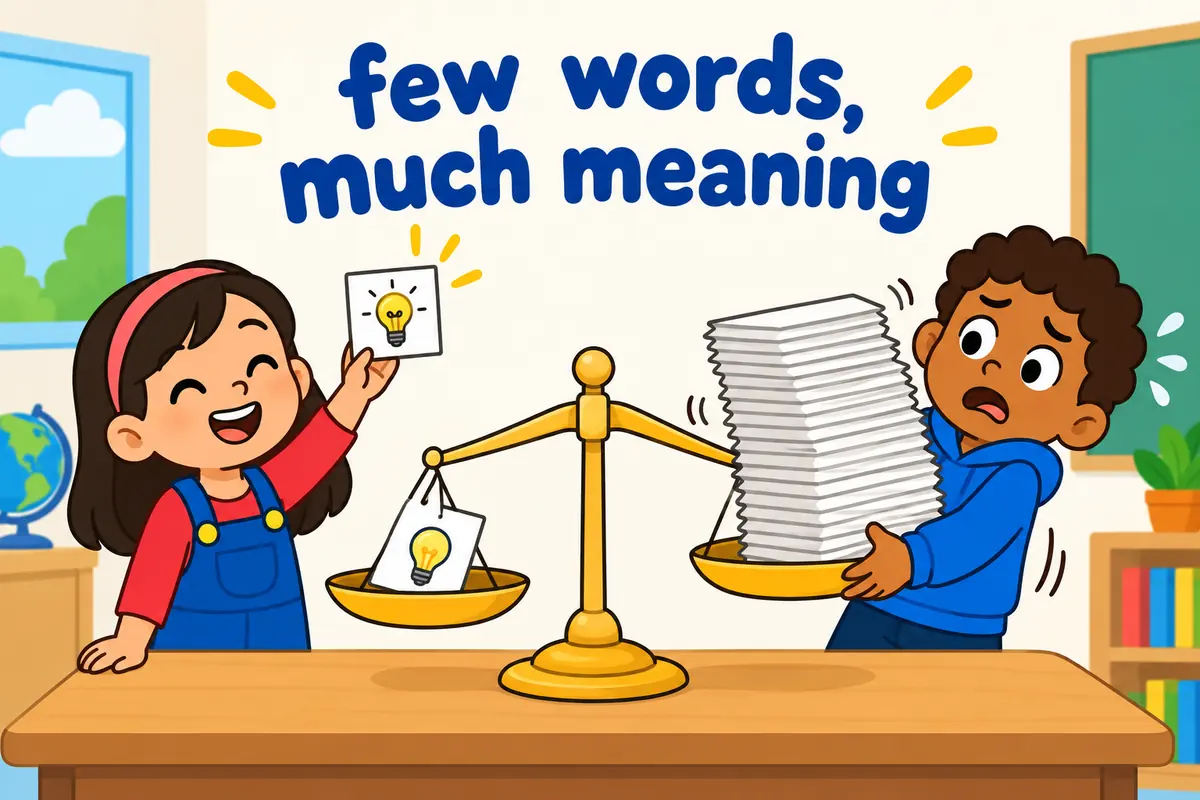
Tangential describes something only loosely connected to the main subject, and you use tangential in a sentence to mark an aside that drifts from the point. A tangential remark touches the topic without settling it: “His question was interesting, if a little tangential.” The adjective usually follows a linking verb or the preposition to.
Tangential at a glance
- Tangential is an adjective; its adverb is tangentially and its noun is tangency.
- The dominant pattern is tangential to plus a topic, as in tangential to the main argument.
- Tangential belongs to academic, analytical and professional writing more than to casual talk.
- Common collocations are tangential remark, tangential point and tangential issue.
- The usual learner error is using tangential for anything boring rather than barely connected.
What does tangential mean?
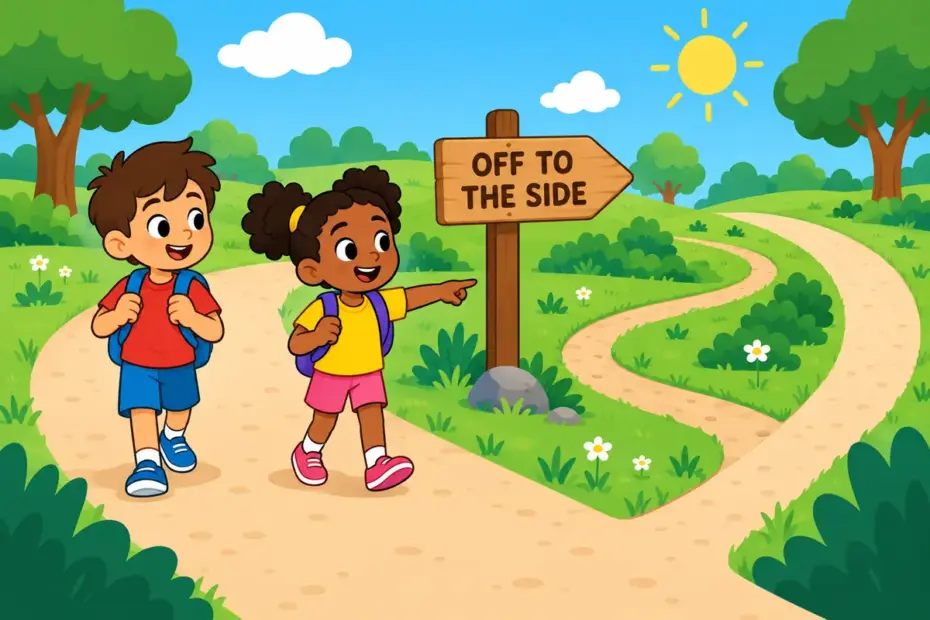
Tangential is an adjective meaning only slightly connected to the subject under discussion; in geometry it means touching a curve at a single point. The Cambridge entry for tangential records both senses. A tangential remark is not false, merely off to the side, so the word judges relevance rather than truth. Where a point sits inside the topic but at its edge, peripheral to the debate is the more exact term. Tangential is the wrong choice when something is wholly unrelated, because it promises a thin connection that does not exist.
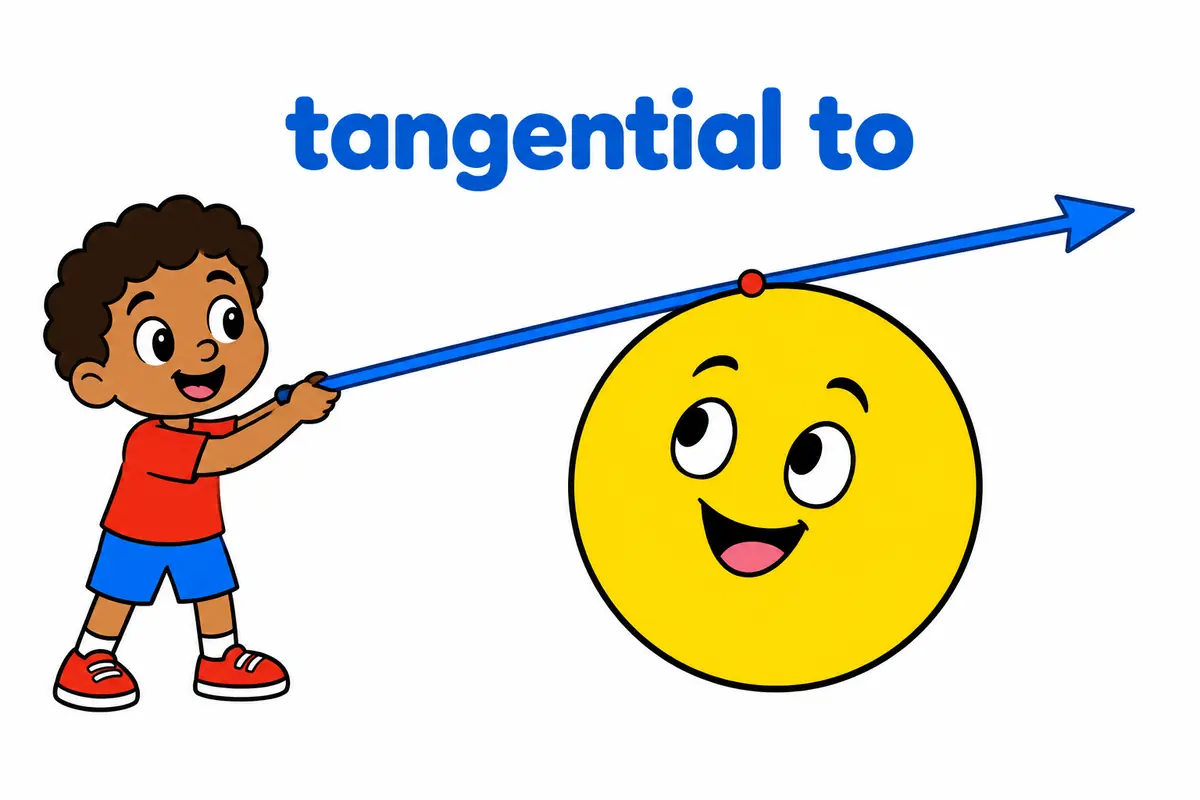
The word borrows its force from mathematics, where a tangent line meets a curve without crossing it, and that image survives in the figurative sense: a tangential point makes contact and then moves away. Because the connection is real, tangential is gentler than off-topic, and because it is slight, it is firmer than merely interesting. That double edge makes the word useful in meetings, marking and peer review, where the aim is usually to redirect rather than to reject.
| Sense | Plain meaning | Example sentence |
|---|---|---|
| Figurative | Barely touching the main subject | Her aside was tangential to the budget debate. |
| Geometric | Touching a curve at exactly one point | The straight line is tangential to the circle. |
| Peripheral | Connected only at the edge of a topic | That detail is tangential to the diagnosis. |
How do you use tangential in a sentence?
Tangential rarely stands alone. It either follows a linking verb or names its topic with the preposition to, and that preposition is the part learners most often get wrong.
| Pattern | Example | What it signals |
|---|---|---|
| be + tangential | The objection was tangential. | Judges relevance rather than truth. |
| tangential + to + noun | His note was tangential to the review. | Names the topic it only grazes. |
| a tangential + noun | She added a tangential comment. | Labels the item, not the speaker. |
| become, seem or feel + tangential | The debate became tangential after lunch. | Tracks a drift away from the point. |
Register matters more than position. In a lecture or a report, tangential is neutral shorthand for a side issue. In conversation the same word sounds formal and slightly evasive, which is why a speaker who wants to apologise softly says “that was a bit tangential” rather than “that was irrelevant”. A chair or a tutor can use it to close a digression without dismissing the person who raised it.
Tangential in a sentence: examples across contexts
The adjective shifts tone with its setting, from a gentle aside in conversation to a precise ruling in a courtroom.
| Context | Example sentence | Why this works |
|---|---|---|
| Academic writing | The second finding is tangential to the central hypothesis. | Marks limited relevance without dismissing the result. |
| Workplace email | I will keep my comments tangential to the agenda. | Promises economy and keeps the thread. |
| News report | The senator dismissed the question as tangential. | Frames an aside as an evasion. |
| Conversation | Sorry, that was tangential; back to your news. | Self-corrects a drift politely. |
| Technical writing | These variables are tangential to the calibration. | Narrows the scope of the test. |
| Legal writing | The testimony was ruled tangential to the charge. | Excludes weak evidence cleanly. |
| Review or critique | The plot twist feels tangential to the hero’s arc. | Judges craft rather than plot. |
| Classroom | Your example is tangential, but it does connect. | Balances encouragement with focus. |
| Business report | Costs are tangential to the decision this quarter. | Ranks the issue below the main choice. |
| Policy memo | Funding for the side project is tangential to the main motion. | Keeps the debate on the budget line. |
| Editor feedback | This paragraph is tangential; move it to an appendix. | Separates the main claim from supporting detail. |
| Interview | The candidate’s answer was tangential to the role. | Signals a missed question. |
| Book review | The historical chapter feels tangential to the novel’s plot. | Notes an imbalance in structure. |
Tangential vs irrelevant
Tangential and irrelevant sit close in everyday speech but pull in opposite directions. A tangential point keeps a thin thread to the subject, while an irrelevant to the decision point has no thread at all. The difference is the difference between an aside and a distraction, and it decides whether a chair lets you finish or rules you out.
| Attribute | Tangential | Irrelevant |
|---|---|---|
| Meaning | Only slightly connected | Not connected at all |
| Strength of link | A thin but real thread | No thread to follow |
| Register | Analytical and often polite | Blunt and everyday |
| Typical subject | Asides, details, findings | Questions, objections, data |
| What it implies | Worth a glance, not central | Safe to ignore |
| Tone in a meeting | Gentle redirection | Flat dismissal |
Choose tangential when a link exists but is thin, and irrelevant when no link exists. An extraneous detail can be removed without any loss, and when two lines of argument simply separate, diverging views describes the split more precisely than tangential does.
One test separates the two in practice: can you finish the sentence “it does touch the subject because”? If you can, the point is tangential; if you cannot, it is irrelevant. Editors apply this test to cut padding, and committee chairs apply it to decide which objections to hear.
Word forms and grammar of tangential
Tangential belongs to a small family, and the forms are not interchangeable. The adverb appears in a sentence such as she mentions the cost tangentially, where it describes how a topic is raised. The noun went off on a tangent names a sudden change of direction, and in geometry the noun the tangency of the line names the single point shared by a line and a curve.
| Form | Part of speech | Example |
|---|---|---|
| tangential | adjective | a tangential remark |
| tangentially | adverb | The report mentions housing tangentially. |
| tangency | noun (geometry) | The tangency of line and curve is exact. |
| tangent | noun | The speaker went off on a tangent. |
| tangent | adjective (geometry) | A tangent line touches the circle once. |
The adjective and the noun also differ in how much blame they carry. A tangent is often a harmless detour that a speaker recovers from, while a tangential argument can look like an avoidance strategy. Writers who want to criticise the digression choose tangential; writers who describe a passing swerve choose tangent.
Common mistakes with tangential
- Incorrect: The recipe is tangential, so I ignored it. Correct: The recipe is irrelevant, so I ignored it. Rule: tangential needs a thin connection; a wholly unrelated thing is irrelevant.
- Incorrect: His comment was tangential about the budget. Correct: His comment was tangential to the budget. Rule: the adjective takes to, never about.
- Incorrect: This is a tangentially point. Correct: This is a tangential point. Rule: tangentially is an adverb and cannot modify a noun.
- Incorrect: The topic is very tangent to ours. Correct: The topic is very tangential to ours. Rule: tangent is the noun; the adjective is tangential.
- Incorrect: Tangential means wrong. Correct: Tangential means only slightly connected. Rule: the word describes weak relevance, not error.
- Incorrect: Her remarks were tangentially to the main point. Correct: Her remarks were tangential to the main point. Rule: the adverb tangentially does not follow be; the adjective does.
Practice using tangential
- Fill in the blank: Her question was interesting but ______ to the vote we are taking.
- Fill in the blank: The editor cut every ______ detail from the profile.
- Correct the error: His excuse was tangential about the deadline.
- Choose the better word: The colour of the chairs is (tangential / irrelevant) to the safety review.
- Build a sentence: use tangential to about a meeting agenda.
- Spot the register: which sentence belongs in a formal report, “That is beside the point” or “That point is tangential to the audit”?
Answers
- tangential, because it grazes the vote without deciding it.
- tangential, because it labels a detail as only loosely connected.
- Change about to to: His excuse was tangential to the deadline.
- irrelevant, because chair colour has no connection at all.
- Model answer: The pricing question is tangential to the agenda.
- The audit sentence is formal; beside the point is conversational.
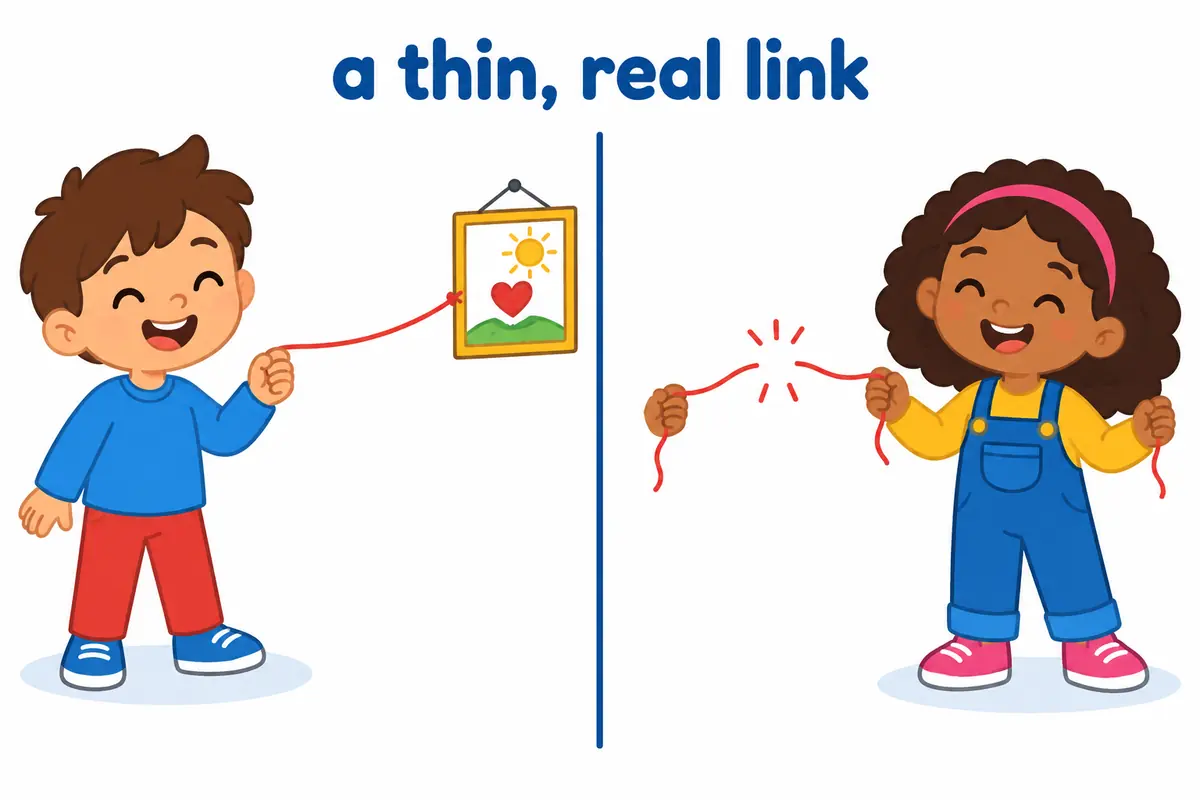
The bottom line
Tangential marks a thin, real connection to the main subject, so you use tangential in a sentence to flag an aside that deserves a glance but never the centre of attention. The adjective takes the preposition to, as in tangential to the argument, and its adverb is tangentially. Reach for irrelevant when no connection exists at all, and for tangent when you need the noun. Getting that preposition right, to rather than about, keeps the whole sentence clear.
Frequently asked questions about tangential
Is tangential a negative word?
Tangential is mildly critical rather than insulting. It says a point touches the subject without advancing it, so a teacher who calls your question tangential is not angry, only steering the class back. In a review the same label can be a genuine criticism, because straying from the argument weakens a piece of writing.
Does tangential mean unrelated?
No. Tangential means slightly connected, and the thin connection is the whole point. An unrelated fact has nothing to do with the subject, while a tangential fact brushes against it and then leaves. That is why speakers often soften a dismissal by calling a remark tangential rather than irrelevant.
Can you call a person tangential?
You can, but the adjective usually describes what a person says or does rather than the person. A tangential speaker keeps wandering away from the agenda. Saying a colleague is tangential sounds odd and vague; saying a colleague’s report is tangential to the audit is clear and fair.
What is the adverb form of tangential?
The adverb is tangentially, and it marks the same slight connection inside a verb phrase, as in the study mentions housing tangentially. Use it when you describe how something is raised rather than what it is. There is no verb form, so writers who need an action choose a phrase such as address only in passing.