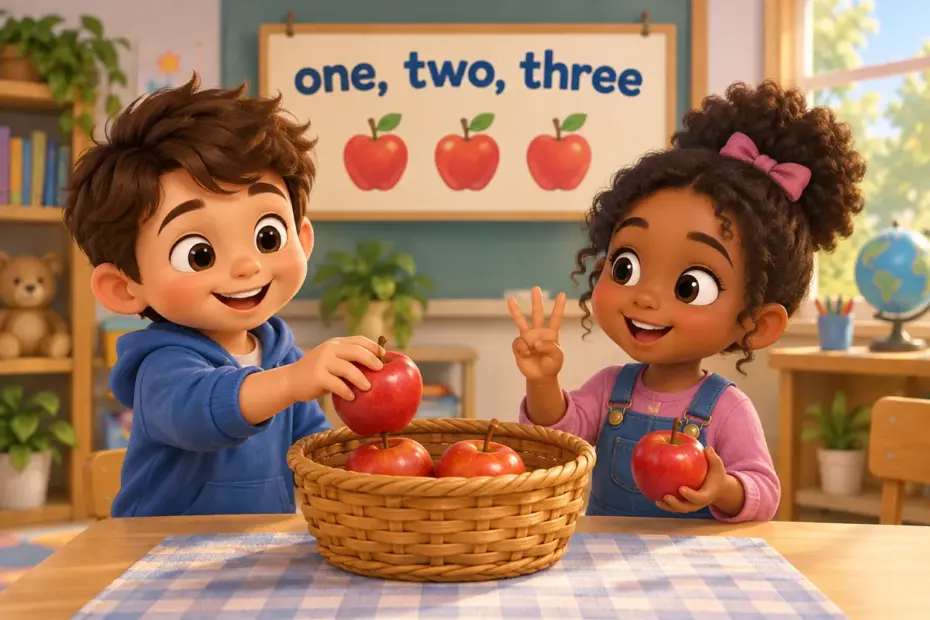
Countable nouns in English name things you can count one by one, so they take both singular and plural forms, as in one apple and three apples. They work with a or an in the singular and with many and few in the plural. “Two coffees, please” treats a drink as countable.
countable nouns in english at a glance
- A countable noun has a singular and a plural form.
- Singular countable nouns take a or an, or the.
- Countable nouns work with many, few and how many.
- They cannot stand alone in the singular: write a book, not book.
- The commonest error is treating an uncountable noun such as information as countable.
What is a countable noun?
A countable noun names something you can count one by one, so it has both a singular and a plural form, as in one apple and three apples. The singular takes a or an, and the plural takes many or few. More examples sit among countable sentence examples.
| Feature | Singular | Plural |
|---|---|---|
| Article | a cup, an egg | the cups, the eggs |
| Ending | cup, egg | cups, eggs |
| Question word | how many | how many |
| Determiner | a, an, each, every | many, few, several |
| Example | I ate an egg. | I ate three eggs. |
The plural ending is the clearest signal, and the article test, a or an before the singular, confirms that the noun can be counted.
What is the difference between countable and uncountable nouns?
A countable noun names separate items, while an uncountable noun names a mass or an idea that is not counted directly. The two behave differently with articles and quantity words, which is where learners slip.
| Test | Countable | Uncountable |
|---|---|---|
| Plural form | books | no plural: information |
| Article | a book | no a or an |
| Quantity word | many books | much information |
| Verb | is / are | is only |
| Example | She bought two pens. | She bought some furniture. |
Some nouns are both, changing meaning with the count: a glass of water is a countable container, while water itself is uncountable.
countable nouns in english examples across contexts
Countable nouns appear wherever separate items are named; the setting changes the vocabulary, not the grammar. Related word lists include nouns that start with c.
| Context | Example sentence | Why this works |
|---|---|---|
| Classroom | Each pupil needs two pencils and a ruler. | separate items counted directly |
| Kitchen | We bought six eggs and a loaf of bread. | countable beside uncountable |
| Workplace | Please book three rooms for the team. | a countable plural in a request |
| News report | The city opened four new libraries. | things counted in a report |
| Narrative | Two dogs barked at a single cyclist. | countable nouns drive the scene |
| Science writing | The sample held five seeds and two leaves. | countable units in a method |
| Shopping | I picked up three shirts and one tie. | countable items in a list |
| Travel writing | The village had a church and two bridges. | countable landmarks |
| Sports report | The team scored three goals in ten minutes. | countable scores and times |
| Recipe | Add two carrots and a pinch of salt. | countable with an uncountable extra |
Which nouns can be counted?
Apply the plural test: if the noun forms a natural plural, it is countable.
| Noun | Countable? | Evidence |
|---|---|---|
| chair | yes | one chair, two chairs |
| information | no | not informations |
| idea | yes | a clever idea, two ideas |
| advice | no | some advice, not advices |
| coin | yes | a coin, three coins |
| furniture | no | some furniture, not furnitures |
When an uncountable noun names a single unit, use a countable partner word, as in a piece of advice or an item of furniture.
Word forms and grammar of countable nouns
The forms are regular for most nouns, and the irregular plurals are worth learning by heart; more start lists include nouns that start with d and nouns that start with e.
| Form | Part of speech | Example |
|---|---|---|
| Regular plural | noun | two cats |
| Irregular plural | noun | three children |
| Same singular and plural | noun | one sheep, two sheep |
| Singular with a or an | noun | an orange |
| Plural with many | noun | many oranges |
| -with a piece of | noun | a piece of chalk |
Countability sits apart from concreteness and from proper naming, so a noun can be countable, proper and concrete all at once.
Common mistakes with countable nouns
Mistake 1: pluralising an uncountable noun. Incorrect: She gave me two advices. Correct: She gave me two pieces of advice. Rule: use a countable partner word for a unit.
Mistake 2: singular noun with no article. Incorrect: I need pencil. Correct: I need a pencil. Rule: a singular countable noun needs a, an or the.
Mistake 3: much for many. Incorrect: How much books did you buy? Correct: How many books did you buy? Rule: many pairs with countable plurals.
Mistake 4: less for fewer. Incorrect: There are less chairs than before. Correct: There are fewer chairs than before. Rule: fewer pairs with countable plurals.
Mistake 5: wrong irregular plural. Incorrect: Three childs waited. Correct: Three children waited. Rule: learn the irregular plurals as fixed forms.
Practice using countable nouns in english
- Fill in the blank: I bought ___ umbrella and two hats.
- Choose the better word: How (much / many) sandwiches do we need?
- Correct the error: He gave me two informations.
- Build a sentence: name three countable things in a kitchen.
- Spot the register: which suits a shopping list, (a) three loaves, or (b) some breads?
- Fill in the blank: There are ___ (few) seats than last week.
Answers
- an, because a singular countable noun starting with a vowel takes an.
- many, because sandwiches is a countable plural.
- He gave me two pieces of information; information is uncountable and needs a partner word.
- We need three eggs, two carrots and a loaf of bread.
- Example (a), because a countable count suits a list.
- fewer, because fewer pairs with a countable plural.
The bottom line
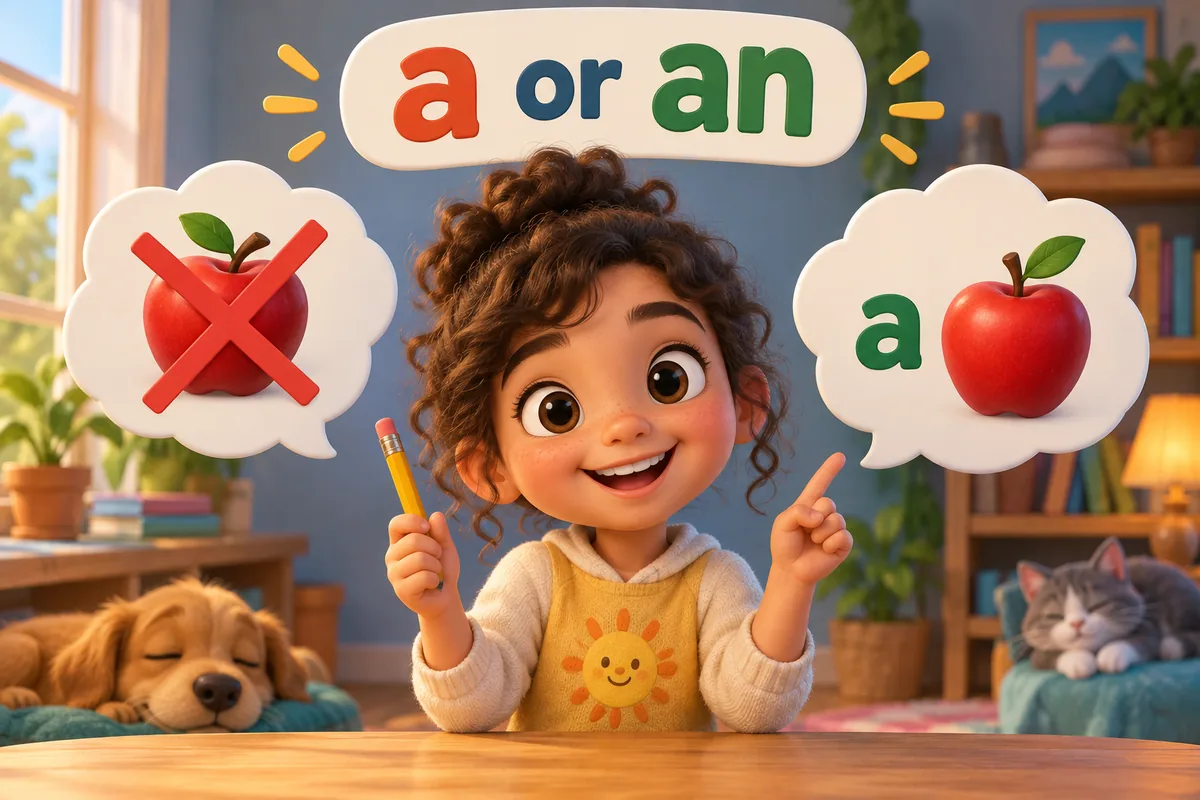
Countable nouns in English name separate items, so they take a or an in the singular, a plural ending when there is more than one, and many and few as quantity words. Test any noun by trying to form a plural, and use a partner word such as a piece of for anything uncountable. Match many and few to countable plurals and the common errors disappear.
Frequently asked questions about countable nouns
Is money a countable noun?
Money is uncountable when it names the general mass, as in I have little money, so it takes no plural. When you count the individual notes and coins you switch to a countable noun, as in three coins or two notes, which is why both forms exist.
Can a countable noun be used without a, an or the?
Not in the singular. A countable singular noun needs an article or another determiner, so you write a cat or the cat, never cat alone. In the plural no article is needed, which is why two cats stands on its own.
Why do some nouns keep the same singular and plural?
A few nouns such as sheep, deer and series do not change in the plural, so one sheep and two sheep use the same form. You still treat them as countable, since the quantity is shown by the number rather than by an ending.
How do I test whether a noun is countable?
Try to form a plural and to put a or an in front of the singular. If both work, as with cup and cups, the noun is countable. If neither works, as with advice, the noun is uncountable and needs a partner word such as a piece of.