Frenetic in a Sentence: Meaning, Examples & Usage
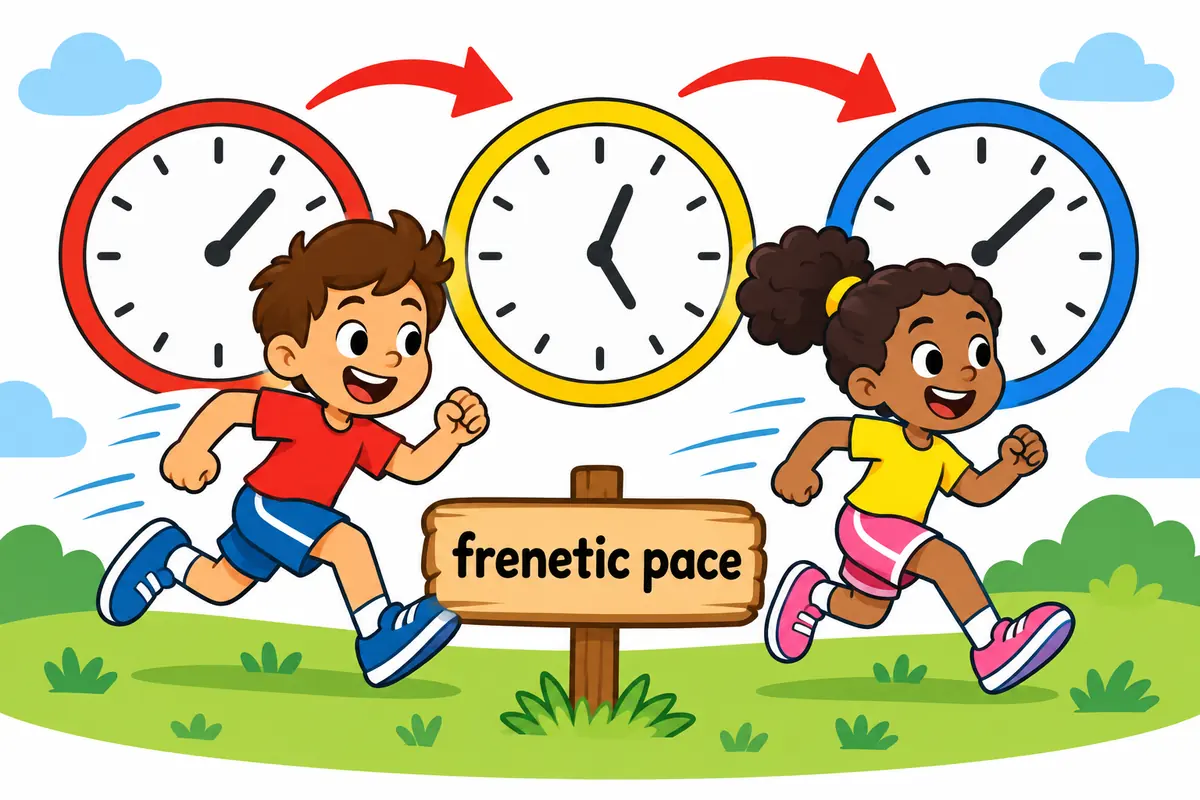
Frenetic is an adjective meaning fast, energetic and slightly chaotic, usually describing activity, pace or atmosphere rather than one calm person. It sits before a noun in phrases such as a frenetic pace or a frenetic morning, and it can also follow the verb: the market was frenetic. Choose it when speed and bustle matter more than anxiety.
Frenetic at a glance
- Frenetic is an adjective; the adverb is frenetically and the related noun is frenzy.
- It most often sits before a noun that names speed or activity, as in a frenetic pace.
- It can also follow a linking verb to describe a place or moment: the office was frenetic.
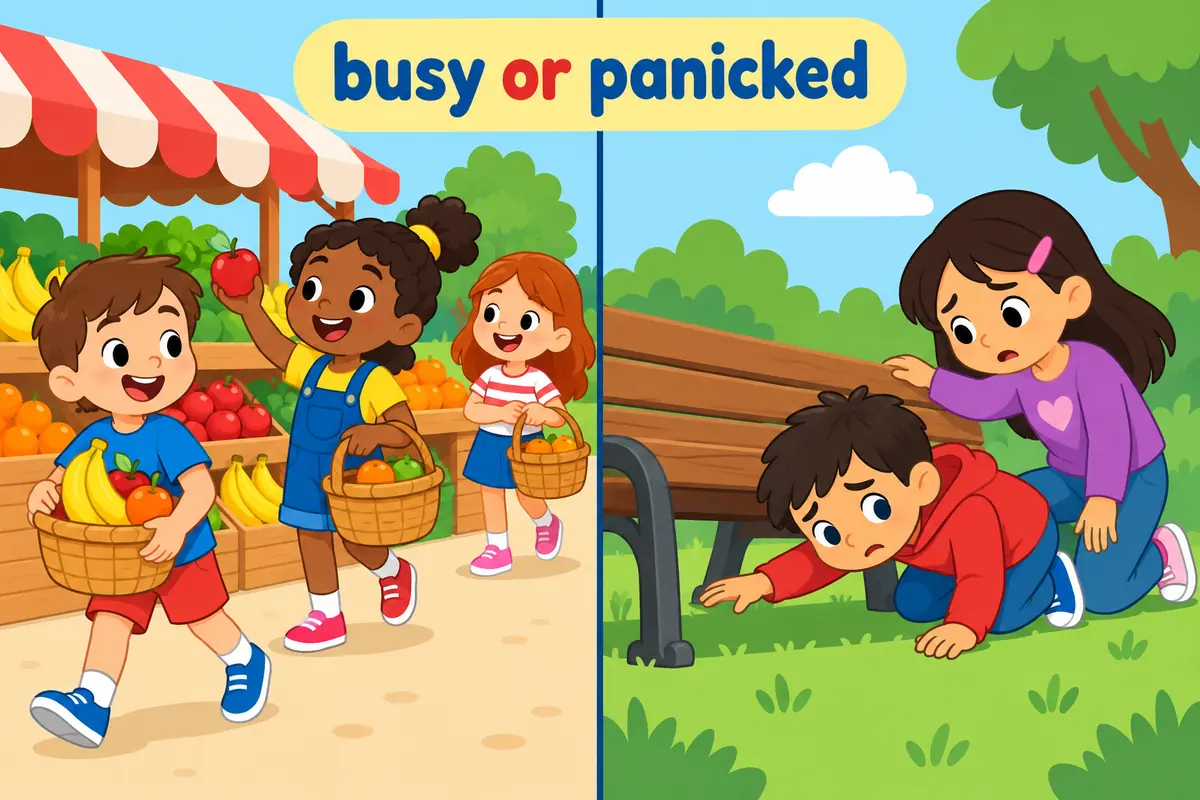
- Frenetic suggests lively, bustling movement rather than fear or panic.
- The commonest error is using frenetic for a frightened person, where frantic belongs.
What does frenetic mean?
Frenetic is an adjective meaning hurried, energetic and disorderly in a lively way. The Cambridge entry for frenetic ties it to fast, excited activity. It rarely describes a quiet individual; it describes the pace, the day, the street or the office. When the feeling is fear or worry, English prefers a person who is agitated or frantic, and when the busyness is ordinary and tiring, hectic is the plainer word.
| Sense | Plain meaning | Example sentence |
|---|---|---|
| Fast and energetic | Hurried activity full of movement | The kitchen was frenetic before the lunch service. |
| Hectic and disorderly | Busy in a way that feels out of control | A frenetic morning of calls and deadlines. |
| Describing pace | Modifying a noun that names speed or activity | The frenetic pace of the city never eased. |
The word keeps a note of enjoyment that its near-synonyms lose. A frenetic party, market or rehearsal can still be fun, because the energy is shared and purposeful. Frantic cannot carry that idea, since it means someone is frightened or desperate. Where the disorder itself is the point, with no interest in speed, chaotic is the sharper choice.
Register is the second clue. Newspapers and sports reports reach for frenetic because it packs speed and energy into a single adjective, while conversation usually prefers a plainer phrase such as things got crazy. A report might say the trading floor turned frenetic, but a friend is more likely to say work went mad that afternoon. Matching the register keeps the word from sounding borrowed.
How do you use frenetic in a sentence?
The adjective is most at home before a noun, and the noun it modifies decides whether the sentence sounds natural.
| Pattern | Example | What it signals |
|---|---|---|
| frenetic + noun | a frenetic pace | The dominant use, naming fast activity |
| be or look + frenetic | The office was frenetic all afternoon. | The atmosphere at a particular moment |
| frenetic + scene, energy, schedule | a frenetic scene in the newsroom | Collocations that sound native |
| frenetically + verb | She typed frenetically until midnight. | How an action is carried out |
| the noun frenzy | the frenzy before the sale | The state itself, rather than the adjective |
Two collocations separate a native sentence from a translated one. Frenetic pace, frenetic activity and frenetic energy are standard, while frenetic person and frenetic emotion are not. The adjective attaches to what moves, not to what someone feels, so a frenetic mood is odd but a frenetic morning is ordinary. The related noun frenzy describes the state that produces the adjective, and the adverb frenetically describes the manner, as in staff moved frenetically between tasks.
Frenetic in a sentence: examples across contexts
Each example below shows the adjective doing a different job, from a hard news report to a line of everyday talk.
| Context | Example sentence | Why this works |
|---|---|---|
| News report | The trading floor turned frenetic in the final hour. | Speed and disorder appear in one image. |
| Workplace | The week before the audit is always frenetic. | The atmosphere follows the verb. |
| Sports writing | The final minutes were frenetic, with chances at both ends. | Fast, end-to-end action is captured. |
| Classroom | The last day of term was frenetic but happy. | Busy and noisy, not frightening. |
| Travel writing | The market was a frenetic swirl of colour and noise. | The pace of a whole place is described. |
| Personal diary | My mornings are frenetic until the school run is over. | An ordinary household rush. |
| Business report | Growth was driven by a frenetic launch schedule. | Activity is framed as intense and fast. |
| Film review | The editing is frenetic, cutting almost every second. | A style of rapid movement is named. |
| Everyday talk | Things got frenetic when the guests arrived. | Informal but entirely natural. |
| Restaurant kitchen | The kitchen grew frenetic as the orders piled up. | The pace of a whole workplace is captured. |
| Music review | The finale is frenetic but never out of control. | Speed is praised as skill rather than chaos. |
| Hospital ward | The ward turned frenetic after the night bus arrived. | Bustle is described without panic. |
The same adjective can praise or criticise, depending on the noun around it. A frenetic rehearsal suggests a group working at full speed toward a goal, while a frenetic schedule signals strain. The context, not the adjective, carries the judgement.
Writers often reach for frenetic when a simpler word would do. If the only fact is that there was a lot to do, busy is honest; if the point is that the work never stopped, non-stop is plainer. Frenetic earns its place when the reader should feel the speed and the swirl of the scene, not merely be told that it was full.
One contrast sharpens the choice further. Frenzied and frenetic both name speed, but frenzied often suggests a crowd or a mind losing control, while frenetic can describe efficient, even cheerful hustle. A frenzied mob is dangerous; a frenetic market is merely fast. If the scene is not on the edge of chaos, frenetic is the milder and safer word.
Frenetic vs frantic
These two words differ by the emotion behind the speed, and mixing them is the single most common error. For plain, tiring busyness, hectic sits between them in tone.
| Attribute | Frenetic | Frantic |
|---|---|---|
| Core meaning | Fast, energetic, lively | Wild with fear, worry or urgency |
| Emotional charge | Excitement or bustle | Distress or panic |
| Typical subjects | Pace, schedule, market, scene | Search, effort, call, person |
| Register | Descriptive and journalistic | Neutral and common in speech |
| What it implies | Activity may be enjoyable or planned | Something has gone wrong |
| Usual partner | city, morning, activity | phone call, attempt, rush |
Use frenetic for fast, bustling activity and frantic when fear or desperation drives the speed. The test is simple: if nobody in the scene is worried, frenetic is safe; if somebody is panicking, frantic is the accurate word.
Word forms and grammar of frenetic
Four forms cover almost every use, and one of them is a different adjective rather than a relative.
| Form | Part of speech | Example |
|---|---|---|
| frenetic | adjective | a frenetic pace |
| frenetically | adverb | She worked frenetically to meet the deadline. |
| frenzy | noun | a frenzy of buying before the sale |
| frenzied | adjective, stronger | a frenzied crowd at the gates |
| frantic | separate adjective | a frantic search for the tickets |
| frenetical | non-standard form | Do not write frenetical for the adjective. |
Frenzied and frenetic are close, but frenzied carries more loss of control and often more emotion. Someone who cannot settle themselves is restless, which is a different quality again, tied to stillness rather than speed.
Pronunciation trips up many learners as well. The stress falls on the middle syllable, so frenetic rhymes with phonetic rather than with frantic. Keeping that rhythm in mind also keeps the spelling straight: one n, then -etic.
Common mistakes with frenetic
Incorrect: She was frenetic about the missing keys. She was frenetic about the missing keys. Correct: She was frantic about the missing keys. Fear and worry take frantic, while frenetic describes activity.
Incorrect: The frenetic man paced the corridor. The frenetic man paced the corridor. Correct: The frantic man paced the corridor. A distressed person is frantic; frenetic usually modifies a pace or an atmosphere.
Incorrect: a frenetic search for survivors a frenetic search for survivors Correct: a frantic search for survivors. A desperate search driven by danger is frantic.
Incorrect: The party was frenetic and relaxing. The party was frenetic and relaxing. Correct: The party was lively and relaxing. Frenetic implies fast movement, so it clashes with calm.
Incorrect: He ran frenetic down the road. He ran frenetic down the road. Correct: He ran frenetically down the road. An adverb modifies the verb, and the adverb is frenetically.
Incorrect: The whole city felt frenetical. The whole city felt frenetical. Correct: The whole city felt frenetic. The adjective has no -al ending.
Practice using frenetic
These six tasks mix gap-fills, word choices and error repairs.
- Fill in the blank: The shop was _____ in the week before the holiday.
- Choose the better word: After the accident he made a [frenetic / frantic] call for help.
- Correct the error: She felt frenetic before the exam.
- Build a sentence: use the phrase a frenetic pace to describe a city.
- Spot the register: which sentence belongs in a news report? (a) The trading floor was frenetic. (b) The trading floor was crazy busy.
- Fill in the blank with the correct form: Staff worked _____ to finish on time.
- Choose the better word: The last-minute rehearsal was [frenetic / frantic] but everyone was laughing.
- Fill in the blank with the correct form: The whole street was _____ with activity before the parade.
Answers
- frenetic, because the shop was busy and full of movement.
- frantic, because fear and urgency drive the call for help.
- She felt frantic before the exam, because personal anxiety takes frantic rather than frenetic.
- Model answer: The city kept up a frenetic pace until midnight, using the adjective before the noun pace.
- Sentence (a), because a news report favours the precise adjective over the informal phrase crazy busy.
- frenetically, because the adverb modifies the verb worked.
- frenetic, because the mood is cheerful and fast rather than frightened.
- frenetic, because the adjective describes the busy atmosphere after the linking verb was.
The bottom line
To use frenetic in a sentence, put it before a noun such as pace, morning or scene, or after a linking verb to describe an atmosphere. Keep it for fast, lively activity, and switch to frantic when fear or panic drives the speed. The adverb is frenetically, and the adjective has no -al ending.
Frequently asked questions about frenetic
Is frenetic a negative word?
Not by itself. Frenetic can describe a thrilling market or a joyful last day of term, so the tone comes from the situation. It turns negative when the pace suggests strain, as in a frenetic schedule that leaves no time to rest.
What is the adverb form of frenetic?
The adverb is frenetically, as in the team worked frenetically before the launch. It describes how an action is carried out, not what something is like. The adjective stays frenetic when it follows a linking verb such as be, seem or feel.
How is frenetic different from busy?
Busy means there is a lot to do. Frenetic adds speed and a sense of lively disorder to that, so a busy desk is full of work while a frenetic desk is a blur of movement. Frenetic is the stronger and more vivid choice.
Can frenetic describe a person?
Only loosely. It normally describes a pace, a day, a place or an activity, not a calm individual. If a person is upset or panicking, frantic fits better; if someone simply moves quickly and cannot sit still, restless or hyperactive is clearer.