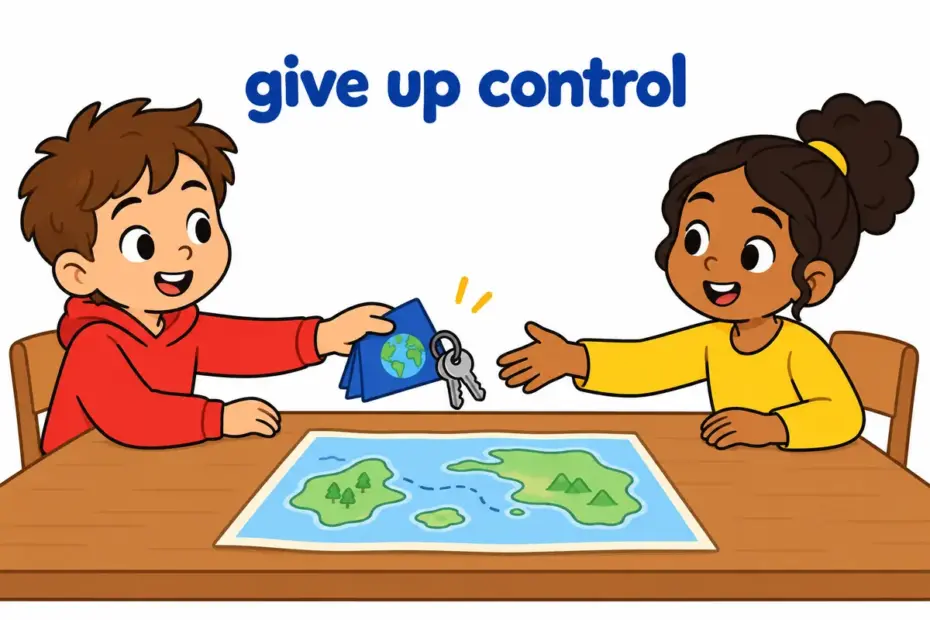
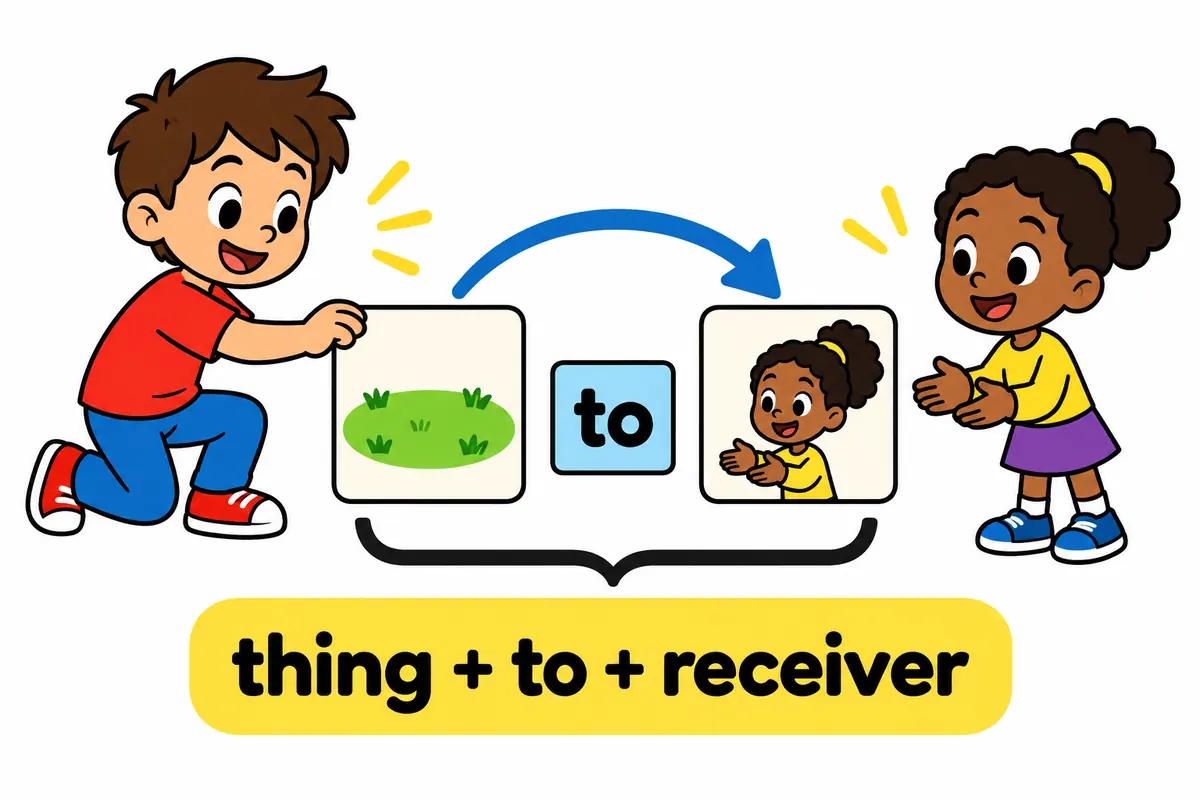
Cede is a verb meaning to give up power, territory or control to somebody else, usually under pressure or by agreement. To use cede in a sentence, name the thing surrendered and the receiver: “The company ceded control of the port to the city.” The verb is transitive and takes to before the new owner.
Cede at a glance
- Cede is a transitive verb meaning to give up power, territory, control or ground.
- Its forms are cede, cedes, ceded and ceding, with the noun cession.
- The receiver follows the preposition to: cede the land to the council.
- Cede suits formal, legal and historical writing, and political news.
- The commonest error is confusing cede with concede, which can also mean to admit.
- A second error is dropping the preposition, as in ceded the city the council.
What does cede mean?
Cede is a transitive verb meaning to give up something such as authority, control or territory, especially to another state, body or person. The Cambridge entry for cede records the giving-up of authority or ownership, and the word almost always implies that the giver loses something real. Where the emphasis falls on the formal act of handing something over, relinquish is close, but relinquish often stresses the personal decision to let go, while cede stresses the transfer itself.
| Sense | Plain meaning | Example sentence |
|---|---|---|
| Give up territory | Transfer land or a region to another power | Under the treaty, the kingdom ceded the coastal province. |
| Give up power or control | Surrender authority over something | The ministry ceded control of the railway to the region. |
| Give up ground | Concede a position in an argument or contest | The negotiator ceded ground on the first clause. |
| Yield to pressure | Give in to demands without a direct object | Faced with a strike, the board ceded to the union. |
One limitation is worth stating plainly. Cede does not mean to lend or share, and it is not the right word for small everyday gifts. It describes a formal loss of control, so if you simply hand a friend a pen, you give it, you do not cede it.
How do you use cede in a sentence?
Name the thing given up, then name the receiver after to. The five patterns below cover the physical, political and figurative uses of this formal verb.
| Pattern | Example | What it signals |
|---|---|---|
| cede + object | The king ceded the province. | Names what is given up, even when the receiver stays implicit. |
| cede + object + to + receiver | They ceded the land to the council. | The receiver follows to, which is the standard full pattern. |
| cede + abstract noun | The minister ceded ground on tariffs. | Objects such as control, power and ground are common in politics. |
| cede to + pressure or demands | The board ceded to the strikers. | No object before to; the phrase means to yield to pressure. |
| be ceded | The islands were ceded by treaty in 1898. | Passive suits formal history and legal writing. |
A yield can mean the same as cede, but yield also works for crops and traffic, so cede stays the sharper word when land or authority changes hands. The most common collocations are cede control, cede territory, cede power and cede ground.
Cede in a sentence: examples across contexts
Cede belongs to any setting where authority or territory changes hands, from a school council to a peace treaty. The sentences below move from the everyday to the historic, each naming the receiver.
| Context | Example sentence | Why this works |
|---|---|---|
| Classroom | The group ceded the last two minutes of the debate to the other side. | Names a short, tangible transfer of time and turns. |
| School council | The head teacher ceded control of the garden to the pupils. | A concrete authority passes to a named receiver. |
| Workplace email | We ceded the client account to the northern team. | Business register with hand-over as the plain cousin. |
| News report | The army ceded two districts to the advancing forces. | Territory and receiver, the classic hard-news pattern. |
| Peace treaty | The empire ceded the islands in exchange for peace. | Formal, legal phrasing with a condition attached. |
| History essay | By 1912 the sultan had ceded most of his coastline. | Past perfect shows the transfer was completed long ago. |
| Political analysis | The party ceded ground on welfare to keep the budget. | The figurative sense with ground as the object. |
| Sports commentary | United ceded the midfield after the second goal. | Extends the giving-up image to a contest for space. |
| Business writing | The founders ceded voting power to keep the funding deal alive. | Abstract control as object, with a reason in the same sentence. |
| Academic prose | Local rulers had ceded jurisdiction to the colonial courts. | A precise legal noun follows the verb. |
| Family conversation | Mum finally ceded the remote control to my brother. | Playful use of the formal verb for a tiny transfer. |
| Diplomatic note | Both states agreed to cede the disputed waterway to a joint board. | Shows the receiver as a body rather than a single nation. |
In informal speech, hand over and give up keep the same meaning without the formal weight, so a text message would say hand over rather than cede.
Cede vs concede
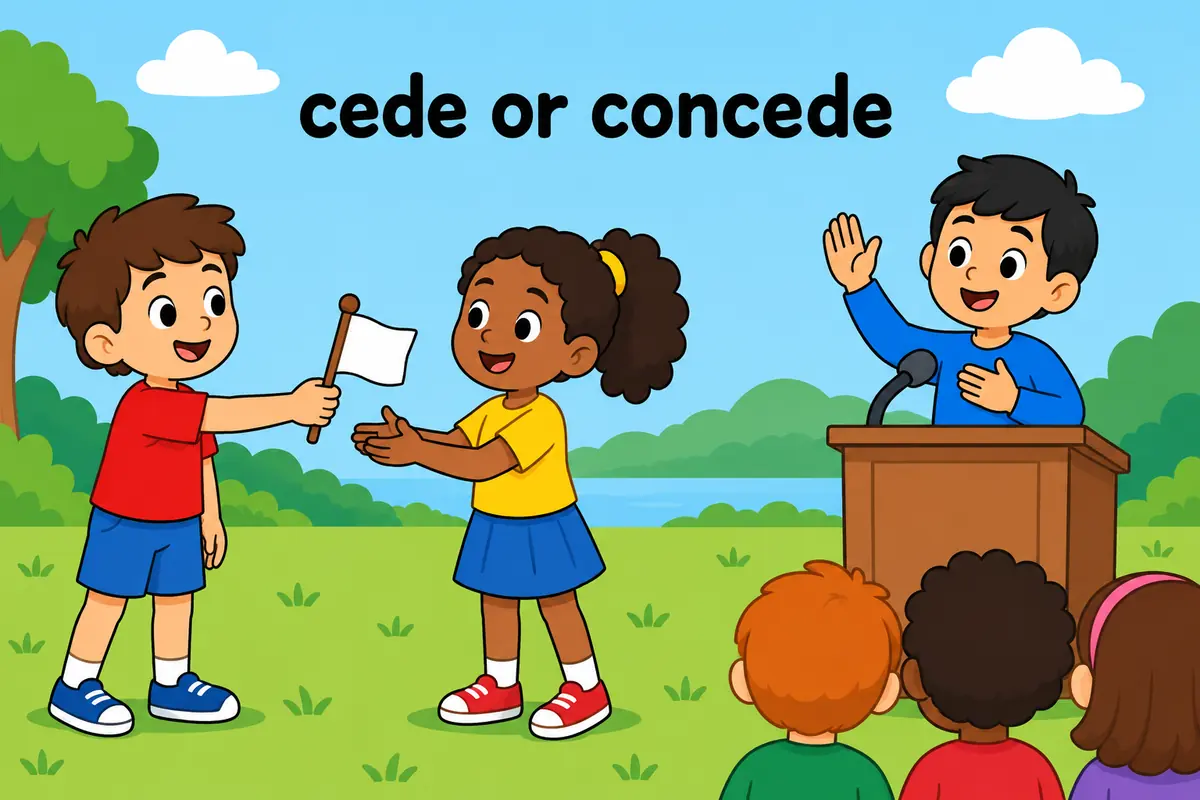
Cede and concede share a Latin root and a sense of yielding, and separating them solves most learner errors. Cede always transfers something you held; concede admits that something is true, or lets a point go in an argument.
| Attribute | cede | concede |
|---|---|---|
| Core idea | Give up power, land or control | Admit a point, or yield a contest |
| Common objects | Territory, control, ground | A point, a fact, defeat |
| Implies a receiver | Usually, after to | No; the admission can stand alone |
| Typical settings | Treaties, law, politics | Debate, argument, sport |
| Can take that-clause | No | Yes: he conceded that he was wrong |
Verdict: use cede when something concrete changes hands, and concede when a person admits a truth or accepts defeat. Surrender is stronger than both, because it usually ends a conflict instead of marking one step in it. To forgo something is to go without it by choice, a gentler act than ceding it to a rival.
Word forms and grammar of cede
Cede is a regular verb with a formal noun, and the spelling never doubles a consonant. The table also flags the form that learners invent by mistake.
| Form | Part of speech | Example |
|---|---|---|
| cede | verb, base form | They will not cede the harbour without a fight. |
| cedes | verb, third person | The treaty cedes the valley to the neighbouring state. |
| ceded | verb, past and participle | The region was ceded after the war. |
| ceding | verb, present participle | Ceding power was the price of the deal. |
| cession | noun | The cession of the port took two years to arrange. |
| ceded to | prepositional phrase | The land was ceded to the trust. |
| cedement | non-standard | Use cession or ceding, never cedement. |
Because cede is transitive, the thing given up always appears as the object: you cede territory, not cede from territory. The formal noun transfer covers the same movement of property and power, and it works in business settings where cession would sound legal.
Common mistakes with cede
- Incorrect:
The government ceded the land the company.Correct: The government ceded the land to the company. Rule: The receiver takes the preposition to. - Incorrect:
The manager ceded that the plan had failed.Correct: The manager conceded that the plan had failed. Rule: Cede transfers something; concede admits a point. - Incorrect:
She ceded her seat to me for a moment.Correct: She gave up her seat for a moment. Rule: Cede implies a lasting, formal hand-over, not a temporary courtesy. - Incorrect:
He ceded from his authority.Correct: He ceded his authority. Rule: Cede is transitive, so it takes a direct object with no from. - Incorrect:
The team ceded to lose the match.Correct: The team ceded the match. Rule: Cede cannot take an infinitive; use a noun object instead. - Incorrect:
They cede the room to the guests every weekend.Correct: They lend the room to the guests every weekend. Rule: Cede means to surrender permanently, so lending needs a different verb.
Practice using cede
Work through the seven items, then check the reasoning as well as the answer.
- Fill the gap: After the war, the empire ______ three coastal provinces.
- Choose the better word: The minister refused to (cede / concede) that the figures were wrong.
- Correct the error: The council ceded the park the trust.
- Build a sentence: use cede control of about a company handing a factory to its workers.
- Spot the register: which belongs in a peace treaty — the state ceded the islands to its neighbour, or the state gave the islands away to its neighbour?
- Rewrite with the noun: The port was ceded to the city. Use cession instead.
- Rewrite in the passive: The committee ceded the decision to the members. Make the decision the subject.
Answers
- ceded — the past tense matches the historical setting, and the provinces are what was given up.
- concede — admitting that figures are wrong is a point conceded, not a transfer.
- The council ceded the park to the trust — the receiver needs the preposition to.
- Model answer: The owners ceded control of the factory to the workers’ committee.
- The state ceded the islands to its neighbour — the treaty register prefers the formal verb.
- The cession of the port to the city took a year — the noun takes of after it.
- The decision was ceded to the members by the committee — the passive keeps the thing transferred as subject.
The bottom line
Use cede in a sentence when power, territory or control passes formally from one holder to another, and name the receiver after to. The two nuances that decide most sentences are these: the verb is transitive, so something concrete or abstract must be given up, and it differs from concede, which admits a point rather than handing something over. For an everyday transfer, give up or hand over reads more naturally.
Frequently asked questions about cede
Is cede a formal or a legal word?
Cede is formal and very common in legal, historical and diplomatic writing. Treaties cede territory, statutes cede jurisdiction and boards cede control. The word can appear in business and political news, but it would sound stiff in everyday conversation, where give up or hand over is the natural choice.
What is the difference between cede and concede?
Cede means to give up something you held, such as land, power or control, and it usually names a receiver after to. Concede means to admit that something is true or to accept that you have lost. Only concede can take a that-clause, as in he conceded that he was wrong.
Can you cede something without pressure?
Yes, though cede often implies pressure. A country may cede a port by voluntary agreement, and a council may cede authority to a local group by choice. The word still marks a formal, lasting transfer, so a free hand-over and a forced one both fit, as long as control genuinely changes hands.
What is the noun form of cede?
The noun is cession, meaning the act of giving something up, as in the cession of the port. It takes of after it: the cession of territory. The gerund ceding also works as a noun, as in ceding power proved expensive, but cession is the standard formal term.