Fishes that start with R include named species, larger groups, and common names that vary by region. Pair a common name with its scientific name when you need a precise identification. Several profiles in the original list assign the wrong scientific name or combine facts about different fish; the sourced clarifications below make those distinctions visible while preserving the full source article unchanged.
At a glance
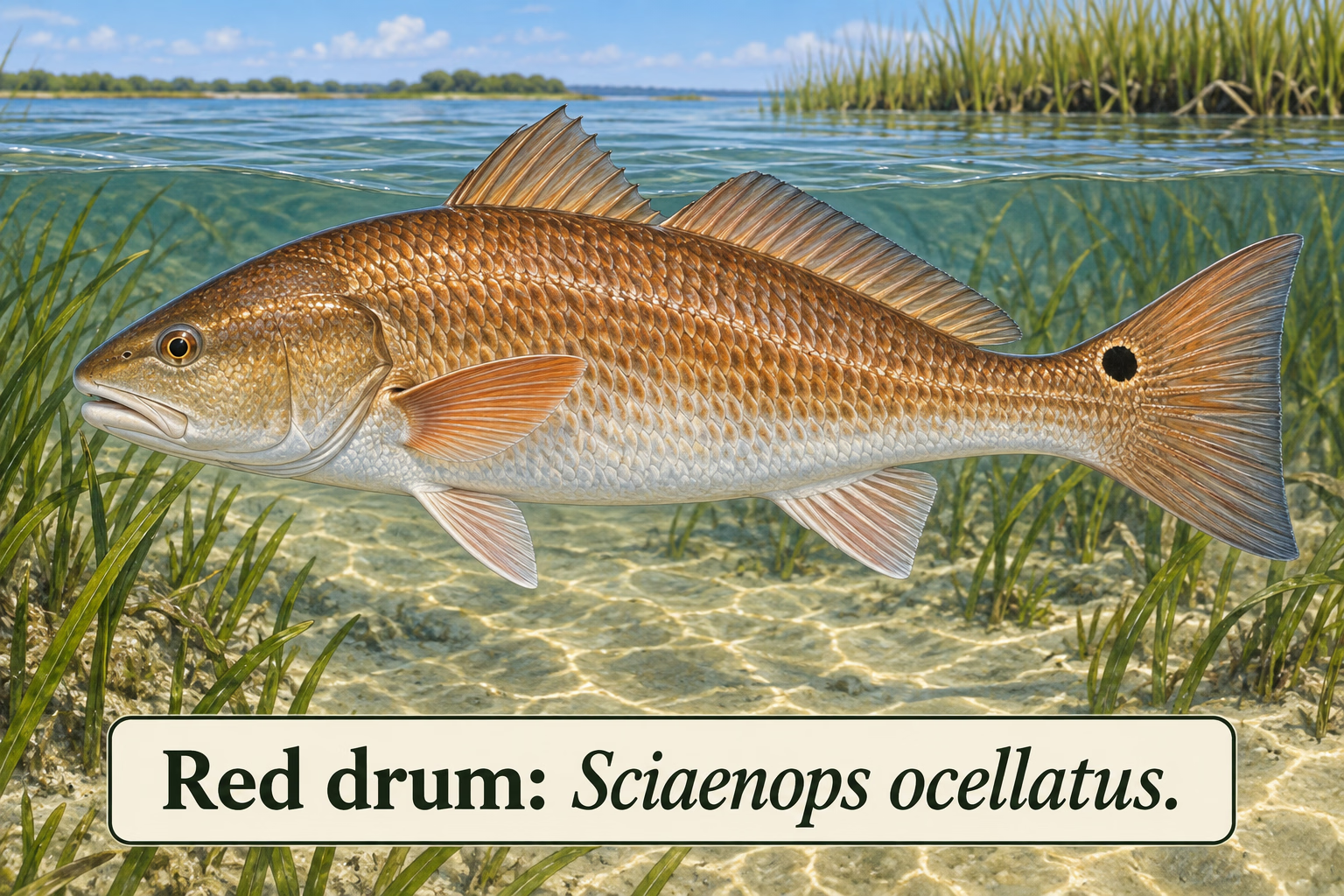
- Red drum is Sciaenops ocellatus; red snapper is a different species, Lutjanus campechanus.
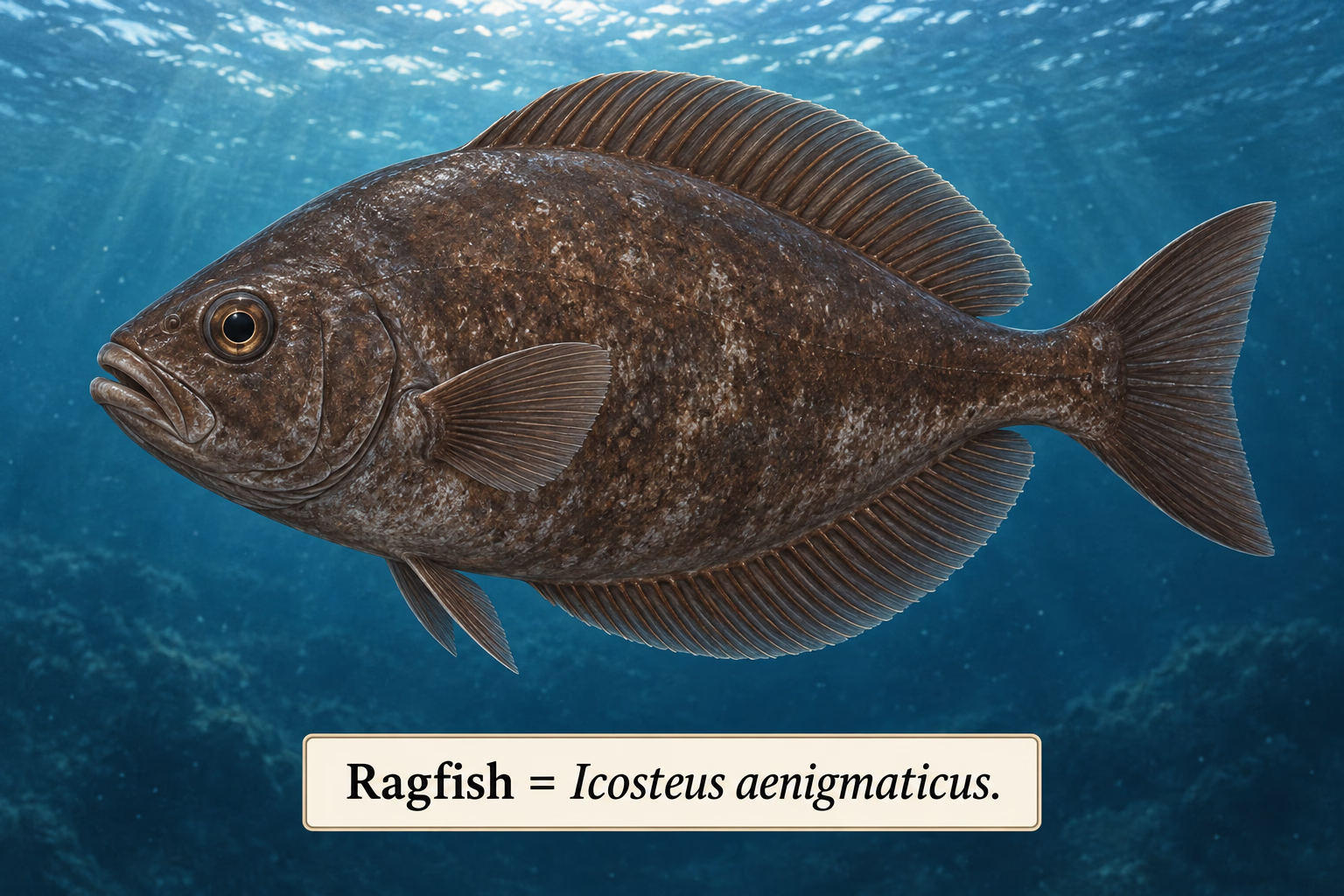
- Ragfish is Icosteus aenigmaticus; Siganus luridus is the dusky spinefoot, also called squaretail rabbitfish.
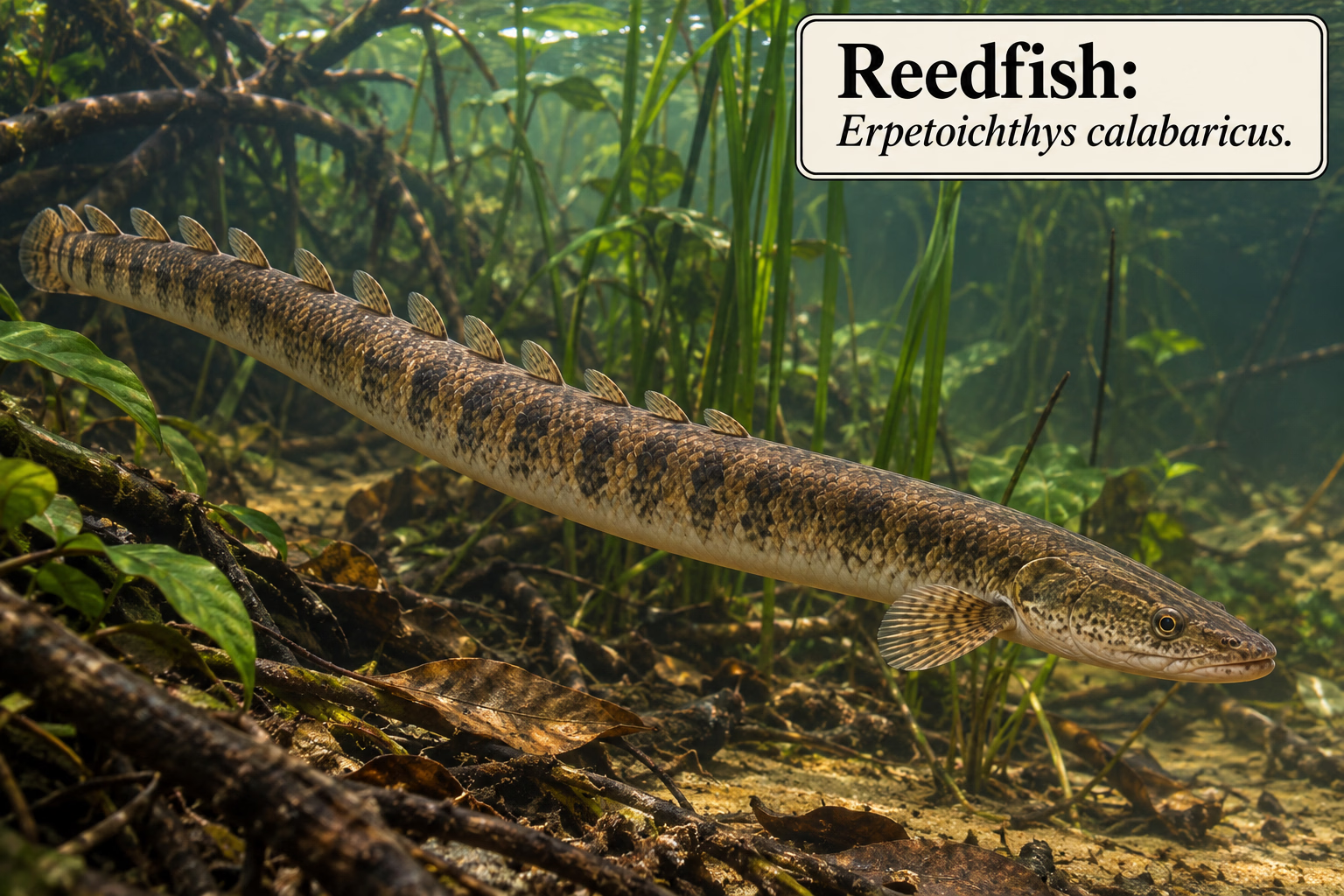
- Reedfish is Erpetoichthys calabaricus; Etroplus suratensis is pearlspot.
- “Rabbit fish” can name a chimaera as well as rabbitfishes in family Siganidae, so specify the species.
- “River shark” needs a named species before its range or life history can be described.

R-fish names that need a taxonomic check
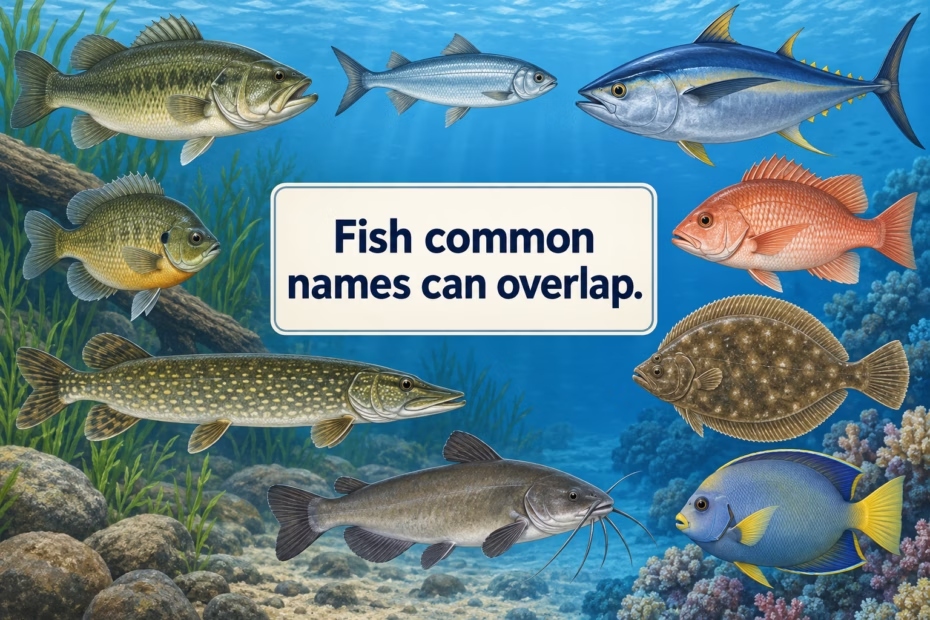
Common names are useful search terms, but they are not always unique species labels. These examples correct mismatches in the original profiles:
| Name in the source | Clarification | Why it matters |
|---|---|---|
| Redfish / red snapper | Sciaenops ocellatus is red drum. NOAA lists red snapper separately as Lutjanus campechanus. | The source misspells the red drum genus as “Scianops” and then calls it a red snapper. “Redfish” is a regional common name, so pair it with the scientific name. |
| Ragfish | Ragfish is Icosteus aenigmaticus. Siganus luridus is dusky spinefoot, also called squaretail rabbitfish. | The source attaches the ragfish profile’s reef and rabbitfish claims to the wrong fish. |
| Rabbitfish | FishBase records “rabbit fish” as a common name for Chimaera monstrosa, a chimaera. Rabbitfishes in family Siganidae are another group. | Shared common names do not make these fish close taxonomic matches; use the species name to identify which one is meant. |
| Red whalefish | The U.S. Fish and Wildlife Service identifies red velvet whalefish as Barbourisia rufa. FishBase identifies Melanocetus johnsonii as humpback anglerfish. | The source pairs “Red whalefish” with “Malacocetus johnsonii,” a combination not verified in the references consulted. Do not silently merge it with either name. |
| Reedfish | Reedfish is Erpetoichthys calabaricus. Etroplus suratensis is pearlspot. | The source gives the pearlspot binomial for reedfish, then later correctly identifies ropefish as E. calabaricus. |
| River shark | Name the species or genus before describing range, size, or reproduction. The river-shark genus Glyphis is documented in the Indo-West Pacific and Australian river/coastal habitats. | The source gives a broad Central and South American range and leathery egg-capsule claim without identifying a species; those details should not be generalized across river sharks. |
For example, the ragfish’s name belongs with Icosteus aenigmaticus, not with a rabbitfish species. FishBase records Chimaera monstrosa as “rabbit fish,” but places it among chimaeras; the word rabbitfish is also used for Siganidae. A common-name match alone is therefore not enough to transfer habitat or behavior between entries.
Likewise, “redfish” should not be treated as interchangeable with “red snapper.” NOAA uses Sciaenops ocellatus for red drum and lists red snapper under the separate binomial Lutjanus campechanus.
The source also assigns Etroplus suratensis to Reedfish, then gives the correct reedfish/ropefish binomial later. FishBase records the former as pearlspot and the latter as reedfish.
Sources for the name checks
- NOAA Fisheries identifies red drum as Sciaenops ocellatus and red snapper as Lutjanus campechanus.
- FishBase: Icosteus aenigmaticus, Siganus luridus, and Chimaera monstrosa.
- FishBase: Erpetoichthys calabaricus (reedfish) and Etroplus suratensis (pearlspot).
- U.S. Fish and Wildlife Service: Red Velvet Whalefish; FishBase: Melanocetus johnsonii.
- Fishes of Australia: Genus Glyphis; Australian Government DCCEEW: Northern River Shark.
Reader note: The preserved directory below contains fish names and profiles that are not all taxonomically reliable. In particular, some common names are paired with incorrect scientific names, and some habitat or life-history details may refer to a different fish. Use the sourced corrections above for those entries; the legacy list and its title count are preserved from the original article and are not a verified count of unique species.
Fishes are a common theme in many cultures around the world. In some cultures, they are seen as a symbol of good luck, while in others they are considered to be a delicious food source. There are many different species of fish, and they come in all shapes and sizes. Some of the most popular fish include the salmon, tuna, and tilapia.
The article “Fishes that begin with ‘R'” is a list of some of the most popular fish that start with the letter “R”. The list includes the red snapper, rainbow trout, and the redfish. Each of these fish has its own unique appearance and flavor. The red snapper, for example, is a pinkish-red fish with a mild flavor, while the rainbow trout is a brightly colored fish with a slightly more intense flavor.
Fishes That Start With The Letter R
There are a variety of fishes that start with the letter “R”. The most common of these are the red snapper, the rainbow trout, and the red drum. However, there are also many lesser-known species such as the blackfin tuna, the blue tang, and the clownfish.
No matter what type of fish you are looking for, there is sure to be a species that starts with “R” and that will suit your needs. So whether you are a beginner fisherman or an experienced angler, be sure to check out the wide variety of fishes that start with “R”. You might just find your new favorite catch.
Rasbora
The rasbora is a freshwater fish belonging to the cyprinid family. It is native to Southeast Asia and can be found in Thailand, Malaysia, Indonesia, and Singapore. The rasbora is a small fish, typically only growing to be 2-3 inches in length. It has a slender body with a long, fins. The rasbora is a peaceful fish and is best kept in a community tank with other peaceful fish. It is an omnivore and will eat both plant and animal matter.

Redtail Catfish
The redtail catfish is a freshwater fish belonging to the order Siluriformes. It is native to South America and can be found in the Amazon River basin. The redtail catfish is a large fish, typically growing to be 3-4 feet in length. It has a long, slender body with a reddish-brown tail. The redtail catfish is a carnivore and will eat other fish, crustaceans, and insects. It is an excellent fighter and is often used in fish fighting competitions.

Redfin Pickerel
The redfin pickerel is a freshwater fish belonging to the pike family. It is native to North America and can be found in the eastern United States and Canada. The redfin pickerel is a small fish, typically only growing to be 8-10 inches in length. It has a slender body with a greenish-brown coloration. The redfin pickerel is a carnivore and will eat other fish, frogs, and insects. It is an excellent fighter and is often used in fish fighting competitions.

River Blackfish
The river blackfish is a freshwater fish belonging to the carp family. It is native to Australia and can be found in the Murray-Darling river system. The river blackfish is a medium-sized fish, typically growing to be 1-2 feet in length. It has a stout body with a dark brown or black coloration. The river blackfish is an omnivore and will eat both plant and animal matter.

The Rabbitfish

Imagine a fish with a big, bulbous head like a rabbit and a long, slender tail like a snake. That’s the Rabbitfish (Chimaera monstrosa), a mysterious denizen of the deep waters in the Atlantic and Mediterranean. These cartilaginous fish, like sharks and rays, have been around for millions of years, making them living fossils.
Rabbitfish Facts:
- Rabbit-like looks: Large eyes, protruding nostrils, and powerful tooth plates give them their nickname.
- Deep-sea divers: They prefer depths of 200 meters to 1,000 meters, where sunlight barely reaches.
- Predator power: They use their sharp teeth to crush shellfish and other hard-shelled prey.
- Egg-laying oddities: Females lay leathery egg capsules with hooks that attach to seaweed or the bottom.
- Slow and steady: Rabbitfish are sluggish swimmers, relying on camouflage and ambush tactics.
The Ragfish

Don’t be fooled by the plain name, the Ragfish (Siganus luridus) is a master of disguise! With its silvery scales and the ability to change color to match its surroundings, this reef fish can blend into coral or rocks, making it invisible to predators. Ragfish are vital members of coral reef ecosystems, grazing on algae and helping to keep the reefs healthy.
Ragfish Facts:
- Master of camouflage: They can change color within seconds, even mimicking the patterns of other fish!
- Coral reef cleaners: They nibble on algae growing on coral, keeping the reefs clean and vibrant.
- School’s out: Ragfish often gather in large schools for protection and to find food.
- Poisonous spines: Watch out! Their dorsal fins have venomous spines that can deliver a painful sting.
- Hermaphrodites: Ragfish can change sex throughout their lives, depending on the needs of the group.
The Ratfish

The Ratfish (Hydrolagus colliei) is like a time capsule from the past, swimming around our oceans for over 300 million years. With its long, eel-like body and a snout that resembles a rodent, it’s easy to see why it earned its name. Ratfish are bottom dwellers, using their powerful jaws to crush clams and other invertebrates.
Ratfish Facts:
- Living fossil: Their primitive features offer scientists insights into the evolution of fish.
- Deep-sea diner: They use their sensitive snout to find food buried in the mud and sand.
- Electric bite: Their jaws contain electric organs stun prey before they’re snapped up.
- Egg-laying experts: Females lay spiral-shaped egg capsules that stick to seaweed or rocks.
- Slow swimmers: Ratfish propel themselves with their large pectoral fins, gliding gracefully through the deep.
The Razorback Sucker

Imagine a fish that can climb waterfalls and navigate rushing rapids! Meet the Razorback sucker (Xyrauchen texanus), a champion of freshwater survival. With its broad, muscular head and powerful sucker mouth, this bottom dweller clings to rocks and even scales vertical surfaces in fast-flowing rivers.
Razorback Sucker Facts:
- Mountain climber: They can climb rapids over 5 meters high using their sucker mouth and strong fins.
- Algae enthusiasts: Their diet consists mainly of algae scraped from rocks with their rasp-like lips.
- Endangered icon: Sadly, their habitat destruction and water pollution put them on the endangered species list.
- Rocky homes: They prefer fast-flowing, rocky rivers with plenty of oxygen and clean water.
- Long-distance journeyers: Razorback suckers migrate long distances for spawning, making them vital ecosystem connectors.
The Redfish

Don’t underestimate the Redfish (Scianops ocellatus)! This vibrant red snapper isn’t just a feast for the eyes; it’s a master of disguise and a skilled hunter. Redfish live in coastal waters and estuaries, changing their color to blend in with the surroundings and ambush prey.
Redfish Facts:
- Color-changing chameleon: They can shift from red to brown to grey, depending on the environment.
- Opportunistic eaters: Redfish feast on a variety of prey, from shrimp and crabs to smaller fish and mollusks.
- Important food source: They are a popular game fish and a vital part of the commercial fishing industry.
- Estuary guardians: Redfish play a crucial role in keeping estuaries healthy by controlling prey populations.
- Strong swimmers: They use powerful tail fins to navigate swift currents and hunt their prey effectively.
The Red Whalefish

Dive into the deepest, darkest parts of the ocean, and you might encounter the Red whalefish (Malacocetus johnsonii). This bioluminescent creature, with its elongated body and enormous nostrils, resembles a ghostly whale at first glance.
Red Whalefish Facts:
- Deep-sea dweller: They prefer depths of 1,000 to 4,000 meters, where sunlight never reaches.
- Bioluminescent wonder: Red whalefish produce a red glow from organs along their body, attracting prey and mates.
- Giant nostrils: Their enormous snout helps them detect faint scents in the darkness and find food.
- Mysterious predators: Little is known about their feeding habits, but they likely prey on small invertebrates.
- Elusive enigma: The Red whalefish remain largely an enigma, adding to the allure of the deep sea.
The Reedfish

Imagine a fish that can effortlessly blend in with its surroundings, transforming from green to brown to nearly transparent! That’s the Reedfish (Etroplus suratensis), a master of mimicry that thrives in the intricate maze of mangrove roots. These small, colorful fish play vital roles in their ecosystem, both as prey and predators.
Reedfish Facts:
- Mimicry champion: They can change their color rapidly to match their surroundings, making them invisible to predators and prey.
- Mangrove guardians: Reedfish contribute to the health of mangrove ecosystems by consuming algae and detritus.
- Sex-changing wonders: These fish are sequential hermaphrodites, meaning they can switch between male and female roles depending on the needs of their group.
- Egg-laying artists: Females lay their eggs on leaves or rocks, where males guard them until they hatch.
- Tiny titans: Adults typically reach only 7-10 centimeters in length, making them compact wonders of the mangrove world.
The Ribbon Eel

Prepare to be mesmerized by the Ribbon Eel (Rhinomuraena quaesita), a slender, ribbon-like creature that dances gracefully through coral reefs. With vibrant colors and mesmerizing movements, these eels are both predators and performers in the underwater realm.
Ribbon Eel Facts:
- Coral reef ballerina: Their flexible bodies and flowing fins allow them to move with astounding fluidity, weaving through coral branches like living ribbons.
- Stealthy hunters: Don’t be fooled by their beauty; Ribbon Eels are ambush predators, using their lightning-fast strikes to capture small fish and shrimp.
- Jaw-dropping jaws: Their mouths can protrude surprisingly far, enabling them to snatch prey hidden in crevices and coral formations.
- Solitary or social: Depending on the species, some Ribbon Eels live alone, while others form small groups in coral caverns.
- Gender mystery: Unlike many eels, their sex remains unknown, adding to the intrigue of these captivating creatures.
The Rice Eel

Don’t let the name fool you, the Rice Eel (Monopterus albus) doesn’t dine on rice! Found in freshwater habitats across Asia, these burrowing eels have fascinating adaptations and surprising feeding habits.
Rice Eel Facts:
- Burrowing masters: They spend most of their time buried in mud or sand, emerging at night to hunt.
- Air-breathing adventurers: Rice Eels can gulp air from the surface, allowing them to survive in poorly oxygenated waters.
- Opportunistic omnivores: While not rice connoisseurs, they eat a variety of prey, from worms and insects to small fish and amphibians.
- Eel parents extraordinaire: Unlike most eels, Rice Eels exhibit parental care, guarding their eggs and young until they are independent.
- Cultural significance: In some Asian cultures, Rice Eels are symbols of strength and perseverance, revered for their adaptability and burrowing prowess.
The River Shark

River sharks? Believe it or not, these freshwater predators roam rivers and lakes in Central and South America. Not to be confused with their ocean-dwelling cousins, River Sharks are smaller, typically reaching around 3-4 feet in length. But don’t underestimate their ferocity! With sharp teeth and powerful jaws, they hunt fish, amphibians, and even small mammals.
River Shark Facts:
- Freshwater hunters: Found in rivers and lakes of South and Central America, including the Amazon River.
- Smaller than their ocean cousins: Growing to around 3-4 feet, compared to the 20-30 feet of Great White Sharks.
- Ambush predators: They use camouflage and ambush tactics to surprise their prey.
- Egg-layers: Females lay leathery egg capsules near the water’s edge, with young hatching independently.
- Vulnerable giants: Sadly, their habitat loss and overfishing due to their perceived threat to humans place them in vulnerable species categories.
The Rockfish

Rockfish isn’t just one fish, it’s a group of over 100 species belonging to the Sebastes genus. These vibrant fish inhabit rocky reefs and kelp forests in the Pacific Ocean, dazzling divers with their kaleidoscope of colors. From fiery red and vibrant orange to deep purple and shimmering yellow, Rockfish add a splash of personality to their underwater homes.
Rockfish Facts:
- A diverse family: Over 100 species with varying sizes, colors, and ecological roles.
- Reef residents: They cling to rocky bottoms and kelp forests, playing a crucial role in reef ecosystems.
- Opportunistic feeders: They prey on small fish, invertebrates, and crustaceans, using their spiny heads to crack open hard shells.
- Live-bearers: Unlike most fish, Rockfish give birth to live young, contributing to their unique life cycle.
- Resilient survivors: Rockfish have surprisingly long lifespans, with some species living over 100 years! Their slow growth and late maturity, however, make them vulnerable to overfishing.
The Roosterfish
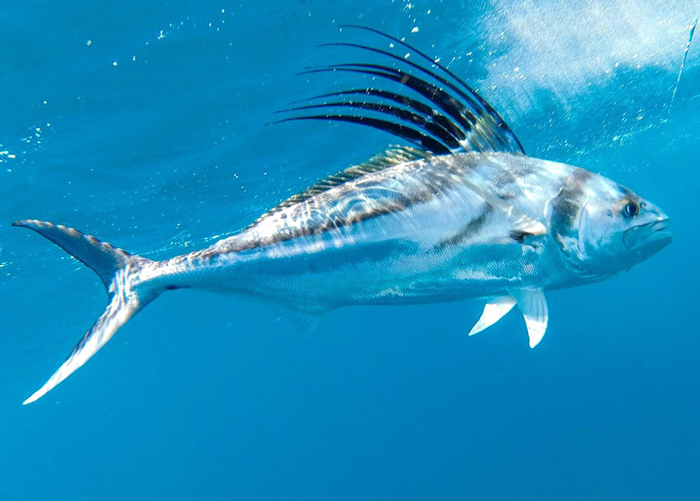
Get ready for a jaw-dropping spectacle! The Roosterfish, as its name suggests, boasts a majestic dorsal fin that resembles a rooster’s comb. But this fish isn’t just about looks; it’s a fierce predator and an acrobatic aerialist. They launch themselves out of the water, chasing flying fish and squid with impressive leaps that can reach heights of 15 feet!
Roosterfish Facts:
- Leaping acrobats: Known for their spectacular jumps out of the water to catch prey.
- Predatory powerhouses: With sharp teeth and powerful jaws, they hunt fish, squid, and even small birds.
- Solitary wanderers: Adults prefer a solitary life, roaming the open ocean in search of food.
- Game fish giants: Their impressive size and fighting spirit make them popular game fish, but responsible fishing practices are crucial for their conservation.
- Symbiotic relationships: Roosterfish often work with dolphins to hunt schools of fish, a fascinating example of interspecies cooperation.
The Rudderfish

Imagine a fish with a body shaped like a rudder, expertly navigating currents and coral reefs with unparalleled agility. Meet the Rudderfish (Kyphosus sectatrix), aptly named for its distinctive dorsal fin that resembles a ship’s steering wheel. These vibrant reef dwellers are playful and social, often forming large schools that shimmer across the ocean floor.
Rudderfish Facts:
- Rudder for a reason: Their tall, dorsal fin acts like a rudder, allowing them to maneuver swiftly through coral reefs and evade predators.
- Algae enthusiasts: They graze on algae growing on coral and rocks, helping to keep the reefs healthy and vibrant.
- School’s out: Rudderfish often gather in large schools for protection and to find food, creating a mesmerizing spectacle for divers.
- Hermaphrodites with a twist: Interestingly, they can switch between male and female roles throughout their lives, adapting to the needs of their group.
- Colorful characters: Rudderfish sport a range of hues, from vibrant yellow and orange to shimmering green and blue, adding a splash of color to the coral reefs.
The Round Whitefish

Venture into the icy depths of the Arctic and North Atlantic, and you might encounter the Round Whitefish (Prosopium cylindraceum). As its name suggests, this plump fish has a perfectly rounded body, perfectly adapted to survive in the frigid waters. Round Whitefish play a crucial role in the Arctic ecosystem, acting as a vital food source for seals, birds, and even larger fish.
Round Whitefish Facts:
- Cold-water warriors: Thriving in temperatures as low as -1°C, their antifreeze proteins allow them to survive in the icy Arctic waters.
- Round for resilience: Their rounded body shape minimizes surface area, reducing heat loss and helping them retain warmth in the cold.
- Shoaling survivors: Round Whitefish often form dense schools for protection against predators and to conserve energy.
- Egg-laying endurance: Females lay thousands of tiny eggs in the winter, tucked away under the ice, ensuring the next generation’s survival.
- Slow and steady: These fish are slow swimmers, relying on camouflage and their cold-adapted physiology to avoid predators.
The Ropefish

Prepare to be astonished by the Ropefish (Erpetoichthys calabaricus), a living fossil that has remained virtually unchanged for over 100 million years! This slender, eel-like creature boasts a unique adaptation: its incredibly long dorsal fin runs the entire length of its body, resembling a living rope. Ropefish are bottom dwellers, often found lurking in muddy rivers and swamps of Africa.
Ropefish Facts:
- Living fossil: Their primitive features offer scientists insights into the evolution of fish, making them a valuable window into the past.
- Breathing buddies: Unlike most fish, they can gulp air from the surface using a primitive lung-like organ, allowing them to survive in low-oxygen waters.
- Long and lean: Reaching up to 3 feet in length, their slender body and flexible dorsal fin help them navigate through dense vegetation and mud.
- Slow-motion hunters: Ropefish are ambush predators, using their sensitive snouts to detect prey and their lightning-fast strikes to capture them.
- Parental care champions: Unlike most eels, Ropefish exhibit parental care, guarding their eggs and young until they are independent.
63 Fishes Beginning With R
| Rabbitfish | Raccoon butterfly fish |
| Ragfish | Rainbow trout |
| Rainbowfish | Rasbora |
| Ratfish | Rattail |
| Ray | Razorback sucker |
| Razorfish | Red grouper |
| Red salmon | Red snapper |
| Redfin perch | Redfish |
| Redhorse sucker | Redlip blenny |
| Redmouth whalefish | Redtooth triggerfish |
| Red velvetfish | Red whalefish |
| Reedfish | Reef triggerfish |
| Remora | Requiem shark |
| Ribbon eel | Ribbon sawtail fish |
| Ribbonfish | Rice eel |
| Ricefish | Ridgehead |
| Riffle dace | Righteye flounder |
| Rio Grande perch | River loach |
| River shark | River stingray |
| Rivuline | Roach |
| Roanoke bass | Rock bass |
| Rock beauty | Rock cod |
| Rocket danio | Rockfish |
| Rockling | Rockweed gunnel |
| Rohu | Ronquil |
| Roosterfish | Ropefish |
| Rough scad | Rough sculpin |
| Roughy | Roundhead |
| Round herring | Round stingray |
| Round whitefish | Rudd |
| Rudderfish | Ruffe |
| Russian sturgeon |
Conclusion
There are many types of fishes that begin with the letter “R”. Some of these fishes include the red drum, the redfish, and the red-bellied piranha. All of these fishes are interesting in their own way and provide different benefits to those who consume them.
Overall, fishes that begin with the letter “R” are interesting creatures that provide many benefits to those who consume them. They are a good source of protein and can be cooked in a variety of ways. Whether you are looking for a tasty meal or a fun pet, one of these fishes is sure to fit your needs.