In the vast tapestry of the English language, certain words evoke strong emotions and have the power to convey negativity instantly. As we journey through the alphabet, focusing on these potent terms, we’ve now arrived at the letter ‘F’.
Whether you’re a writer aiming to capture a particular mood, a student trying to enhance your vocabulary, or just someone fascinated by the multifaceted nature of language, our exploration of negative words that start with ‘F’ will undoubtedly be intriguing. Prepare to delve into a list of words that might remind you of challenges, obstacles, or dark moments, but also remember: understanding these terms also empowers us to use them judiciously and effectively.
How to Choose the Right Negative F Word
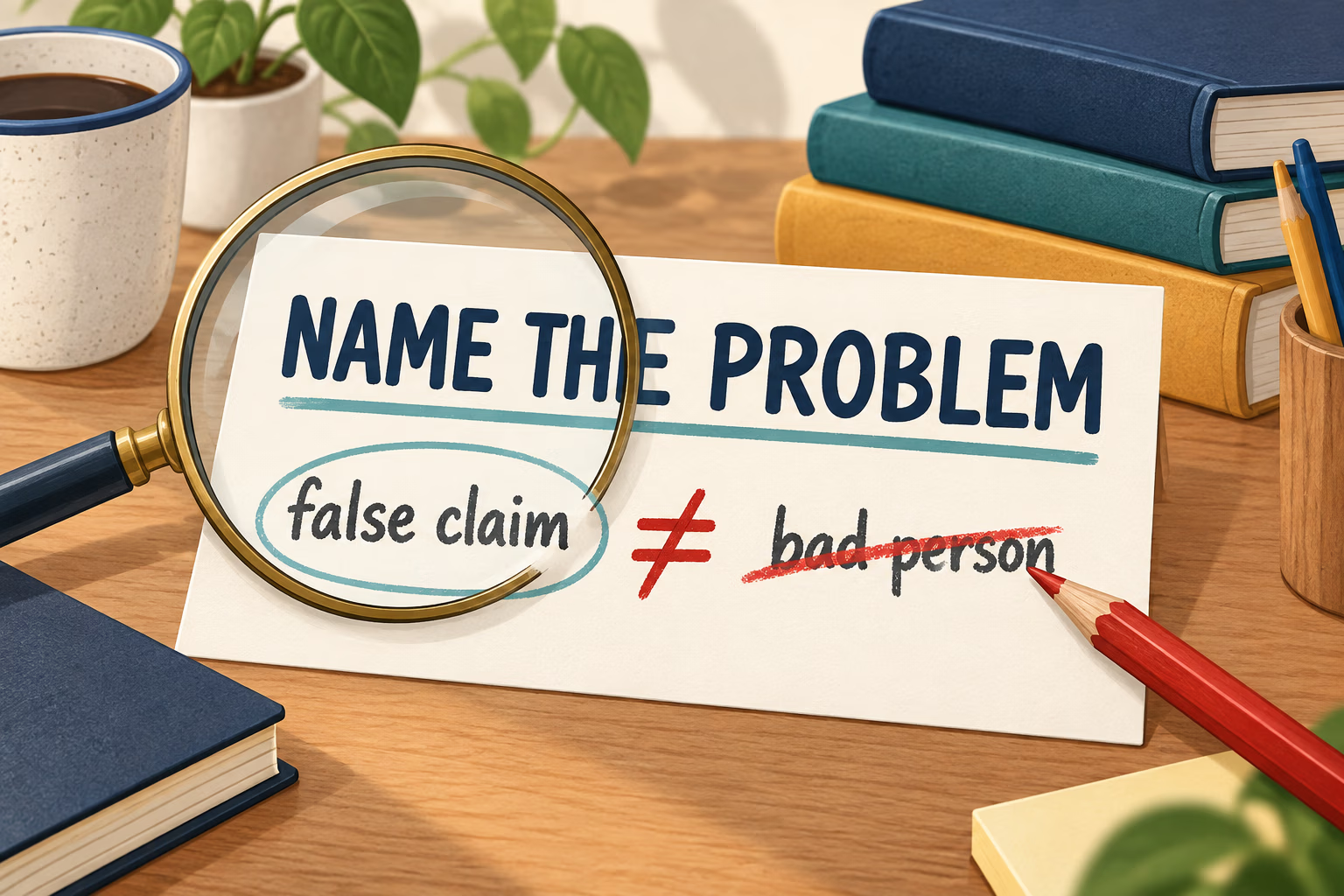
“Negative” is a useful starting label, but it does not describe one fixed kind of word. The F list includes feelings, actions, outcomes, judgments, and words that may be neutral or even complimentary in another setting. Before using an item, ask what it describes: a feeling, a result, a factual error, harmful conduct, or a person’s perceived manner. That small check makes a description clearer and fairer.
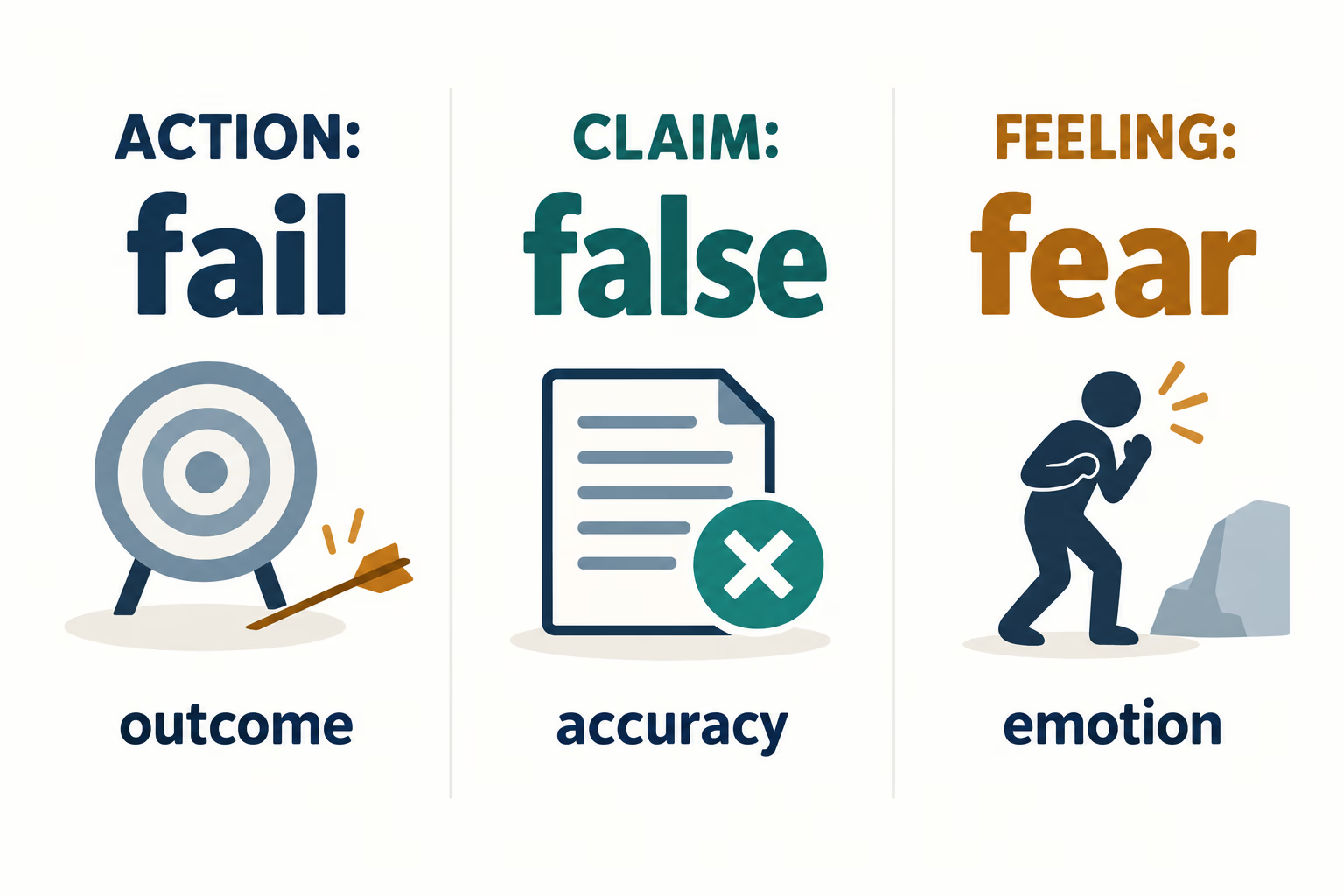
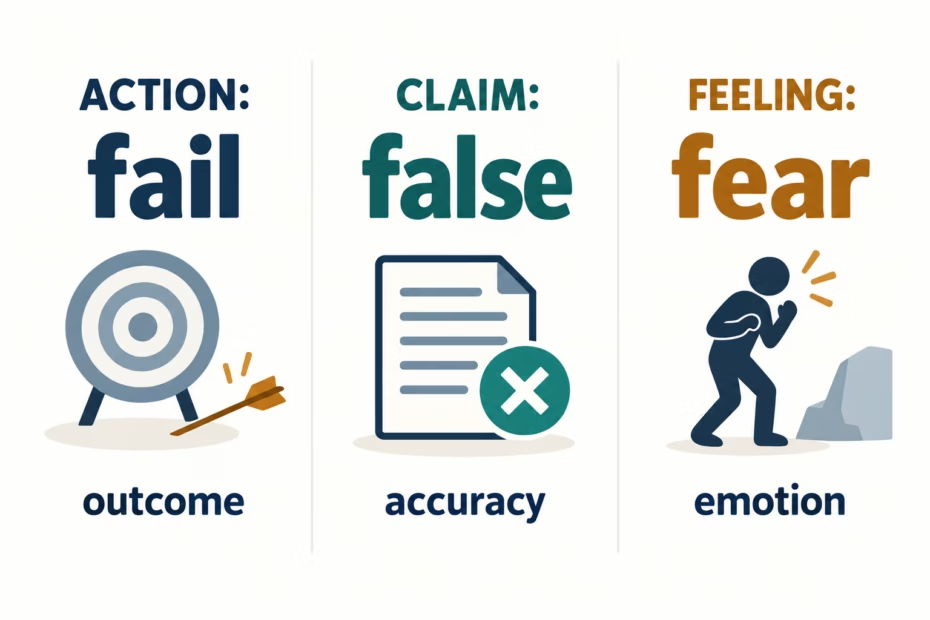
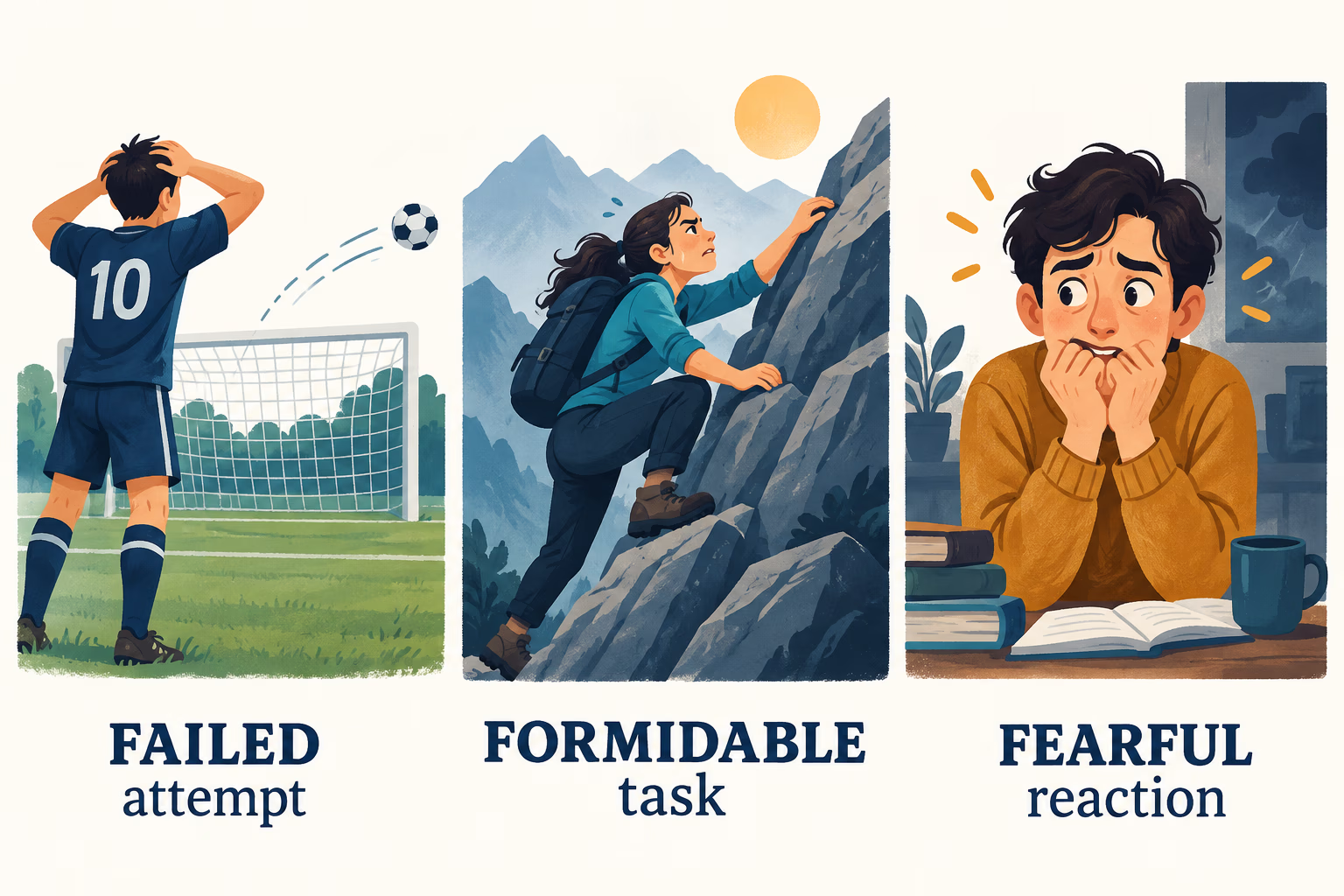
For example, fail names an unsuccessful result or attempt, while fear names an emotion. False challenges the accuracy of a statement; it does not by itself show that the speaker intended to deceive. Fraudulent is a much stronger accusation of deception, so it should be reserved for situations where the evidence and context support it. The Cambridge Dictionary describes fear as an unpleasant response to perceived danger or harm, illustrating why an emotion word is not automatically a judgment about character.
Sort the words by the kind of problem they describe
| Kind of description | Useful F words | What the word points to |
|---|---|---|
| Harm or deception | fraud, fraudulent, false, fabricate | A deceptive act, an inaccurate claim, or something invented rather than verified. |
| Outcome or reasoning | fail, failure, fault, fallible, fallacy | An unsuccessful result, a specific defect, human susceptibility to error, or mistaken reasoning. |
| Feeling or response | fear, fearful, fretful, frustrated, furious | An emotion or reaction, which may be temporary and tied to a particular situation. |
| Difficulty or lack of effect | formidable, feeble, futile, fruitless, falter | A demanding challenge, limited strength, an ineffective effort, or wavering progress. |
| Evaluation or tone | fickle, frivolous, facetious, foul, fatuous | A judgment whose force depends on what is being described and the evidence available. |
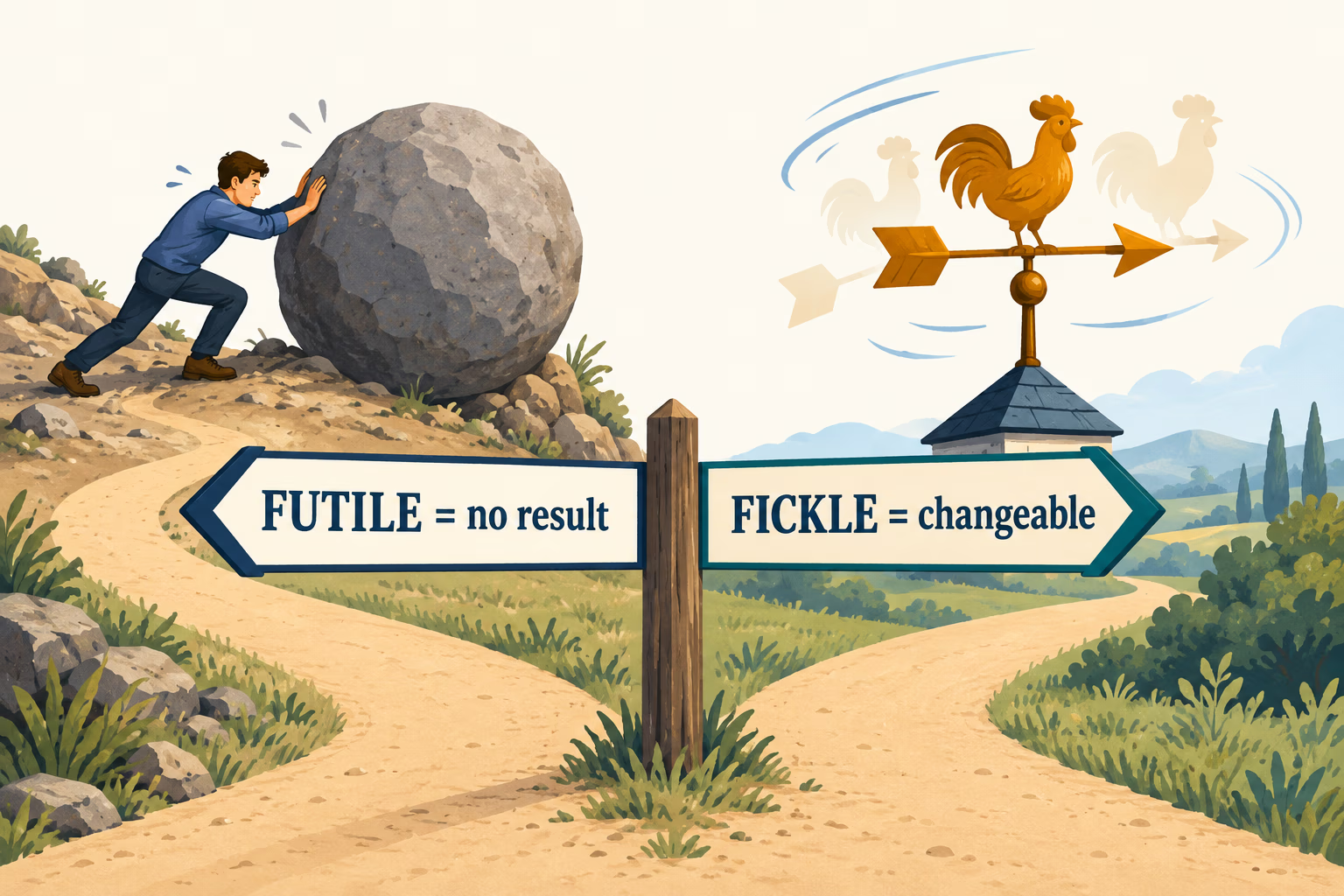
The categories are practical guides, not rigid boxes: a word can carry more than one sense. Cambridge defines futile around an action achieving no effect, while fickle describes a person or conditions that change readily. The two can both sound critical, but they do not mean the same thing.
Distinguish closely related F words
- Fail, failure, and faulty: Fail is commonly a verb (“the first attempt failed”) and can also be a noun in some uses. Failure names an unsuccessful attempt, result, or breakdown. Faulty describes something defective or not working properly. A failed experiment is not necessarily a faulty experiment: it may have answered the question it was designed to test.
- False, fallacious, and fraudulent: False means untrue or inaccurate. Fallacious describes reasoning or an argument built on a mistake. A fallacy is a mistaken belief or line of reasoning. Fraudulent implies deliberate deception in a particular context; do not use it as a synonym for every error.
- Fear, fearful, and fearsome: Fear is the emotion; fearful usually describes someone feeling or showing fear, or something that causes fear; fearsome chiefly describes something that inspires fear. Specify whose perspective is involved when it matters.
- Futile and fruitless: Both can describe an effort that produces no useful result. Futile often stresses that success or effect seems impossible in the circumstances; fruitless stresses that no result came from the attempt. Choose the one that fits the evidence instead of treating every difficult task as futile.
- Fickle and fickleness: These refer to frequent or sudden changes, often of opinion, interest, or conditions. Calling a person fickle judges their pattern; describing fickle winds or fickle demand can simply report changeability. Cambridge marks the people-focused sense as disapproving, so a concrete description such as “changed her view twice after new evidence” may be more informative than a blanket label.
Examples: use the word that matches the facts
| Less precise | More precise sentence | Why it fits |
|---|---|---|
| “The report was fraudulent.” | “The report contained a false figure; the review has not established how the error occurred.” | Separates a demonstrable inaccuracy from an unproven claim about intent. |
| “Her plan was futile.” | “The plan produced no water because the supply line was disconnected.” | Names the observable result and its cause. |
| “He is a failure.” | “His first application was unsuccessful, so he revised it and tried again.” | Describes one outcome without turning it into an identity. |
| “That was a frivolous question.” | “The question was playful and unrelated to the safety issue we were discussing.” | Explains the mismatch rather than dismissing the person asking. |
| “She is fickle.” | “She changed her preference after comparing the new options.” | Reports the change and its context without assuming a trait. |
| “The trail was formidable.” | “The steep, rocky trail was formidable for our group after the rain.” | Shows what made the challenge demanding and for whom. |
| “The decision was fateful.” | “The decision had lasting consequences for the project.” | States the consequence rather than relying on dramatic emphasis. |
Some words on a negative-word list are strongly critical, but others are negative only in a particular sentence. Frivolous can criticize something treated as too trivial for the occasion; it can also describe lighthearted fun that is welcome in the right context. Facetious means joking in a way that may be inappropriate or misunderstood, while fancy, fastidious, fierce, frugal, funny, and funky are not inherently negative. Their meaning depends on the noun, situation, and speaker’s tone.
Use strong labels with care
Words that judge a person—such as fickle, fatuous, or feckless—can flatten a complicated situation into a character verdict. In feedback, name the action or evidence instead: “the figures were not checked” is clearer than “the work was foolish.” In a story, a narrator may choose a harsher word to create a distinct voice, but the reader should be able to tell whether the label is the narrator’s opinion or an established fact.
Use famine literally for an extreme, widespread food shortage, not as a casual synonym for “not enough.” The Integrated Food Security Phase Classification overview hosted by the United Nations explains that an area-level famine classification draws on evidence about food access, acute malnutrition, and mortality. In ordinary figurative writing, choose a less loaded word such as shortage or scarcity when that is what you mean.
A quick editing check
- Identify the target: is the sentence about a claim, action, outcome, feeling, or person?
- Choose the narrowest word that says what you can support: “inaccurate” for an error, “unsuccessful” for an outcome, “ineffective” for an action that had no effect.
- Check the word form: frustrate is a verb, frustrated often describes a person’s state, and frustrating describes what causes that response.
- Read the sentence aloud. If the adjective sounds like a permanent verdict, replace it with the specific evidence unless that judgment is intentional and justified.
Choosing a precise F word does not make a difficult fact less serious. It shows the reader whether you mean harm, an error, a setback, an emotion, or a point of view—and keeps the example useful rather than merely forceful.

Negative Words That Start With The Letter F
The alphabet is a veritable tapestry of emotions, and the letter ‘F’ folds neatly into this fabric, fusing both favorable and foreboding feelings. Whilst it fans the flames of fun, freedom, and fantasy, it simultaneously fuels facets of negativity, fear, and frustration. This feature seeks to filter out and foreground the negative ‘F’ words, framing their significance in our lexicon.

1. Fear
Perhaps the most instinctive of human emotions, fear signals danger, threats, or anything that raises the alarm of potential harm, be it physical, emotional, or psychological.
2. Fail
A word that denotes the absence of success. To fail means not to achieve the desired goal or standard, often leading to feelings of disappointment.
3. Fraud
An intentional deception made for personal gain or to damage another individual; a deliberate act of trickery or deceit.
4. Frustrate
A word that encapsulates the feeling of being upset or annoyed, especially because of the inability to change or achieve something.
5. Famine
A severe shortage of food that results in widespread hunger and can often lead to death, migration, and social disruption.
6. Fickle
Describing inconsistency or changeability. A person labelled as fickle is often considered unreliable because of their changing opinions or loyalties.
7. Futility
The feeling or state of being pointless or useless. It emphasizes the sense that there’s no beneficial outcome to be found in a situation.
8. Falter
To move or act hesitantly or unsteadily. This can be due to a lack of confidence or because of being unsure.
9. Feud
A prolonged and bitter argument or hostility between two parties, often spanning generations.
10. Frivolous
Not having serious purpose or value. Often used to describe actions or objects that are considered unimportant or wasteful.
11. Forsake
To abandon or give up on something or someone, particularly in a challenging time or when needed.
12. Feeble
Lacking in strength or effectiveness. It can refer to physical strength, but also to less tangible forms of strength, like arguments or efforts.
13. Fester
Refers to the development of pus in a wound, but can also metaphorically describe negative feelings that grow more intense due to neglect.
14. Flaw
A defect, fault, or imperfection that diminishes the value or quality of something.
15. Forebode
To predict or indicate a future event, usually an undesirable or unfortunate one.
List of Negative Words Starting with F
| Fabricate | Fabrication | Facetious |
| Facetiously | Faded | Fail |
| Failed | Failing | Fails |
| Failure | Failures | Faint |
| Fainthearted | Faithless | Fake |
| Fall | Fallacies | Fallacious |
| Fallaciously | Fallaciousness | Fallacy |
| Fallen | Falling | Fallout |
| Falls | FALSE | Falsehood |
| Falsely | Falsified | Falsify |
| Falter | Faltered | Faltering |
| Famine | Famished | Fanatic |
| Fanatical | Fanatically | Fanaticism |
| Fanatics | Fanciful | Far-Fetched |
| Farce | Farcical | Farcical-Yet-Provocative |
| Farcically | Farfetched | Fascism |
| Fascist | Fastidious | Fastidiously |
| Fat | Fat-Cat | Fat-Cats |
| Fatal | Fatalistic | Fatalistically |
| Fatally | Fateful | Fatefully |
| Fathomless | Fatigue | Fatigued |
| Fatty | Fatuity | Fatuous |
| Fatuously | Fault | Faults |
| Faulty | Fawning | Fawningly |
| Faze | Fear | Feared |
| Fearful | Fearfully | Fears |
| Fearsome | Feckless | Feeble |
| Feebleminded | Feign | Feigned |
| Fell | Felon | Felonious |
| Ferociously | Ferocity | Fetid |
| Fever | Feverish | Fevers |
| Fiasco | Fib | Fibber |
| Fickle | Fiction | Fictional |
| Fictitious | Fidget | Fidgeting |
| Fidgety | Fiend | Fiendish |
| Fierce | Fight | Figurehead |
| Filmy | Filtered | Filth |
| Filthy | Finagle | Finicky |
| Fishy | Fissures | Fist |
| Flabbergast | Flabbergasted | Flagging |
| Flagrant | Flagrantly | Flair |
| Flairs | Flak | Flake |
| Flakey | Flaking | Flaky |
| Flare | Flares | Flat |
| Flat-Out | Flaunt | Flavorless |
| Flaw | Flawed | Flaws |
| Flee | Fleeing | Fleer |
| Flees | Fleeting | Flicker |
| Flickering | Flickers | Flighty |
| Flimflam | Flimsy | Flippant |
| Flirt | Flirtatious | Flirty |
| Floored | Floppy | Flounder |
| Floundering | Flout | Fluster |
| Foe | Foggy | Fool |
| Fooled | Foolhardy | Foolish |
| Foolishly | Foolishness | Forbid |
| Forbidden | Forbidding | Forceful |
| Foreboding | Forebodingly | Forfeit |
| Forged | Forgetful | Forgetfully |
| Forgetfulness | Forgettable | Forgotten |
| Forlorn | Forlornly | Formulaic |
| Forsake | Forsaken | Forswear |
| Foul | Foully | Foulness |
| Fractious | Fractiously | Fracture |
| Fragile | Fragmented | Frail |
| Frantic | Frantically | Franticly |
| Fraud | Fraudulent | Fraught |
| Frayed | Frazzle | Frazzled |
| Freak | Freaking | Freakish |
| Freakishly | Freaks | Freaky |
| Freeze | Freezes | Freezing |
| Frenetic | Frenetically | Frenzied |
| Frenzy | Fret | Fretful |
| Frets | Friction | Frictions |
| Fried | Frigging | Fright |
| Frighten | Frightened | Frightening |
| Frighteningly | Frightful | Frightfully |
| Frigid | Frilly | Frivolous |
| Frost | Frosty | Frown |
| Frowning | Froze | Frozen |
| Frugal | Fruitless | Fruitlessly |
| Frumpy | Frustrate | Frustrated |
| Frustrates | Frustrating | Frustratingly |
| Frustration | Frustrations | Fudge |
| Fugitive | Full-Blown | Fulminate |
| Fumble | Fumbling | Fume |
| Fumes | Fuming | Fundamentalism |
| Funky | Funnily | Funny |
| Furious | Furiously | Furor |
| Furtive | Fury | Fuss |
| Fussy | Fustigate | Fusty |
| Futile | Futilely | Futility |
| Fuzzy |
Conclusion
The fluidity of the letter ‘F’ flits between positivity and negativity, foregrounding the multifaceted nature of language. By fleshing out these ‘F’ words, we gain insight into the fears and frustrations frequently faced in our shared human experience. It’s crucial to fathom these words and the feelings they foster, as they fortify our understanding of the world and help in framing our responses to challenges.
Negative Words That Start With
A | B | C | D | E | F | G | H | I | J | K | L | M | N | O | P | Q | R | S | T | U | V | W | X | Y | Z


