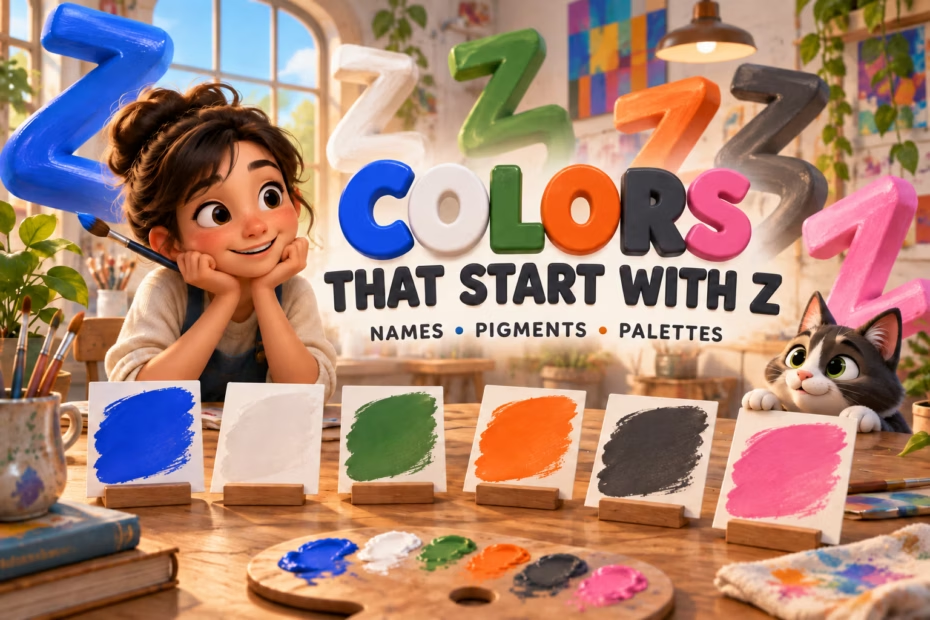
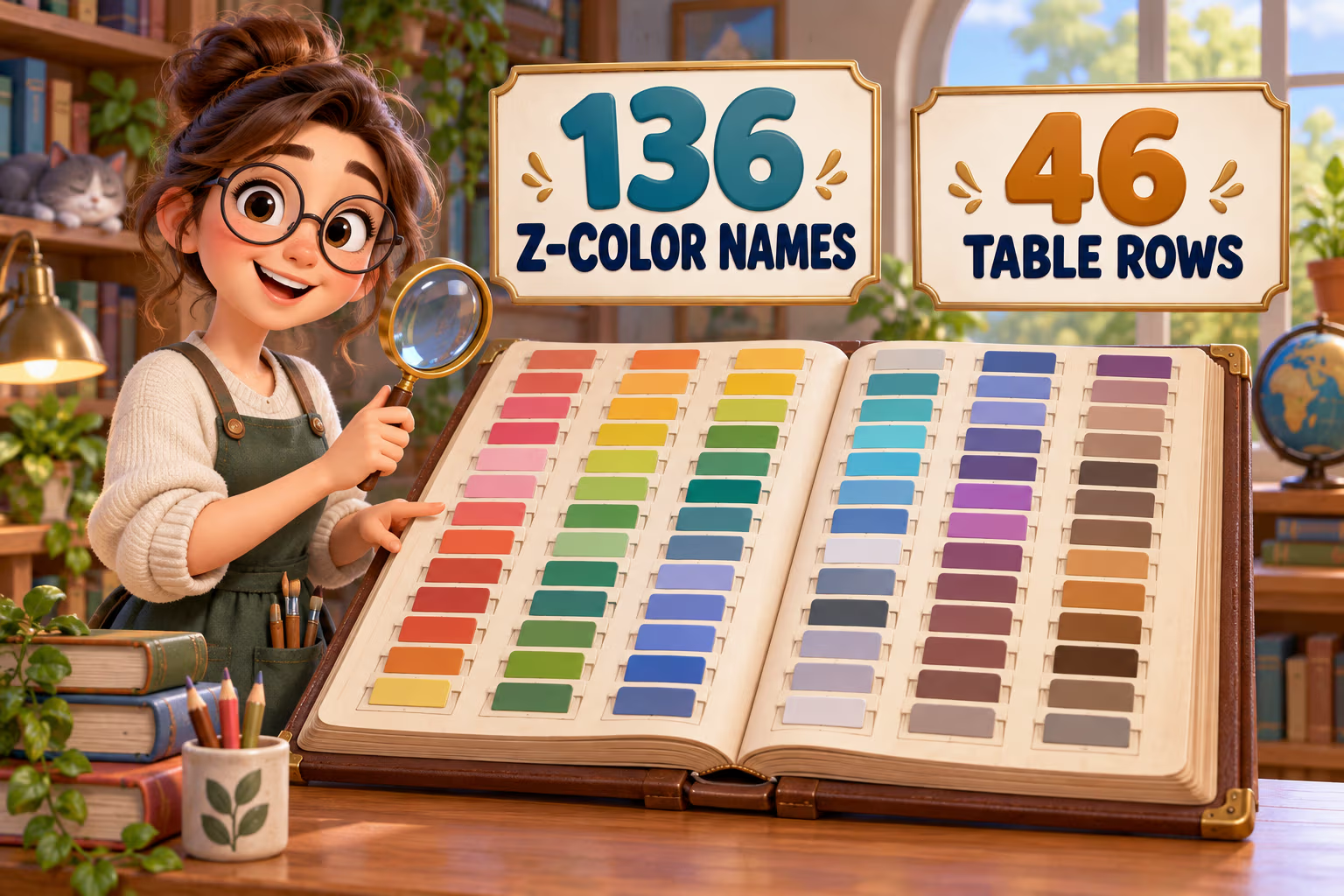
Colors that start with Z include 136 distinct entries here, such as Zaffre, Zinc White, Zephyr Pink, and Zomp. Some names describe historical pigments or materials; others are palette labels. W3C CSS Color 4 lists no Z-starting named-color keyword, so a shade name alone cannot establish one universal HEX or RGB value.
Quick Guide to Colors That Start With Z
- Directory size: the index lists 136 distinct names in two tables with 46 rows.
- CSS names: the W3C Color 4 named-color list contains no keyword beginning with Z.
- Pigment history: Zaffre and Zinc White are documented art materials, not universal digital color codes.
- Other shade labels: descriptive and palette names need a cited palette or product source before assigning an exact code.
- Find a name: use your browser’s Find command (Ctrl+F on Windows/Linux or Command+F on Mac), then search the word in the original profiles or directory.
How to Read a Z-Color Name
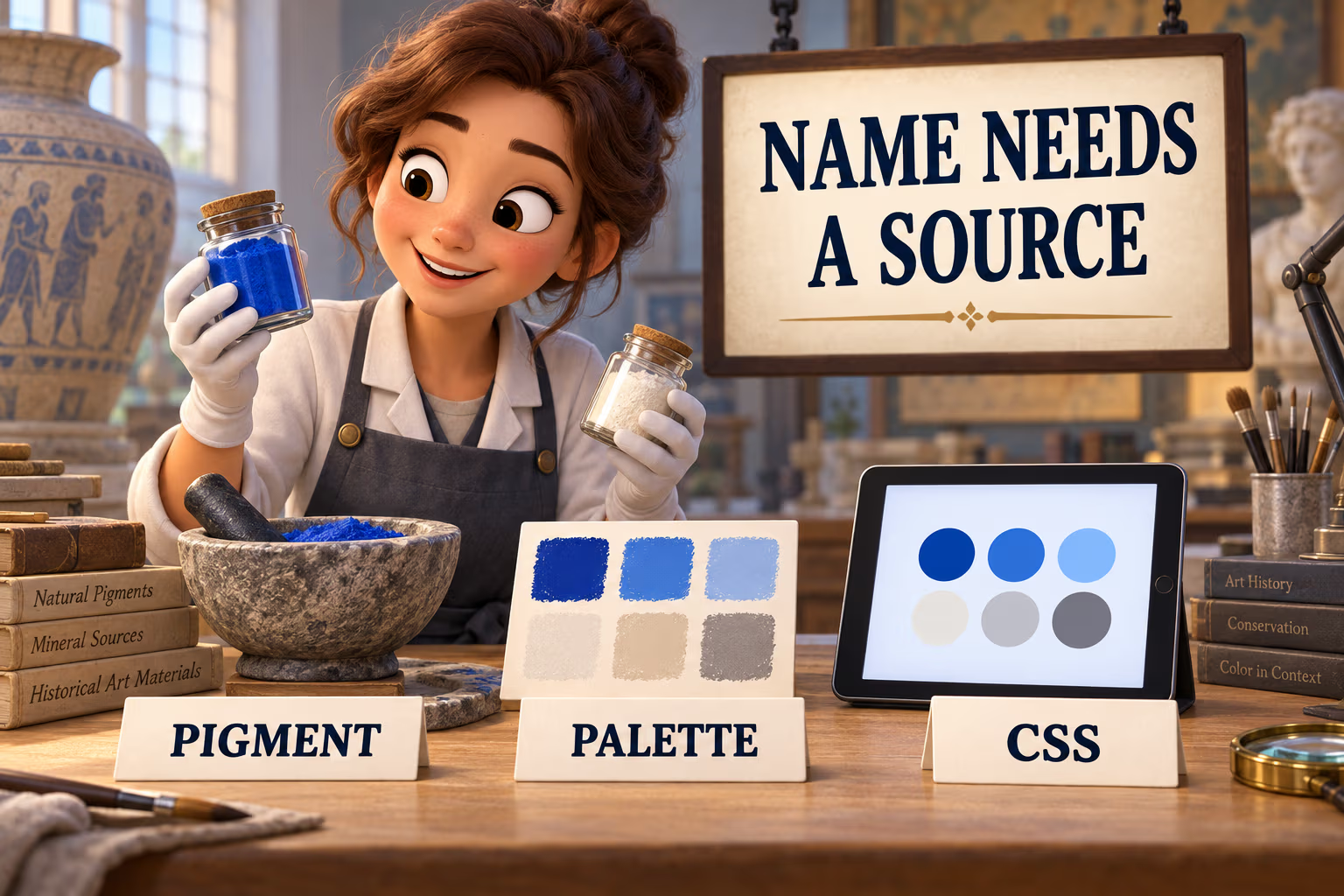
A name can point to a material, a historic term, a commercial shade, or a descriptive choice in a palette. Those uses are not interchangeable. Start with the source that defines the shade; if the source does not specify a digital value or a physical product, treat the name as a useful description rather than an exact match.
For more alphabetic color lists, visit colors that start with M or colors that start with F. For descriptive wording, see our color adjectives guide.
Zoom into the world of color with our final exploration, “Colors That Start With Z”. This comprehensive guide traverses the unique array of hues that begin with the last letter of the alphabet. From well-known shades like ‘Zinnwaldite’ to more obscure hues such as ‘Zaffre’ and ‘Zomp’, we’ll delve into the zesty world of ‘Z’ colors.
This article is designed for artists seeking to complete their color vocabulary, designers eager to discover rare hues, or color enthusiasts aiming to broaden their knowledge. As we delve into the history, cultural significance, and psychological impacts of these unusual colors, you’ll gain a richer understanding of our colorful world.
So, let’s embark on this zealous journey into the world of ‘Z’ colors and unravel the unique stories and symbolism each shade carries. Enjoy this zestful exploration of our final chapter in the colorful alphabet journey!
Colors That Start With The Letter Z
There’s a special intrigue attached to anything that starts with ‘Z’, and colors are no exception. As we come to the end of the alphabetic list of colors, ‘Z’ does not disappoint. Though the colors starting with ‘Z’ may not be as abundant as some other letters, they hold their own with their unique charm. Let’s delve into this colorful world of ‘Z’.
1. Zaffre

Zaffre, also known as sapphire or cobalt blue, is a bright, vivid blue. It was initially created by burning ores of cobalt and producing a blue glass-like substance. This color is often associated with calm, stability, wisdom, and confidence.
2. Zinnwaldite Brown

Zinnwaldite Brown is named after a mineral found in granite pegmatites. The color is deep, dark, and earthy, and its associations are warmth, stability, and comfort.
3. Zomp

Zomp is a medium light shade of green, leaning towards cyan. Zomp is a calming and relaxing color, often associated with nature and growth. It also symbolizes freshness and fertility.
4. Zinc White

Zinc White is a cool shade of white with slight blue undertones. It’s often used in painting, where it’s valued for its covering power and crisp, clean color. This hue represents purity, innocence, and simplicity.
5. Zebra White

Zebra White is an off-white color that has a slightly grayish undertone. The color is named after the white color seen in the zebra’s coat. It symbolizes simplicity, calmness, and balance.
6. Zaffre Blue

Zaffre Blue, a variant of Zaffre, has a slightly lighter hue. The color is rich and saturated, drawing attention and creating a sense of depth and calm.
7. Zucchini Green

Zucchini Green is a dark shade of green-yellow. As the name suggests, it closely resembles the color of a ripe zucchini. This color is often associated with nature, growth, and renewal.
8. Zest Orange

Zest Orange is a vivid, intense shade of orange, much like the color of orange zest. It’s a lively, energetic color, often associated with excitement, enthusiasm, and warmth.
9. Zeus Charcoal

Zeus Charcoal is a deep, dark shade of gray, almost black. Named after the king of the gods in Greek mythology, it conveys power, elegance, and formality.
10. Zephyr Pink

Zephyr Pink is a very light, delicate shade of pink, like a soft breeze – which is what ‘Zephyr’ means in Greek. This color is often associated with sweetness, romance, and charm.
List of Colors Starting with Z
| Zachary | Zacho Blue | Zadar |
| Zaddick | Zaffer | Zaffre |
| Zagreb Lp-300 | Zahara Brown | Zahria |
| Zaire | Zambesi | Zambeze Plains |
| Zambezi | Zambia | Zamboni |
| Zanadu | Zanah | Zane Gray |
| Zany Lime | Zany Pink | Zanzibar |
| Zanzibar Brown | Zanzibar Coast | Zanzibar Gold |
| Zanzibar Retreat | Zanzibar Spice | Zappa |
| Zappo | Zara | Zay Day |
| Zealand Green | Zealander Pine | Zealot |
| Zealous | Zebra Agate | Zebra Finch |
| Zebra Grass | Zebra Print Dress | Zebrano |
| Zebulon | Zelia | Zellwood |
| Zemo’S Way | Zen | Zen Blue |
| Zen Commandment | Zen Essence | Zen Garden |
| Zen Retreat | Zenda | Zenful |
| Zenith | Zentury Brown | Zepher |
| Zephyr | Zephyr Blue | Zephyr Green |
| Zephyr Hills | Zeppelin | Zermatt White |
| Zero | Zero Gravity | Zest |
| Zestful | Zesty | Zesty Apple |
| Zesty Custard | Zesty Lilac | Zesty Lime |
| Zeus | Zeus’ Shadow | Zeus’ Temple |
| Zibibbo | Ziggurat | Zigzag |
| Zimbabwe Plains | Zimidar | Zin Cluster |
| Zinc | Zinc Blue | Zinc Green |
| Zinc Pink | Zinc White | Zinc-Ed |
| Zinfandel | Zing | Zinger |
| Zingy! | Zinnia | Zinnia Bloom |
| Zinnia Gold | Zinnia Scarlet | Zinnia Yellow |
| Zinnwaldite | Zinnwaldite Brown | Zip Line |
| Zipline Green | Zippered Gray | Zippidy Doo Dah |
| Zippy Gold | Zippy Lavender | Zircon |
| Zirconia Teal | Zither | Zoboba |
| Zodiac | Zodiac Blue | Zodiac Gray |
| Zodiac Night | Zoe | Zoey Island |
| Zokine | Zombie | Zombie Green |
| Zomp | Zonda Grey | Zone Grey |
| Zoom | Zora | Zoraya Blue |
| Zorba | Zorro | Zucchini |
| Zucchini Flower | Zuccini | Zuider Zee |
| Zuli | Zulu | Zumthor |
| Zuni Mist | Zuni Turquoise | Zunisha |
| Zunza | Zurich White | Zutem |
| Z-Zip |
Conclusion
In the world of colors starting with ‘Z’, there’s a fascinating spectrum ranging from the vivid Zaffre and Zest Orange to the calm and subtle Zomp and Zinc White. Each color brings its unique energy and can invoke a spectrum of responses and moods. They’re a clear demonstration of the endless diversity and beauty in the world of colors.
Colors That Start With
A | B | C | D | E | F | G | H | I | J | K | L | M | N | O | P | Q | R | S | T | U | V | W | X | Y | Z
Are Any Z Colors Standard CSS Named Colors?
No. The W3C’s CSS Color Module Level 4 named-color table specifies the recognized color keywords and their sRGB meanings; none begins with Z. That means a Z name in this directory is not a built-in CSS color keyword. A website can still define its own token with that label, but it must provide the actual color value and color space.
Zaffre and Zinc White: Material Names With Histories
The Museum of Fine Arts Boston’s CAMEO materials database describes zaffre as an impure form of cobaltous oxide obtained by roasting cobalt ores and used to manufacture smalt, a blue pigment. This makes Zaffre a term with a documented materials history, not one globally fixed screen color. A modern palette may use the same word for a swatch, but its source must define the exact value.
CAMEO describes zinc white as a bright white pigment composed of zinc oxide (ZnO), and records its use in artists’ paints. That material description identifies a pigment, not a universal HEX code: a digital white swatch still needs a defined color value, while a physical paint match depends on the named product and sample.
The directory’s other names, including Zomp, Zephyr Pink, Zebra White, and Zest Orange, may be useful descriptive or palette labels. This page does not identify one authoritative color system that fixes a single value for every such name. Keep the original names and examples as a discovery list, and check the defining palette before using a code in production.
How to Match a Z-Color Name Reliably
- Identify the kind of reference. Is the name a historical pigment, a manufacturer’s product, or a digital palette entry?
- Record the source and specification. For a digital swatch, save its exact HEX or RGB value and color space; for a physical material, note the maker, product line, and shade number.
- Check the final viewing conditions. Compare a physical sample in the intended light, or inspect the digital color on the target display. The CIE describes perceived color through attributes such as hue, lightness, and colourfulness, and notes that the stimulus and viewing context affect perception.
HEX and RGB values only become an unambiguous digital reference when their color space is known. Even then, displays can differ in calibration and gamut. The CIE definition of colour explains why the surrounding conditions and observer matter; the W3C specification also distinguishes color spaces and describes out-of-gamut colors. When color carries meaning in a design, pair it with text, a symbol, or another cue rather than relying on hue alone.
Frequently Asked Questions About Colors That Start With Z
Which colors that start with Z are CSS named colors?
None. The W3C CSS Color Module Level 4 named-color table lists color keywords with defined sRGB meanings, and the list has no Z-starting entry. A designer can create a custom token called “Zaffre” or “Zomp,” but that is a project-specific label; the stylesheet still needs a defined color value.
Is Zaffre a pigment or just a shade name?
Zaffre has a documented materials history. The Museum of Fine Arts Boston’s CAMEO database describes it as a cobalt-based material used to make smalt, a blue pigment. Today the word may also appear as a digital palette label. Use the historical reference for pigment context and the palette’s own specification for an exact digital color.
Does Zinc White have one exact HEX value?
No single HEX value follows from the pigment name. CAMEO identifies Zinc White as a zinc oxide pigment, while HEX records numeric digital channels in a color space. A digital illustration may choose a representative white, but it should cite that palette or code rather than imply it is the one universal screen equivalent of the physical pigment.
Why can the same Z-color name have different swatches?
Many color names are descriptive or belong to a particular product line rather than a shared standard. Two palettes can therefore use one word for different numeric swatches, and physical materials can vary by maker and formulation. Check the named source, its color space or product number, and a real sample when an exact match matters.
How should I use this list for a design?
Use the directory to find names, then confirm a candidate against its source. For digital work, record the palette and color-space value; for paint or fabric, note the maker and product code and check a physical swatch in its intended light. If color conveys information, include a label or symbol so the design remains clear without hue alone.