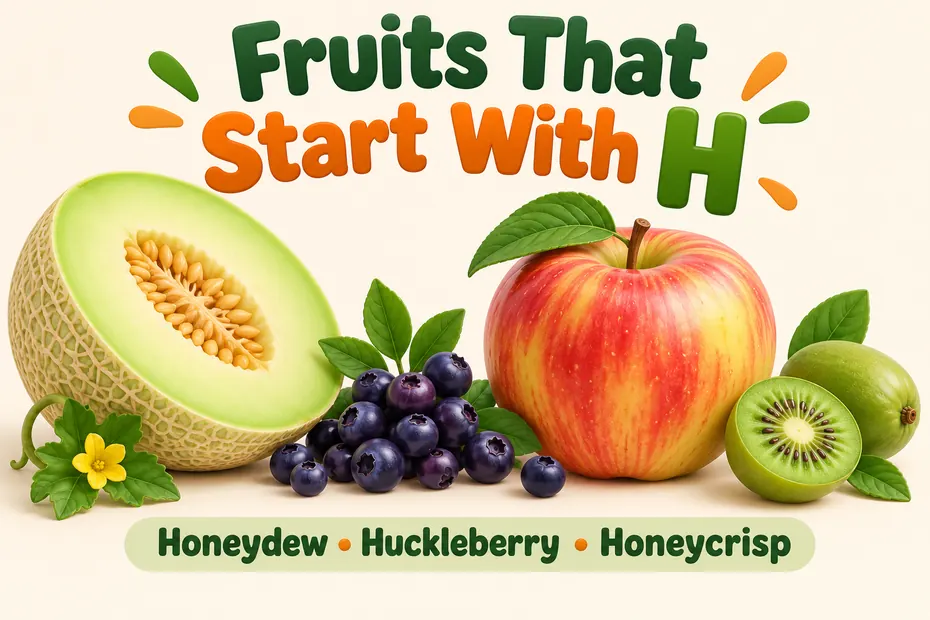
Fruits that start with H include honeydew, honeyberry (haskap), huckleberry, hardy kiwi, and Honeycrisp apple. This checked guide separates everyday fruit names from cultivar names and aliases. Honeyberry and haskap are the same fruit, while Honeycrisp names an apple cultivar. Hydrangea and “humble grape” should not be counted as H fruits.
Fruits that start with H: a checked quick list
For a school alphabet activity, start with honeydew, honeyberry, and huckleberry. Add hardy kiwi if a two-word common name is allowed, or Honeycrisp apple if named varieties count. Say which rule you are using: a list of fruit types and a list of fruit varieties answer slightly different questions.
| Name | What it is | Useful distinction |
|---|---|---|
| Honeydew | A melon in Cucumis melo | Usually pale rind and green flesh; scoop out the central seeds. |
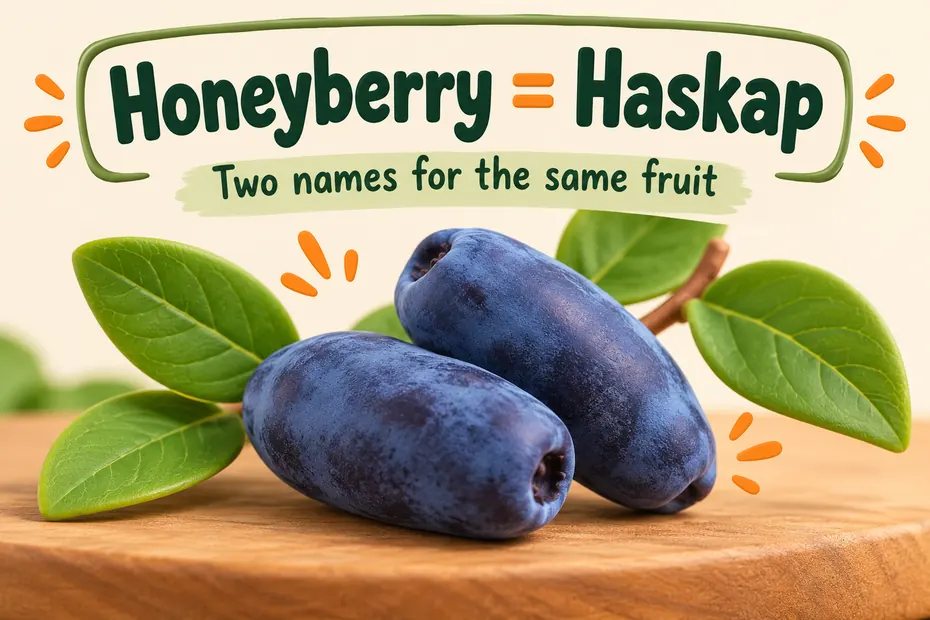
| Honeyberry / haskap | Lonicera caerulea | Two common names for one fruit; berries are typically blue and elongated. |
| Huckleberry | A common name used for several berries | The name alone does not identify one botanical species. |
| Hardy kiwi | A small kiwiberry, commonly Actinidia arguta | Smooth skin distinguishes it from the familiar fuzzy supermarket kiwi. |
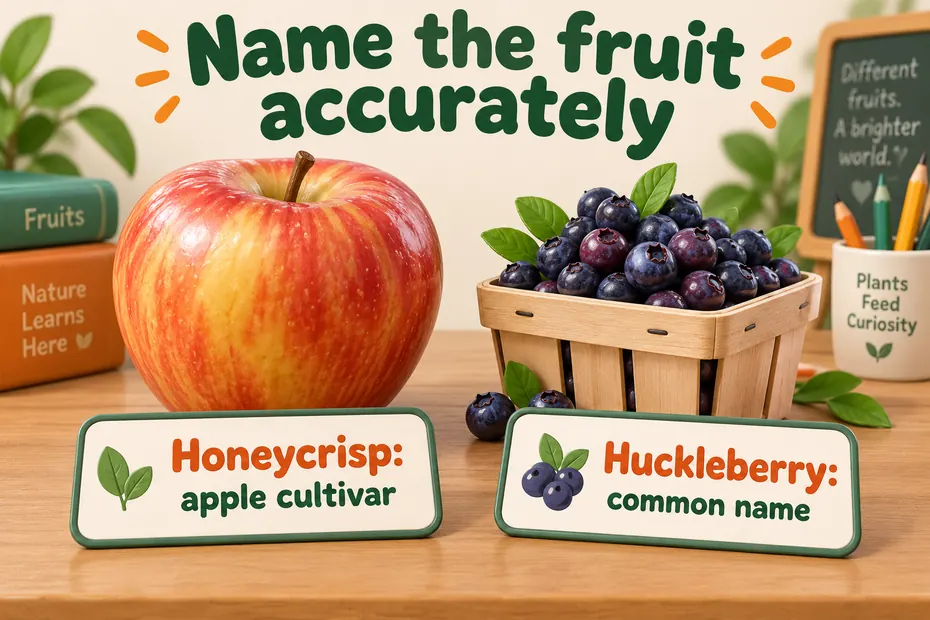
| Honeycrisp apple | A named apple cultivar | Counts when variety names are permitted, rather than as a separate fruit species. |
How to recognize the strongest examples
Honeydew is the clearest supermarket example. A cut melon has a seed cavity surrounded by juicy flesh. Utah State University Extension places honeydew among the Inodorus group of melons. Use “honeydew melon” in a sentence: “We served honeydew melon with breakfast.” Calling every green melon honeydew would be too broad; the name describes a particular melon group.
Honeyberry and haskap belong together, rather than occupying two supposedly different species slots. The University of Minnesota describes honeyberries as haskap. Their elongated shape is a helpful classroom contrast with round berries. For a vocabulary worksheet, write “honeyberry (also called haskap)” once. For a letter-H word list, both words are legitimate examples, but explain that they refer to the same plant.
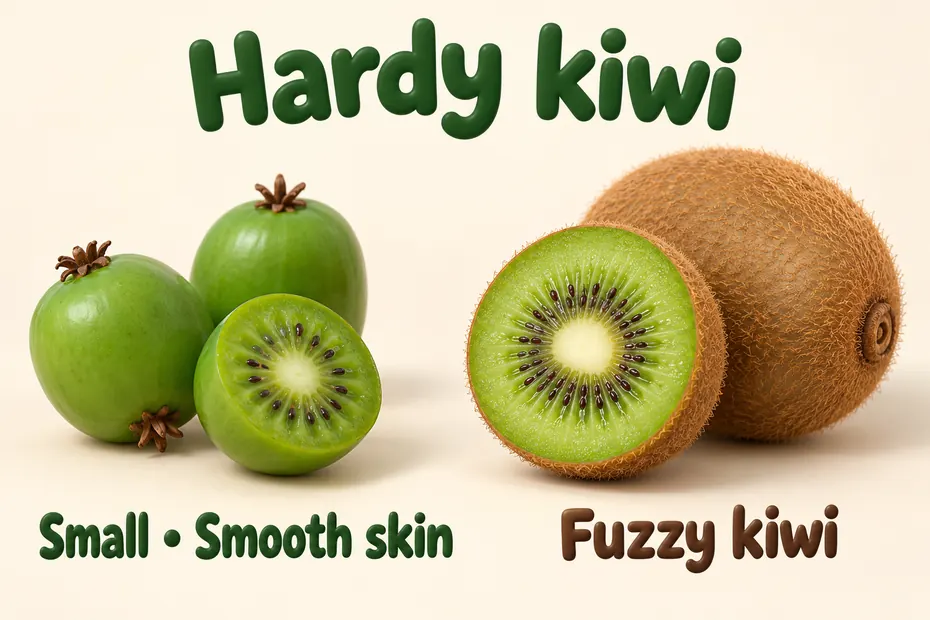
Hardy kiwi needs a correction because the name is often illustrated with ordinary fuzzy kiwifruit. The University of Minnesota’s kiwi berries guide describes small, smooth-skinned fruit. “Hardy kiwi” is therefore useful as an H phrase, while “kiwiberry” belongs under K. Example: “The gardener harvested hardy kiwi from a vine.” The adjective is part of an established common name; it is not simply an invented way to move kiwi into another alphabet category.
Huckleberry is an umbrella common name, not a promise that all huckleberries look identical. The US Forest Service identifies thinleaf huckleberry as Vaccinium membranaceum, while other species carry related names. Use “huckleberry jam” as a clear food example. A cartoon, color description, or common name is insufficient for identifying a wild berry safely.
Honeycrisp is an apple variety known for a crisp, juicy texture and sweet-tart flavor. The University of Minnesota’s Honeycrisp profile lists fresh eating, cooking, and salad among its culinary uses. “Honeycrisp apple” is more informative than “a red fruit,” and the full name makes its category clear.
Corrections to the older list below
Use this checked guide where it differs from the original material retained below. Hydrangea is an ornamental flowering plant, not an edible fruit example. North Carolina State Extension’s hydrangea profile flags human toxicity; do not interpret its appearance in the older introduction as permission to eat it or use it as an edible cake decoration.
“Humble grape” is a descriptive phrase, not an established H fruit name: grape belongs under G. Hala is Pandanus tectorius in the Pandanaceae, as the University of Hawaiʻi native-plants profile explains, rather than the palm family Arecaceae claimed below. Hawaiian mountain apple is Syzygium malaccense, according to University of Hawaiʻi CTAHR; it is not an ordinary Malus apple.
Likewise, “husk tomato” should not make tomatillo, ground cherry, and cape gooseberry interchangeable. Minnesota Extension distinguishes tomatillos and ground cherries as separate crops. Finally, listing hawthorn fruit is different from recommending hawthorn medicine: NCCIH reports conflicting heart-failure evidence. The older heart-health claims are not established treatment advice.
Frequently asked questions
What is the easiest fruit beginning with H?
Honeydew is an easy choice because the fruit name itself begins with H and is familiar in many grocery stores. “Honeydew melon” is also acceptable. Honeycrisp apple works when your activity allows named varieties, but check that rule before using a cultivar to answer a fruit-type question.
Are honeyberry and haskap different fruits?
No. Honeyberry and haskap are common names associated with Lonicera caerulea. Treat them as aliases when counting distinct fruits. You can include both spellings in a vocabulary list, provided you explain the connection rather than presenting them as two unrelated fruit species.
Does hardy kiwi have fuzzy skin?
The small hardy kiwi commonly sold as kiwiberry has smooth skin. The large brown fuzzy fruit familiar from supermarkets is a different kiwi type. For an alphabet illustration, show a small green smooth-skinned fruit and label it “hardy kiwi,” rather than relying on a generic fuzzy kiwi image.
Can any adjective turn a fruit into an H fruit?
No. “Healthy apple” and “humble grape” are ordinary descriptive phrases, so they do not supply established fruit names beginning with H. “Hardy kiwi” is different because it is a recognized common name. State whether your list accepts common names, regional names, or cultivars, then apply that rule consistently.

When you think of fruits that start with the letter H, you might not think of many. However, there are actually quite a few delicious fruits that start with this letter! Here are some of the best:
- Honeycrisp apple: A type of apple that’s known for its sweetness and crisp texture.
- Hydrangea: A pretty flower that’s sometimes used as a decoration on cakes or other desserts.
What other fruits do you know that start with the letter H?
Fruits That Start With The Letter H
H is for healthy! And what could be healthier than a juicy, delicious fruit? Here are some of our favorite fruits that start with the letter H.
H is for honeydew, one of the tastiest fruits around! This melon is not only delicious, but also packed with nutrients like vitamins C and B6.
H is also for honeyberry, a lesser-known fruit that is starting to gain popularity in the United States. Honeyberries are small and tart, with a flavor that has been described as a cross between a blueberry and a grape.
If you’re looking for a fruit that is both sweet and sour, look no further than the huckleberry. Huckleberries can be found in the wild or cultivated, and make a delicious addition to pies, jams, and even ice cream.
Last but not least, we have the humble grape. Grapes come in all sorts of colors, from deep purple to green, and can be eaten fresh or made into wine. No matter how you enjoy them, grapes are a delicious and healthy treat.
So, there you have it: four delicious fruits that start with the letter H. What are you waiting for? Go out and try them all!
Hackberry
A hackberry is a small fruit that is related to the mulberry. The fruit is oval in shape and has a dark red or purple color. The skin of the fruit is thin and the flesh is sweet. The hackberry tree is native to North America and grows in the eastern and central United States.

Hairless Rambutan
Rambutan is a tropical fruit that is grown in countries like Thailand, Malaysia, and Indonesia. The fruit is small and red, and has a hairy outer skin. The flesh of the fruit is white, and it contains a large seed. Rambutan is a popular fruit in Southeast Asia, and is often eaten fresh or made into juices and other beverages.

Hala
The hala fruit, also known as the puhala, is a species of tree in the family Arecaceae. It is endemic to the Hawaiian Islands, where it is the largest native fruit. The tree grows up to 30 m tall and has a trunk diameter of up to 1 m. The leaves are pinnate, with leaflets arranged in a spiral. The flowers are white and borne in inflorescences of 3-5 flowers. The fruit is a drupe, with a hard endocarp and a fleshy mesocarp. The fruit is green when unripe and turns yellow or orange when ripe. It is eaten fresh or made into jams and jellies.

The hala tree is found on all the main Hawaiian Islands, but is most common on Oahu, Maui, and Hawaii. It grows in both dry and wet forests, at elevations from sea level to 1,800 m. The tree is threatened by habitat loss and destruction, as well as by introduced species such as pigs and goats, which eat the fruit and damage the trees.
Hardy Kiwi
Kiwifruit, or Actinidia deliciosa, is a woody vine native to China. The fruit of the plant is oblong, with a furry brown skin and a bright green flesh. Kiwifruit is rich in vitamins C and E, and also contains potassium, magnesium, and dietary fiber.

Kiwifruit was first introduced to New Zealand in the early 20th century, and was later exported to other countries around the world. Today, kiwifruit is grown in many temperate regions, including Europe, North America, and Chile.
Kiwifruit is often eaten raw, and can also be used in a variety of recipes, including pies, jams, and juices.
Hawaiian Mountain Apple
Mountain apples are a type of apple that is native to Hawaii. They are a small, round fruit that has a red or yellow skin. The flesh of the mountain apple is white and has a slightly sweet taste. Mountain apples are often used in Hawaiian cuisine, such as in pies and jams.

Hawthorn
Hawthorn fruit, also known as haws, are small red, orange or yellow fruits that grow on Hawthorn trees. Hawthorn trees are part of the rose family and are native to Europe, Asia and North America. The fruits are used as a food source and for medicinal purposes.

Hawthorn Berry
Hawthorn berry is a small, red fruit that grows on the hawthorn tree. The hawthorn tree is a member of the rose family and is native to Europe, Asia and North America. Hawthorn berries have been used for centuries in traditional Chinese medicine to treat heart disease. Hawthorn berry is rich in antioxidants and has been shown to improve blood circulation and heart function.

Hazelnut
Hazelnuts are a type of fruit that grows on hazelnut trees. The hazelnut tree is a deciduous tree that is native to Europe, Asia, and North America. The hazelnut tree grows to a height of 30 to 40 feet and has a life span of 50 to 60 years. The leaves of the hazelnut tree are oval shaped and have a toothed margin. The flowers of the hazelnut tree are yellow and grow in clusters. The fruit of the hazelnut tree is a nut that is enclosed in a green, leathery husk. The hazelnut tree is cultivated for its nuts, which are used in a variety of food products, including chocolate, cookies, and ice cream.

Heirloom Tomato
Heirloom tomatoes are a type of tomato that is grown from a non-hybridized seed. This means that the seed has been passed down from generation to generation, and has not been cross-bred with another type of tomato. Heirloom tomatoes are usually grown for their flavor, rather than for their resistance to disease or their ability to be shipped without bruising.

Herbert River Cherry
The Herbert River Cherry (Prunus cerasifera) is a fruit native to the Herbert River region of North Queensland, Australia. The Herbert River Cherry is a small, red fruit with a sweet, tart flavor. The fruit is typically used in jams and pies.

Highbush Blueberry
Highbush blueberries are a type of fruit that is native to North America. They are a member of the Vaccinium genus, which also includes cranberries and bilberries. Highbush blueberries are the largest type of blueberry, and they are typically used in pies and jams. The fruit is high in vitamins C and K, and it is a good source of dietary fiber.

Highbush Cranberry
The highbush cranberry (Vaccinium macrocarpon) is a member of the Ericaceae family and is native to North America. The fruit is a small, red berry that is edible and has a tart taste. The highbush cranberry is used in pies, jams, and other desserts. It is also used as a decoration on cakes and other pastries. The fruit can be found fresh or canned.

Himalayan Ambarella
The Himalayan ambarella fruit is a small, round fruit that is native to the Himalayan region. The fruit is yellow in color and has a thick skin. The flesh of the fruit is white and has a sour taste. The fruit is used in many dishes in the Himalayan region, including curries and chutneys. The fruit is also used to make a type of wine.

Himalayan Mulberry
Himalayan mulberry is a fruit that is native to the Himalayan region. It is a small, dark-colored fruit that has a sweet taste. The fruit is often used in jams and jellies. Himalayan mulberry is also known as black mulberry.

Hog Plum
Hog plum fruit, also known as Spondias mombin, is a tropical fruit that is native to Central and South America. The fruit is oblong in shape and has a yellow-orange color. It is typically about 3-4 inches in length and 2-3 inches in width. The skin of the fruit is thin and smooth, and the flesh is white and juicy. The flavor of the fruit is sweet and sour, with a slightly bitter aftertaste. Hog plum fruit is a good source of vitamin C and also contains some vitamin A and iron.

Holly Azara
Holly Azara fruit is a species of holly native to South America. Holly Azara is a small to medium-sized evergreen tree growing to 15“20 m tall, with a dense, oval to rounded crown. The leaves are oblong to elliptical, 5“15 cm long and 2“6 cm broad, with a spiny margin. The flowers are white, borne in clusters of 3“6. The fruit is a red berry, 6“8 mm diameter, ripening in autumn.
Holly Azara is found in lowland rainforests in Brazil, Colombia, Ecuador, Guyana, Peru, Suriname and Venezuela, at altitudes of up to 1,000 m. It is a common tree in the Guianan moist forest ecoregion.

The wood of Holly Azara is hard and heavy, and is used in construction and furniture-making. The fruit is eaten by birds and mammals, and is also used to make jams and liqueurs.
Honey Crisp Apple
Honeycrisp apples are a type of apple that was developed in the 1960s. Honeycrisp apples are known for their sweetness, and they are often used in pies and other desserts. Honeycrisp apples are also a good source of fiber and vitamins.

Honey Dew Melon
Honey dew melon is a fruit that belongs to the gourd family. It is round in shape and has a greenish-white flesh with small black seeds. The skin of honey dew melon is thin and smooth. This melon is a good source of vitamins C and B6, and also contains potassium and magnesium.

Honey Locust
The honey locust (Gleditsia triacanthos) is a deciduous tree native to central North America. It is a member of the Fabaceae family. The honey locust is a large tree, reaching a height of 20“30 m (70“100 ft). The tree has a spread of 15“25 m (50“80 ft). The crown is irregular and open, with widely spaced branches. The honey locust is a fast-growing tree, with a growth rate of up to 60 cm (24 in) per year. The honey locust is tolerant of a wide range of soil types and conditions, and is resistant to drought, flooding, and fire. The honey locust is an important source of food for a variety of wildlife, including deer, rabbits, squirrels, and birds. The honey locust is also a popular ornamental tree, with a wide range of cultivars available.

Honey berry
Honey Berry fruits are small, round, and dark-colored berries that are closely related to the Blueberry. Honeyberries are native to Eastern Asia and have been cultivated in China and Japan for centuries. The berries were introduced to North America in the early 1900s, and they are now grown in many parts of the United States and Canada.

Honeyberries are a good source of vitamins C and E, as well as antioxidants and anthocyanins. The berries have a sweet taste with a hint of tartness. They can be eaten fresh or used in pies, jams, and other desserts.
Honeysuckle
Honeysuckle (Lonicera caerulea) is a flowering plant that produces a fruit that is eaten by many animals, including humans. The fruit is small and round, with a thin skin and a sweet flesh. The plant is native to Asia, but it is now grown in many parts of the world.

The fruit of the honeysuckle plant is high in sugar and calories, and it is a good source of vitamin C. It is often used in jams and jellies, and it can also be eaten fresh.
Horn Melon
Horn melon, also known as karaka, is a fruit native to New Zealand. The fruit is oval in shape and has a hard, green outer shell. The flesh of the fruit is orange in color and is filled with small, black seeds. The taste of the fruit has been described as being similar to a cross between a cucumber and a lime.

The fruit is typically eaten raw, and is often used in salads or as a garnish. Horn melon can also be juiced, and the juice can be used as a base for cocktails or as a flavoring for other beverages.
Horse Mango
The horse mango (Mangifera foetida) is a tropical fruit that is native to the Malay Peninsula and Indonesia. The horse mango is a large fruit, measuring up to 18 cm (7 in) long and weighing up to 1 kg (2 lb). The fruit has a leathery skin that is green when ripe, and the flesh is yellow or orange. The horse mango is a popular fruit in Southeast Asia, and is often used in salads, curries, and desserts.

Hottentot Fig
Hottentot fig (Carpobrotus edulis) is a succulent plant native to South Africa. The fruits are small, round and have a slightly sweet taste. The plant grows in sandy, well-drained soils and is tolerant of drought conditions.

Huckleberry
Huckleberry is a common name for the berries of several plant species in the family Ericaceae, including:
- Gaylussacia baccata (American huckleberry)
- Vaccinium parvifolium (red huckleberry)
- Vaccinium ovatum (evergreen huckleberry)
- Vaccinium membranaceum (black huckleberry)
The plant species are native to North America, and the berries are an important food source for many animals, including bears, birds, and small mammals. The berries are also eaten by humans, and are used to make jams, pies, and other desserts.

Huckleberries are small, round, and vary in color from red to black. They have a tart flavor, and are often used in pies and other desserts. Huckleberries are a good source of vitamins A and C, as well as dietary fiber.
Huito
The huito fruit, also known as Genipa americana, is a tropical fruit that is native to Central and South America. The fruit is oval in shape and has a thick, dark green skin. The flesh of the huito fruit is white and contains small, black seeds. The fruit has a sweet, acidic flavor and is often used in jams, jellies, and beverages.

Husk Tomato
Husk Tomato, or Physalis ixocarpa, is a small, lantern-shaped fruit that is closely related to the tomato. The fruit is encased in a papery husk, which is why it is also known as the groundcherry, cape gooseberry, or poha. Husk tomatoes are native to Mexico and Central America, but they are now grown in many other parts of the world, including the United States, Europe, Asia, and Africa.

The fruit is usually yellow or orange, but it can also be red, green, or purple. It is about the size of a grape and has a tart, acidic flavor. Husk tomatoes are used in both sweet and savory dishes. They can be eaten fresh, cooked, or dried, and are often used in jams, jellies, and preserves.
Hyuganatsu
Hyuganatsu is a citrus fruit that is native to Japan. The fruit is similar in appearance to a grapefruit, and has a slightly sour taste. The skin of the fruit is thin and easy to peel. The flesh of the fruit is pink or orange, and is segmented like a grapefruit. Hyuganatsu fruit is often used in desserts, such as cakes and pies.

Conclusion
While there may not be an abundance of fruits that start with the letter H, there are still a few notable ones. The honeydew melon is a large, round fruit with green skin and white flesh. It is named for its honey-like flavor and is a popular addition to fruit salads. The honeyberry is a small, oval-shaped berry that is dark blue in color. It has a sweet, honey-like flavor and is often used in jams and pies. The hawthorn berry is a small, red fruit that is often used in Traditional Chinese Medicine. It is said to have a number of health benefits, including the ability to improve circulation and heart health.
So, while there may not be a wide variety of fruits that start with H, there are still some delicious and interesting ones to choose from.


